Ethical and sustainable production is now a core requirement for many fashion brands, but what truly defines a responsible partner? Is it fair labor, safe working conditions, lower environmental impact, or all of the above? In this guide, we explain what a sustainable clothing manufacturer is, compare 10 manufacturers by their verified certifications and sustainability programs, and show you how to choose an ethical apparel manufacturer that fits your brand.
1. What Is a Sustainable Clothing Manufacturer?
A sustainable clothing manufacturer is a company that produces garments while prioritizing both people and the environment. It focuses not only on the final product but also on how clothing is made throughout the entire production process.
On the ethical side, this means ensuring fair wages, safe working conditions, reasonable working hours, and respect for workers’ rights. On the sustainability side, it means minimizing waste, saving water, limiting pollution, and using more responsible materials such as organic or recycled fabrics.
In practice, ethics and sustainability go hand in hand. A clothing manufacturer cannot be considered truly sustainable if the people making the garments are not treated fairly.

2. How We Selected These Sustainable Clothing Manufacturers
Every manufacturer in this list was reviewed against information that can be checked in public sources, such as official company websites, sustainability or impact reports, and the Better Work Vietnam list of participating factories. We looked at:
- Social compliance: Certifications or programs covering labor rights and working conditions, such as SA8000, WRAP, BSCI, Better Work, Fair Trade or B Corp.
- Environmental performance: Material certifications (GOTS, OCS, GRS, OEKO-TEX®), facility assessments such as Higg FEM, and published targets validated by the Science Based Targets initiative (SBTi).
- Measurable action: Concrete figures on water recycling, renewable energy, waste or chemical management, rather than general statements.
- Production capability: Clear product specialization and experience serving international brands.
3. Top 10 Sustainable Clothing Manufacturers at a Glance
| Manufacturer | Country | Specialization | Key Certifications |
|---|---|---|---|
| Thygesen Textile Vietnam | Vietnam | Activewear, underwear, casualwear, kidswear, workwear, uniform | SA8000, WRAP, Better Work, GOTS, OCS, GRS, OEKO-TEX® STeP & STANDARD 100 |
| Hung Long | Vietnam | Jackets, coats, trousers | WRAP, BSCI, GSV, Better Work |
| Saitex | Vietnam | Denim | B Corp, Fair Trade, LEED, bluesign® system partner |
| TCE Denim | South Korea & Vietnam | Vertically integrated denim | Better Work (Vietnam factories) |
| Pearl Global | India | Fashion and sportswear | GOTS, OCS, GRS, OEKO-TEX® STANDARD 100, FSC® CoC |
| Square Fashions | Bangladesh | Knitwear | WRAP, Higg FEM verification, GOTS, OEKO-TEX® STeP, ZDHC Level 2, ISO 14001 |
| Crystal International | Hong Kong | Lifestyle wear, denim, intimates, sweaters, sportswear | SBTi-validated net zero target, verified Higg FEM, ISO 45001, Better Work |
| MAS Holdings | Sri Lanka | Intimates, sportswear, athleisure, swimwear | SBTi-validated near-term and net zero targets |
| Essence Garment | China | Sleepwear, loungewear | BSCI audit, OEKO-TEX® STANDARD 100, GOTS and GRS fabric options |
| Makalot | Taiwan | Multi-category apparel | CDP A (Water Security), Better Work (Vietnam factory) |
3.1. Thygesen Textile Vietnam
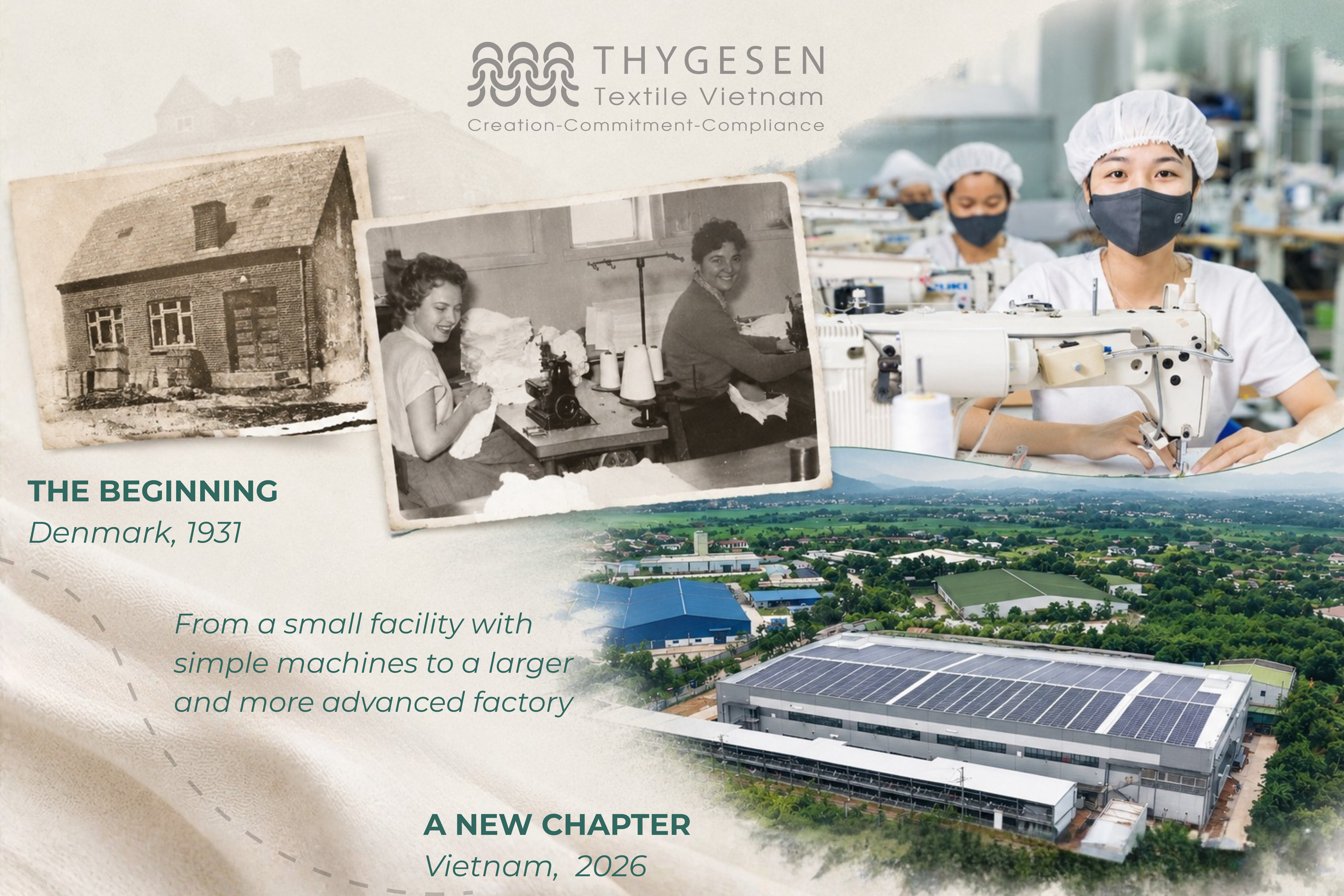
Founded: 1931
Country: Vietnam
Product Lines: Activewear, Underwear, Casualwear, Kidswear, Workwear, Uniform
Featured Customers: Calvin Klein, Tommy Hilfiger, Fjällräven, DKNY, Girlfriend Collective, Boody
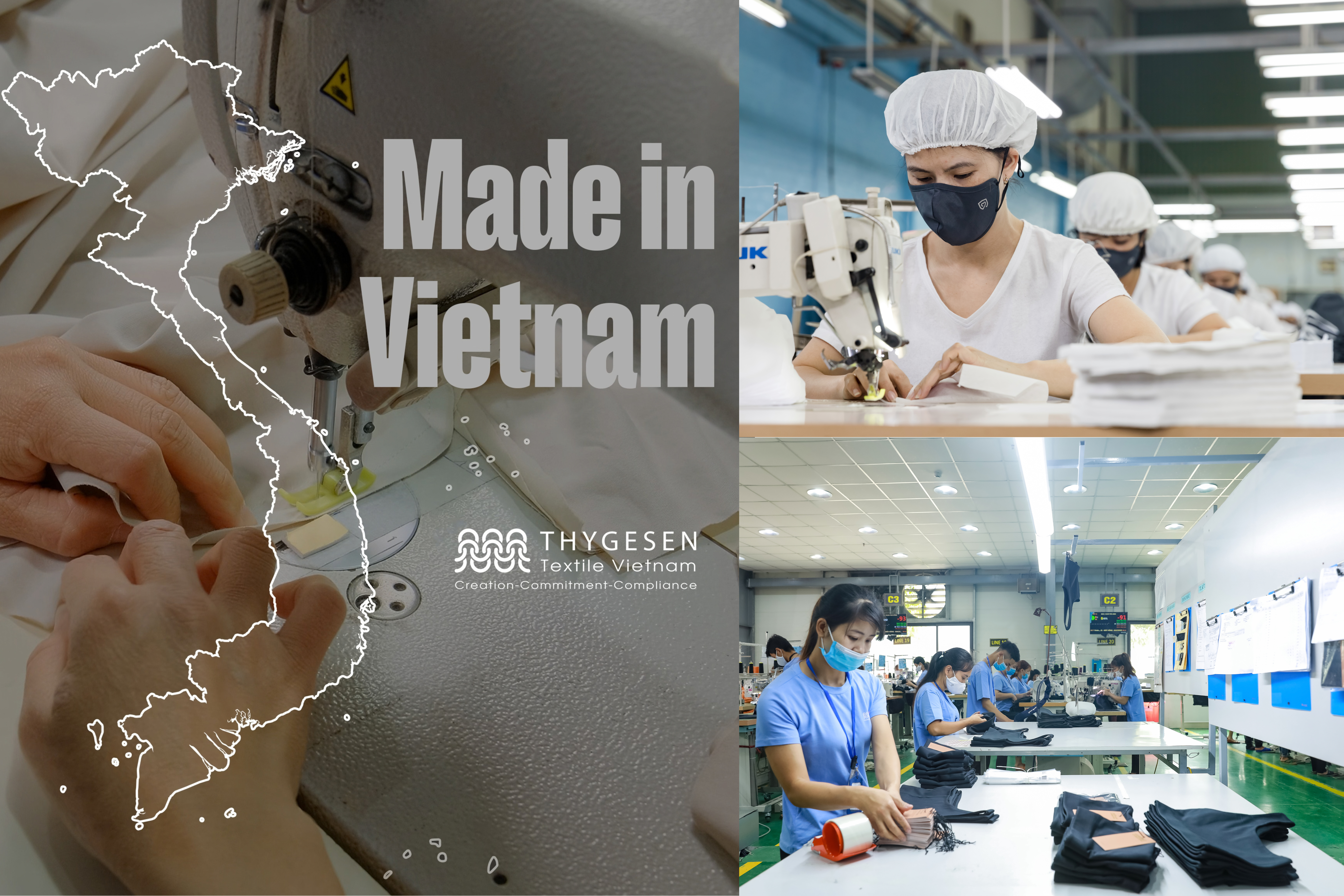
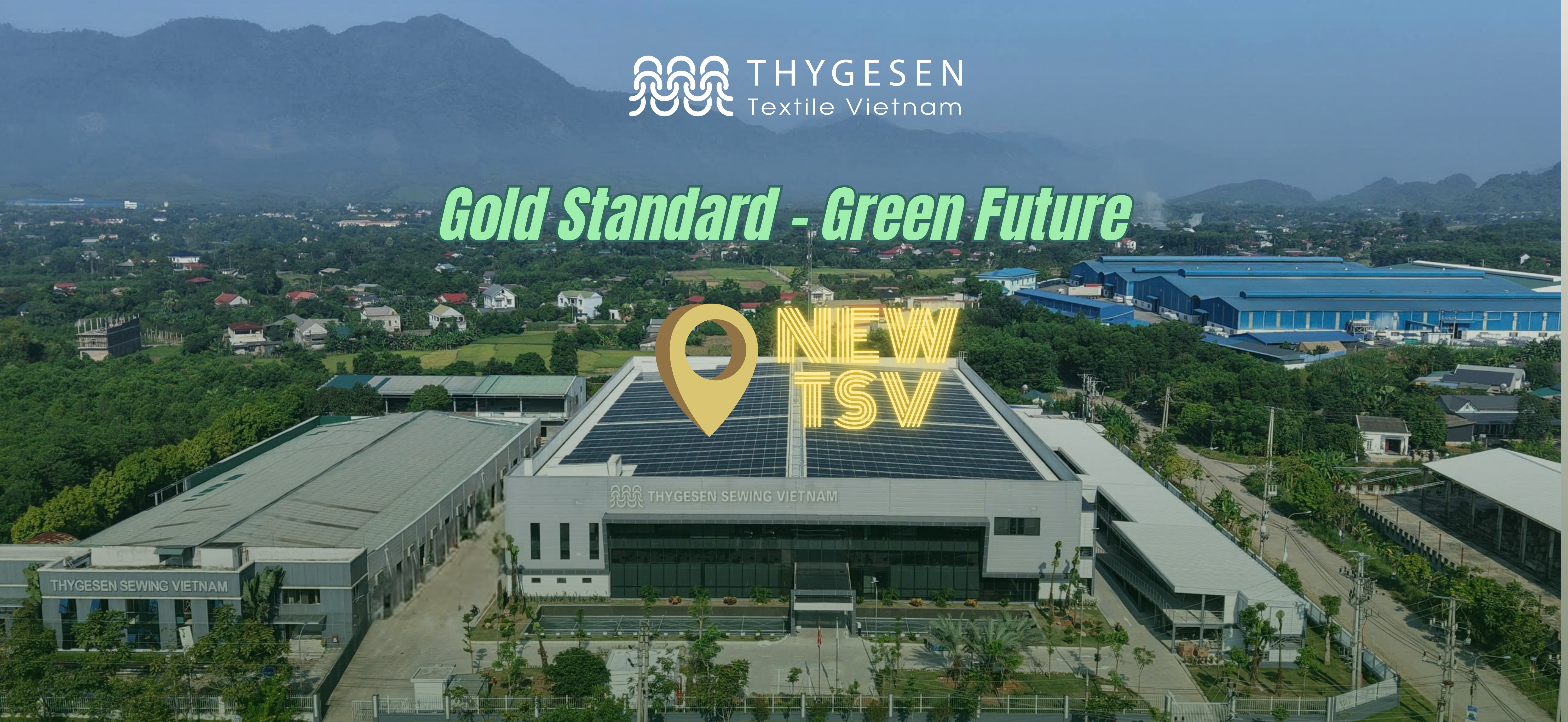
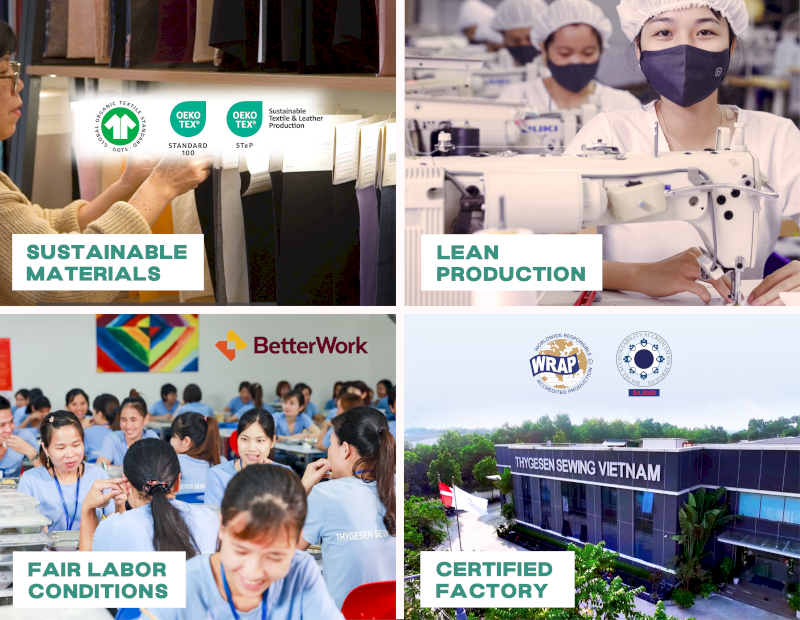
Thygesen Textile Vietnam is an ethical and sustainable clothing manufacturer in Vietnam, offering OEM services across key product categories including activewear, casualwear, and underwear. We combine high-quality production with a strong commitment to responsible sourcing and fair labor practices.
We operate with clear ethical standards, ensuring that both people and processes are treated with care and respect. Our sourcing decisions are made with sustainability in mind, and we actively seek materials that meet international standards for environmental and social responsibility.
Certifications: SA8000:2014, WRAP, Better Work, OEKO-TEX® STeP, OEKO-TEX® STANDARD 100, GOTS (achieved in 2024), OCS, GRS
Sustainability highlights:
- Responsible materials: We offer organic cotton, bamboo viscose, recycled polyester, Lenzing TENCEL™ and modal, and fabrics are traceable upon request to support upcoming Digital Product Passport requirements.
- Lean production: We apply LEAN and Kaizen principles to remove non-value-added activities, reduce waste, conserve energy and materials, and continuously improve efficiency, with 100% end-line inspection (AQL 2.5).
- People and community: We have created nearly 1,000 job opportunities in the mountainous region of Phu Tho Province and supported 11 primary schools in Nam Po District, Dien Bien Province during COVID-19.
Transparency is central to how we work. We maintain open, honest communication with our clients, keeping them informed at every stage of development and production.
For durable and eco-friendly apparel, consider Thygesen Textile Vietnam – Your Trusted Bamboo T-shirt Manufacturer, known for its sustainable material expertise.
Thygesen offers specialized expertise as an athletic clothing manufacturer, adhering to strict international certifications for material sourcing and production processes. This ensures brands can confidently deliver high-performance, sustainable activewear to their customers, aligned with ethical standards.
When seeking reliable cut and sew manufacturers committed to sustainable practices, Thygesen provides complete transparency throughout the production cycle. This dedication to ethical sourcing and responsible manufacturing helps brands reduce supply chain risks while maintaining high quality standards.
3.2. Hung Long
Founded: 1996
Country: Vietnam
Product Lines: Jackets, Coats, Trousers
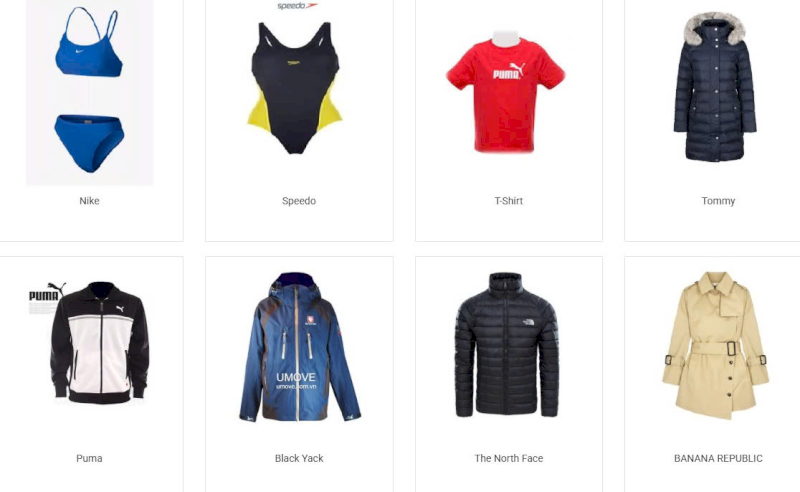
Featured Customers: Nike, Puma, The North Face, Speedo
Hung Long is a well-established clothing manufacturer based in Hung Yen Province, Vietnam, known for its strong production capacity and focus on ethical practices. With 29 production lines, over 2,600 skilled workers, and a factory area of 50,000 m², the company delivers more than 1 million units per month.
What sets Hung Long apart is its commitment to social compliance. The company places a strong emphasis on maintaining stable employment, offering fair working conditions, and continuously improving workforce welfare.
Certifications: WRAP, BSCI, GSV, Better Work
Sustainability highlights:
- Better Work participation: The Better Work Vietnam list of participating factories includes three Hung Long factories in Hung Yen – Hung Long Garment & Service JSC, Hung Long I and Hung Long II – which are regularly assessed on labor standards and working conditions.
3.3. Saitex
Founded: 2001
Country: Vietnam
Product Lines: Denim Jeans, Denim Fabric
Featured Customers: Everlane, G-Star Raw, Madewell, Polo Ralph Lauren
Saitex is a denim manufacturer founded by Sanjeev Bahl, with its main production base in Bien Hoa, Dong Nai Province, about one hour outside Ho Chi Minh City. The company is vertically integrated from spinning to garment manufacturing, has a capacity of around 18,000 pieces per day, and has created about 3,500 jobs in Vietnam.
Certifications: B Corp (certified in 2019), Fair Trade, LEED (garment operation), bluesign® system partner (laundry, and fabric mill since October 2024)
Sustainability highlights:
- Water recycling: Saitex recycles 98% of the water it uses, saving over 38 million liters of water a year.
- Energy: Solar panels with 3-4 MW capacity reduce emissions by more than 2,000 tons a year, and the company targets carbon neutrality by 2030.
- Inclusive workplace: Through its Rekut initiative, Saitex provides training and employment to differently-abled individuals.
3.4. TCE Denim
Founded: 1956
Country: South Korea and Vietnam
Product Lines: Denim Fabric and Denim Garments
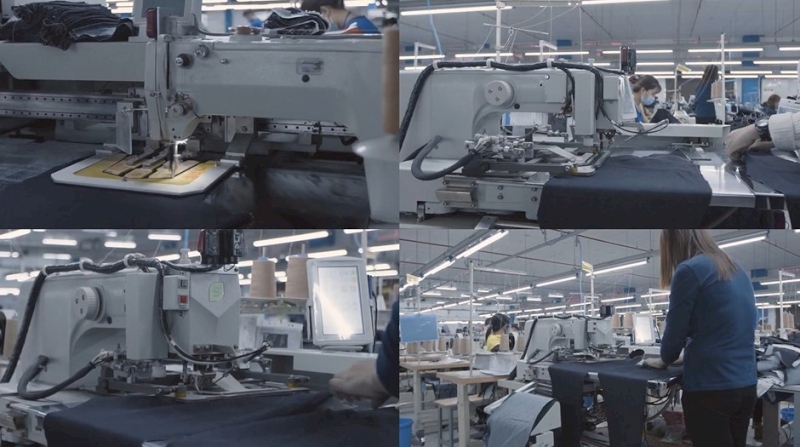
TCE Denim describes itself as one of the oldest denim factories in Asia, operating since 1956. The company runs a vertically integrated supply chain in Vietnam, from denim fabric production to garment washing, with its TCE Vina Denim facility in Ninh Binh and TCE Jeans in Thanh Hoa. Its capacity reaches about 3.5 million yards of fabric and 1.3 million garments per month.
Certifications: Not listed on the official website; both Vietnam factories (TCE Vina Denim and TCE Jeans) participate in Better Work Vietnam
Sustainability highlights:
- Water target: TCE set a target of zero discharge and 100% water recycling across its factories and fabric mills by 2025, and uses solar energy in its operations.
- Smart dyeing: Its Smart Dyeing Tech denim, developed with Archroma, was reported in 2018 to save almost 92% of water and 30% of energy.
3.5. Pearl Global
Founded: 1987
Country: India
Product Lines: Fashion and Sportswear
Featured Customers: Kohl’s, Calvin Klein, Tommy Hilfiger, Ralph Lauren, Gap, MUJI
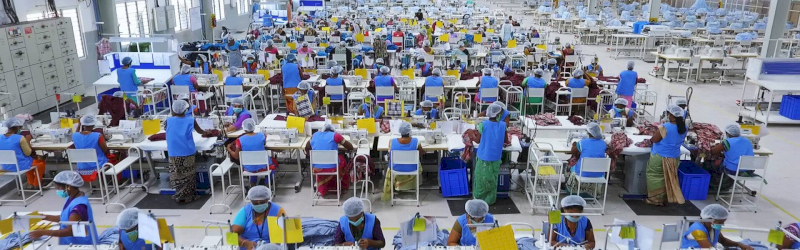
Pearl Global is a major Indian apparel manufacturer with 25+ garment manufacturing units and 30,000+ employees, with manufacturing operations in India, Bangladesh, Vietnam, Indonesia and Guatemala. The company emphasizes transparency, fair labor practices, and social impact, aligning its business strategy with long-term ethical goals.
Certifications: GOTS, OCS, GRS, OEKO-TEX® STANDARD 100, FSC® Chain of Custody
Sustainability highlights:
- Three environmental pillars: Pearl Global’s program focuses on water conservation, waste elimination, and reuse and recycling, guided by a Triple Bottom Line (People, Planet, Profit) approach.
- Better Work participation: Three Pearl factories in Vietnam – Pearl Global Vietnam, Pearl Vina and Pearl Garment Vietnam – are listed as Better Work Vietnam participants.
3.6. Square Fashions
Founded: 1997
Country: Bangladesh
Product Lines: Knit T-shirts, Polo Shirts, Sweatshirts, Jackets, Dresses, Trousers
Featured Customers: Puma, G-Star, M&S, Hugo Boss
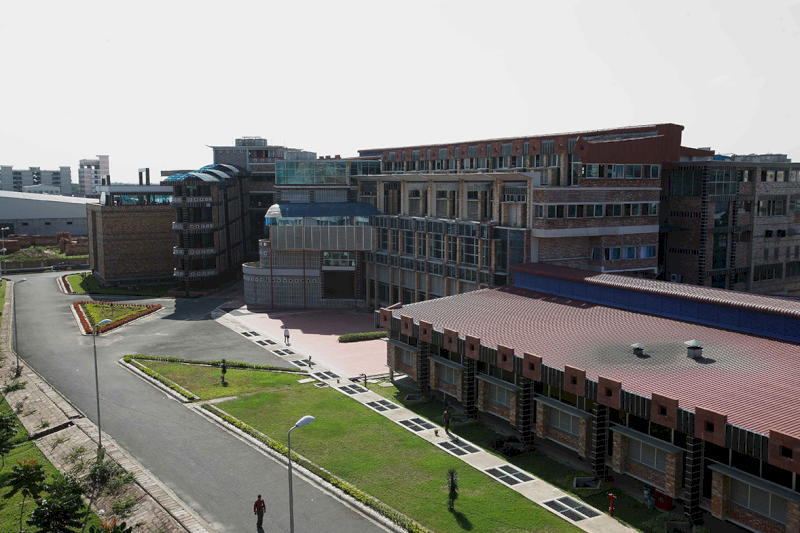
Square Fashions is an established knitwear manufacturer and part of Bangladesh’s Square Group. It operates a round-the-clock effluent treatment plant, recovers and reuses machine cooling water and steam condensate, and converts biodegradable waste into organic fertilizer.
Certifications: WRAP, Higg FEM verification, OEKO-TEX® STANDARD 100 and STeP, GOTS, OCS, GRS, RCS, ZDHC Supplier to Zero (Level 2), ISO 9001, ISO 14001, Fair Wage Certificate; Green Factory Award 2025
Sustainability highlights:
- Water: Rainwater harvesting with 20,000 m³ of storage, a 100 m³/day water reclamation plant operating since 2017, and a 3,900 L/hr caustic soda recovery plant.
- Energy and chemicals: A 649.2 kWp solar PV system, and 98% of production chemicals are ZDHC MRSL Conformance Level 3 compliant. The company targets Zero Liquid Discharge by 2035 and Net Zero by 2050.
- Worker welfare: Free medical care, meals, dormitory and transport, plus life insurance and a contributory provident fund for permanent workers.
3.7. Crystal International
Founded: 1970
Country: Hong Kong
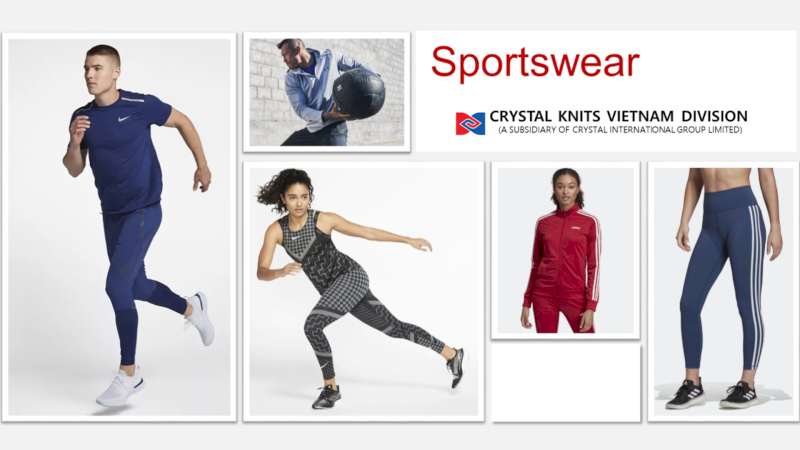
Product Lines: Lifestyle Wear, Denim, Intimates, Sweaters, Sportswear and Outdoor Apparel
Featured Customers: UNIQLO, Abercrombie & Fitch, GAP, Levi’s, H&M, Victoria’s Secret
Crystal International is a global apparel manufacturer founded in Hong Kong in 1970, with around 20 production facilities across Vietnam, China, Cambodia, Bangladesh and Sri Lanka and about 70,000 employees. Its sustainability work covers climate action, waste, water, chemical management and worker development.
Certifications and ratings: SBTi-validated net zero target; verified Higg FEM 4.0 average score of 78.3 (industry median 46.2); ISO 45001 at five factories; all Vietnam factories designated Better Work High Performance Factories
Sustainability highlights:
- Climate: Crystal targets a 90% absolute reduction in Scope 1, 2 and 3 emissions by 2050 from a 2022 baseline, and has expanded its solar PV capacity to 20 MW.
- Waste and water: Over 70% of waste is recycled or recovered to energy, three factories have reached zero operational waste to landfill, and the water recycling rate reached up to 60% at its Vietnam denim facility.
- People: The company has empowered 70,300 women through the CARE program since 2016.
3.8. MAS Holdings
Founded: 1987
Country: Sri Lanka
Product Lines: Intimate Wear, Sportswear, Athleisure, Swimwear
Featured Customers: Victoria’s Secret, Nike, Lululemon, Gap, PVH
Headquartered in Colombo, Sri Lanka, MAS Holdings began as an underwear manufacturer and has grown into an apparel group with over 100,000 employees operating in 13 countries. Its sustainability strategy, Plan for Change, sets goals across products, lives and the planet, with Plan for Change 2030 launched in 2025 as the next phase.
Certifications and ratings: Near-term and net zero targets validated by the Science Based Targets initiative (SBTi) in 2025
Sustainability highlights:
- Climate targets: Net zero emissions by 2048, with an 80% absolute cut in Scope 1 and 2 emissions and a 46.2% cut in Scope 3 emissions by 2030 from a 2019 baseline.
- 2025 progress: 42% renewable energy, 99% of waste diverted from landfill, 99% of chemicals compliant with the ZDHC MRSL, and a 22.64% absolute reduction in Scope 1 and 2 emissions versus 2019.
- Inclusion: Women hold 26% of management roles, and the company employs 436 persons with disabilities.
3.9. Essence Garment
Experience: 25+ years
Country: China (headquartered in Qingdao), with factories in Vietnam and Bangladesh
Product Lines: Pajamas, Sleepwear, Loungewear, Robes, Baby and Kids’ Sleepwear
Essence Garment is a sleepwear and loungewear manufacturer with over 25 years of experience in OEM/ODM production, serving global brands, boutique labels and online retailers. The company operates production in China, Vietnam, and Bangladesh, offering one-stop manufacturing support for pajamas, nightwear, robes, onesies, and related apparel categories.
Its product range includes pajamas, sleepwear, nightgowns, robes, baby and kids’ sleepwear, loungewear, and family matching sets, with minimum order quantities starting from 100 pieces per style and color.
Certifications: BSCI-audited factory; OEKO-TEX® STANDARD 100 certified materials; GOTS organic cotton and GRS recycled fabric options
Sustainability highlights:
- Eco-friendly materials: Essence Garment specializes in bamboo viscose, modal, TENCEL™, organic cotton and linen for sleepwear and loungewear.
3.10. Makalot
Founded: 1990
Country: Taiwan
Product Lines: Activewear, Casualwear, Outerwear, Denim, Intimate Apparel, Performance Clothing
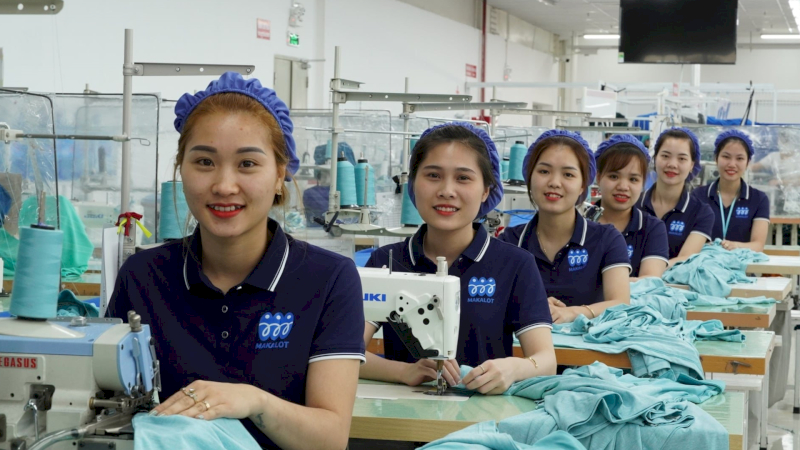
Makalot Industrial Co., Ltd. is an apparel manufacturer and sourcing partner founded in 1990 and headquartered in Taipei, Taiwan, with over 38,000 employees and factories in Indonesia, Vietnam, Cambodia and El Salvador. It has grown into an integrated manufacturing and supply chain solution provider with capabilities in design, development, and production across multiple clothing categories.
Certifications and ratings: CDP A (Water Security) and B (Climate Change); Sustainalytics ESG Risk score of 16.8; Makalot Garments (Viet Nam) participates in Better Work Vietnam
Sustainability highlights:
- Renewable energy: Renewable electricity accounts for 51% of Makalot’s total electricity use, supporting its target of a 38% CO₂e reduction by 2025 and Net Zero by 2050.
- Women’s empowerment: Its P.A.C.E. and R.I.S.E. programs have reached more than 25,000 women, and women hold over 75% of management roles.
4. Key Characteristics of an Ethical Apparel Manufacturer
The manufacturers above share a set of values and practices that define responsible production. Here is what to look for.
4.1. Prioritise Environmental Sustainability
A commitment to environmental sustainability is one of the key traits that set a sustainable clothing manufacturer apart. From materials to energy use, every decision is made with long-term environmental impact in mind.
- Sustainable material sourcing: Ethical manufacturers often advise on suitable options and help brands navigate sourcing decisions. Depending on the production goals, materials may carry certifications such as GOTS, OCS, GRS, or FSC, typically applied to fabrics like organic cotton, recycled polyester, viscose, or blends made from responsibly sourced fibers.
- Water management: Production processes are designed to conserve and recycle water. For example, Saitex recycles 98% of the water it uses, and Square Fashions combines rainwater harvesting with a water reclamation plant.
- Chemical management: Dyes and finishes are used carefully and disposed of responsibly to avoid polluting nearby water sources. Many factories follow the ZDHC Manufacturing Restricted Substances List (MRSL), as Square Fashions and MAS Holdings report.
- Renewable energy: Some manufacturers use clean energy such as solar power to reduce their carbon footprint. Crystal International has 20 MW of solar PV, and renewable electricity covers 51% of Makalot’s electricity use.
- Waste reduction: Common practices include recycling fabric waste, recovering chemicals, and reaching zero waste to landfill at factory level.
4.2. Focus on Fair Labor Practices
Treating people fairly is the foundation of ethical manufacturing, and that begins with how workers are valued, protected, and respected throughout the production process.
- Fair wages and benefits: Employees are paid a living wage, not just the legal minimum. This ensures they can support themselves and their families with basic needs like food, housing, and healthcare.
- Safe and healthy working conditions: Factories maintain clean, well-lit, and ventilated spaces. Workers are provided with ergonomic setups and protective equipment to reduce the risk of injury or long-term health issues.
- Reasonable working hours: Ethical manufacturers follow local labor laws around working hours and overtime. Employees receive proper breaks and days off, helping to maintain work-life balance.
- No child or forced labor: Strict policies are in place to prevent child labor and any form of forced or involuntary work. Regular audits help ensure compliance throughout the production process.
4.3. Understand The Value of Transparency and Accountability
Transparency and accountability are at the core of ethical manufacturing. They reflect not only how a factory operates, but also how much it values trust, responsibility, and long-term impact.
- Supply chain responsibility: Responsibility doesn’t stop at the factory gate. Ethical manufacturers also evaluate and guide their raw material suppliers and subcontractors to uphold fair labor practices throughout the chain.
- Certifications: Ethical manufacturers often hold certifications that demonstrate their commitment to responsible practices. These may include ISO 9001 for quality management, ISO 14001 for environmental management, WRAP for safe and lawful manufacturing, and SA8000 for social accountability.
- Regular audits: Ethical manufacturers undergo independent audits to confirm compliance with labor, safety, and environmental standards. These reviews are conducted regularly and with integrity.
- Published targets and reports: Many manufacturers publish sustainability or impact reports and set climate targets validated by the Science Based Targets initiative (SBTi), as Crystal International and MAS Holdings have done.
Transparency and accountability are becoming increasingly important, especially for brands targeting the European market. The Digital Product Passport (DPP) is set to become a key requirement, providing verified information on a product’s materials, origin, environmental impact, and recyclability. For the EU, this ensures compliance with sustainability regulations, enables consumers to make informed choices, and holds brands accountable for their supply chain practices.
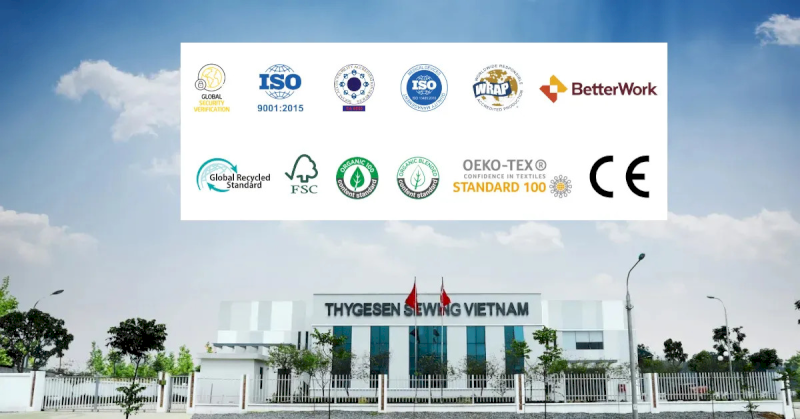
Certifications are equally important for the European market, ensuring that products meet recognized sustainability and ethical standards. Thygesen understands this shift and is proactively preparing our systems and processes, so that our partners can meet these evolving EU standards while maintaining full traceability and ethical practices throughout the supply chain.
5. How to Choose an Ethical Apparel Manufacturer
Finding the right production partner isn’t just about quality and price. Knowing how to identify an ethical and sustainable clothing manufacturer is key to building a responsible brand.
5.1. Look for Key Certifications for Fabrics and Ethical Practices
When evaluating a clothing manufacturer, checking for key certifications should always be the first step. These certifications are issued by independent organizations after inspections, covering not only factory working conditions but also fabric quality and environmental practices.
Certified factories must go through regular audits, ensuring workers are treated fairly, workplace conditions are safe, and fabrics meet chemical safety and sustainability requirements. Widely recognized certifications and programs include:
- GOTS (Global Organic Textile Standard): Organic materials and eco-friendly processing.
- OCS (Organic Content Standard): Verification of organic material content in products.
- GRS (Global Recycled Standard): Verification of recycled content and responsible production.
- OEKO-TEX® STANDARD 100: Fabrics tested for harmful substances.
- OEKO-TEX® STeP: Certification of environmentally friendly and socially responsible production facilities.
- FSC® Chain of Custody: Traceability for forest-based materials such as viscose.
- WRAP (Worldwide Responsible Accredited Production): Lawful, humane, and ethical production.
- SA8000: Social accountability and workplace conditions.
- BSCI (Business Social Compliance Initiative): Labor rights and workplace safety.
- GSV (Global Security Verification): Supply chain security and compliance.
- Better Work: A factory program that assesses and improves labor standards and working conditions.
- Higg FEM (Facility Environmental Module): A facility-level assessment of environmental performance such as energy, water, waste and chemicals.
- ZDHC MRSL: A list of restricted chemical substances for textile and apparel production.
- ISO 14001: Environmental management systems.
5.2. Ask About Sustainable Materials
A good partner should help you choose fabrics that match your product, budget and sustainability goals. Common options include organic cotton, recycled polyester, TENCEL™ lyocell and modal, bamboo viscose, and linen. Ask which certifications cover each fabric and whether the manufacturer can provide traceability documents. When looking to source eco-friendly options, partnering with experienced organic cotton clothing manufacturers can help your products meet recognized environmental standards.
Brands seeking specialized expertise in sleepwear can rely on a dedicated bamboo pajama manufacturer to combine comfort with sustainable production practices.
As a specialist legging manufacturer, Thygesen prioritizes advanced materials and innovative production techniques to ensure both performance and eco-friendliness. Explore how Thygesen supports brands in developing functional and sustainable leggings that meet strict international safety and environmental standards.
5.3. Understand MOQ, Pricing and Lead Time
Minimum order quantities (MOQs), pricing and lead times vary by manufacturer, product type and fabric. Certified or custom-developed fabrics may affect both MOQ and cost, so discuss these points early. For example, Essence Garment accepts orders from 100 pieces per style and color for sleepwear.
Ask each supplier for a clear quotation, the MOQ per style and color, sampling time, and bulk production time. A transparent manufacturer will explain what drives the price instead of giving vague numbers.
5.4. Follow a Clear Production Process
Working with a sustainable clothing manufacturer usually follows these steps:
- Brief and material selection: Share your design, target price and sustainability requirements, then agree on certified fabrics and trims.
- Tech pack and pattern making: The manufacturer reviews your tech pack and develops patterns and grading.
- Sampling and fitting: Samples are produced and adjusted until fit, quality and materials are approved.
- Bulk production: Cutting, sewing and finishing are carried out under the agreed standards.
- Quality control: Products are inspected before shipment. At Thygesen, we apply 100% end-line inspection with AQL 2.5 for final checks.
- Packing and delivery: Goods are packed and shipped with the related certification and traceability documents.
For brands looking to expand their ethical casualwear line, Thygesen stands as a capable hoodie manufacturer, offering flexible production capacity from startups to large corporations. Collaborating with Thygesen means gaining a long-term partner dedicated to delivering sustainable and high-quality apparel solutions tailored to specific brand requirements.
5.5. Factory Transparency and Open Communication
Transparency isn’t just about sharing factory addresses or posting certifications online, it also shows through how a manufacturer communicates during the process. From the first inquiry to discussing product development, pricing, lead times, and production details, ethical manufacturers are clear, honest, and responsive.
If a supplier answers questions openly, provides realistic timelines and transparent quotations, and doesn’t avoid sensitive topics like compliance or minimum order quantities, that’s a positive sign. On the other hand, vague answers, delays in communication, or promises that seem “too good to be true” could signal hidden issues.
Real transparency means both sides can have open discussions about expectations, limitations, and solutions from the very beginning, not just after problems arise.
5.6. Visit the Factory or Request a Virtual Tour
Whenever possible, visiting the factory in person is one of the most direct ways to verify ethical standards. A physical visit allows brands to see the actual working environment, check safety measures, and observe how workers are treated on the production floor, things that cannot be fully assessed through paperwork alone.
If traveling isn’t an option, requesting a virtual factory tour is a practical alternative. Many ethical manufacturers are willing to share videos, live calls, or updated factory photos showing their facilities, machinery, and workplace conditions. This level of openness helps confirm whether what’s written in certifications or emails reflects the reality on the ground.
6. FAQs About Sustainable Clothing Manufacturers
6.1. What is the difference between a sustainable and an ethical apparel manufacturer?
A sustainable manufacturer focuses on reducing environmental impact through responsible materials, water and energy savings, and chemical control. An ethical apparel manufacturer focuses on people through fair wages, safe conditions and no child or forced labor. A reliable partner combines both, which is why certifications often cover social and environmental standards together.
6.2. Which certifications should a sustainable clothing manufacturer have?
It depends on your product and market. For social compliance, look for SA8000, WRAP, BSCI or Better Work participation. For materials, look for GOTS, OCS, GRS and OEKO-TEX® STANDARD 100. For facility-level environmental performance, look for OEKO-TEX® STeP, Higg FEM verification or ISO 14001.
6.3. How can I verify a manufacturer’s sustainability claims?
Ask for valid certificates and check them with the issuing organization, read the company’s sustainability or impact report, check public lists such as Better Work participating factories, and visit the factory or request a virtual tour.
6.4. What MOQ should I expect?
MOQs vary by manufacturer, product and fabric. Some sleepwear manufacturers start from 100 pieces per style and color, while certified or custom fabrics may require higher quantities. Always confirm the MOQ per style and color before sampling.
6.5. Why choose Vietnam for sustainable clothing manufacturing?
Vietnam hosts many factories that take part in Better Work Vietnam, including facilities of several manufacturers in this list, such as Thygesen, Hung Long, TCE Denim, Pearl Global, Crystal International and Makalot. Saitex is also based in Vietnam. This gives brands access to certified production partners across activewear, outerwear, denim and more.
In conclusion, choosing an ethical apparel manufacturer is key to building a responsible brand. Certifications, measurable environmental action, fair labor conditions, and transparent communication are the main factors to consider when comparing any sustainable clothing manufacturer. At Thygesen Textile Vietnam, these values are at the core of how we work. For collaboration, visit thygesenapparel.com or contact us at sale@thygesen.com.vn.