Wondering what cut and sew manufacturing is? This process involves carefully cutting fabric and sewing it step-by-step to create finished garments. Below, Thygesen Vietnam will explain the definition and detailed steps of cut and sew manufacturing.
1. What Is Cut and Sew Manufacturing?
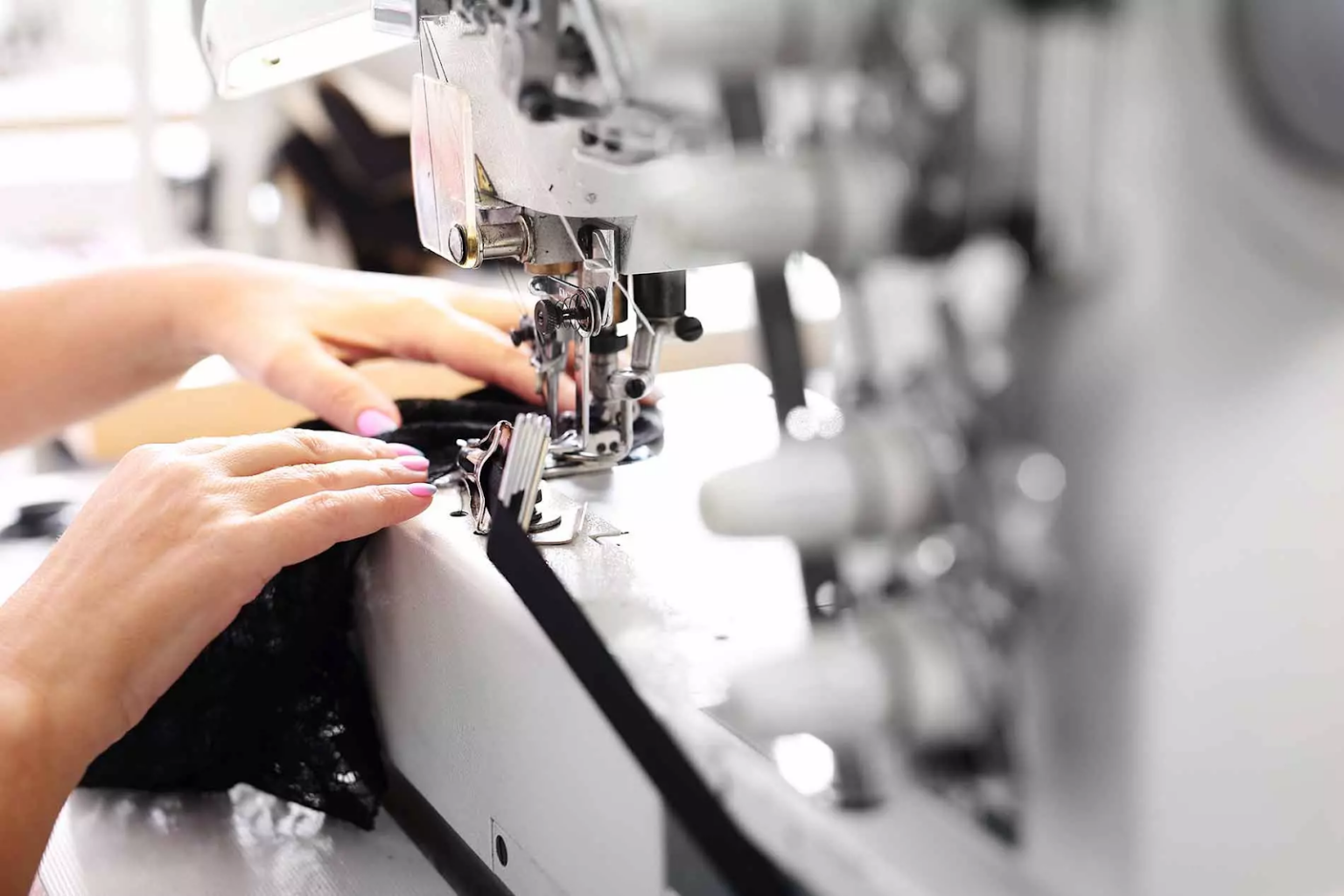
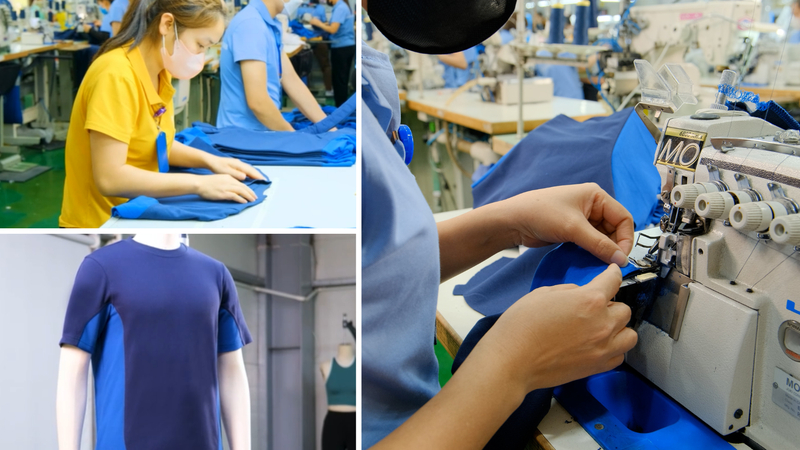
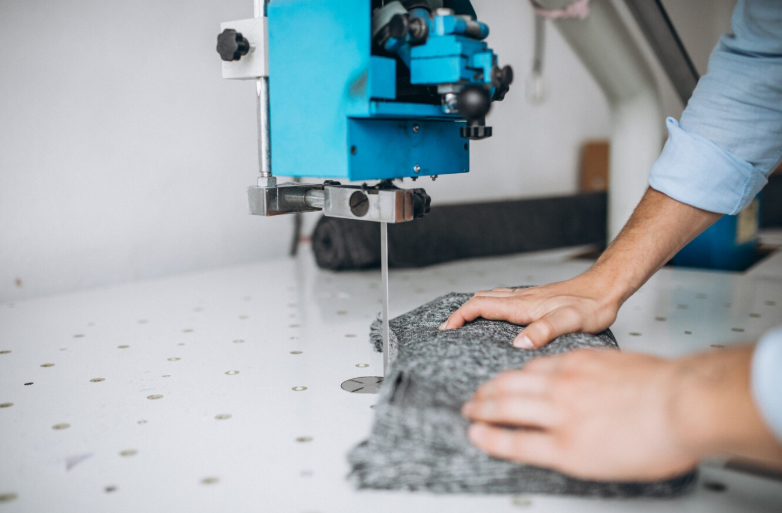
Cut and sew manufacturing is one of the garment production processes where fabric is first cut into specific shapes or patterns. After that, these fabric pieces are carefully sewn together step-by-step to create the final clothing item.
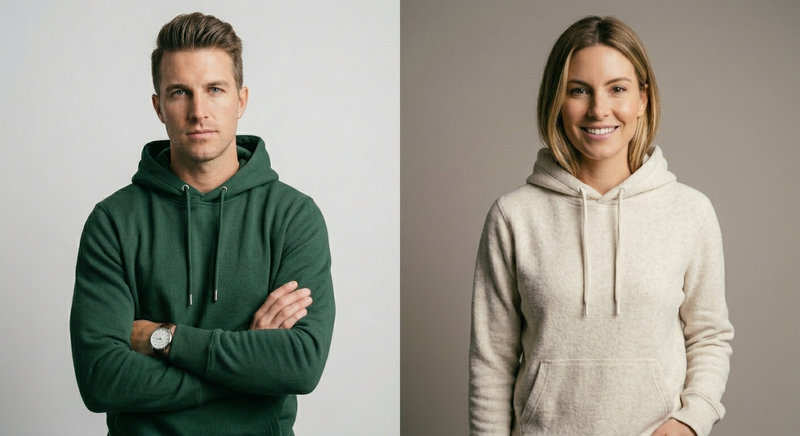
For example, when making a hoodie, the fabric is cut into separate parts like sleeves, front and back panels, and the hood. Then, these parts are sewn together, followed by attaching accessories such as zippers or drawstrings to complete the hoodie.
A cut and sew manufacturer specializes in this process. They handle the entire workflow of cutting fabric into pattern pieces and sewing them together to produce garments or products based on the client’s specifications.
Unlike a full package clothing manufacturers, which cover the entire production process, from sourcing raw materials and trims to cutting, sewing, finishing, and packaging, cut and sew manufacturers focus mainly on the cutting and sewing stages.
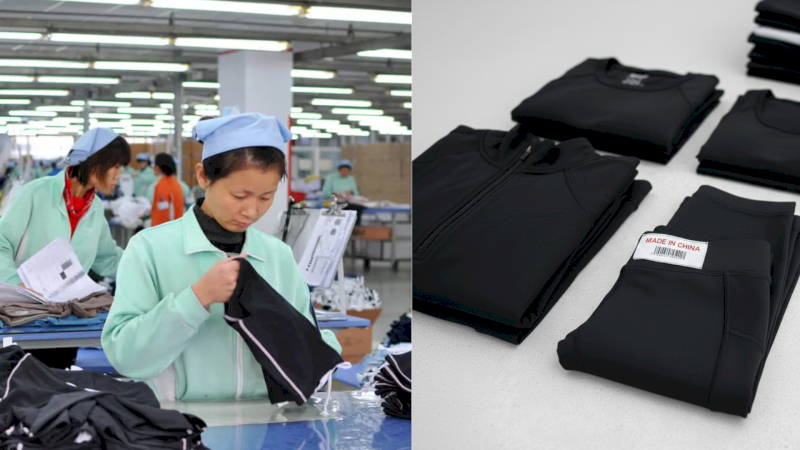
Full package manufacturing is a more comprehensive solution, often chosen by brands that prefer a single partner to manage the entire production process from start to finish. This is a common model for many large-scale china clothing manufacturer operations. In contrast, cut and sew manufacturing is ideal for brands that want more control over specific steps, especially the cutting and sewing process, or those who already source their fabrics and materials.
Looking for a reliable hoodie manufacturer that can handle precise cut and sew production based on your designs? Thygesen delivers expert sewing quality and flexible manufacturing solutions for global brands.
2. Fashion Brand and Cut and Sew Manufacturer: Key Responsibilities
In the apparel production process, responsibilities are shared between the fashion brand and the manufacturer. Here’s a breakdown of who handles what at each stage:
Step 1: Design Development
Design development is typically initiated by the fashion brand and includes defining the product concept, target customer, intended use, and price positioning. At this stage, the design does not need to be fully technical, but it should clearly communicate the brand’s vision and functional goals. The manufacturer then reviews construction complexity, potential production risks, and cost implications, helping brands refine designs so they are suitable for scalable, long-term production.
Step 2: Fabric Selection
Fabric selection plays a critical role in determining comfort, durability, and overall product performance. Brands usually specify desired hand-feel, weight, stretch, and sustainability requirements, while manufacturers validate whether those materials are suitable for production and intended use. Manufacturers support this process by recommending fabrics that have been tested in real production conditions and sourcing them for brands
Step 3: Trims and Assessments
Trims and accessories, including elastics, drawstrings, buttons, zippers, labels, and packaging, have a direct impact on durability and perceived quality. While brands define the visual and branding direction, manufacturers ensure compatibility, functionality, and long-term performance. Trims are carefully sourced or received from brands and then, evaluated for strength, elasticity, wash resistance, and skin comfort. Components such as waist elastics, zippers, and labels are selected to match the fabric and garment purpose, reducing the risk of early wear or discomfort.
Step 4: Pattern Making
Pattern making translates design intent into technical reality. A well-engineered pattern is essential for achieving correct fit, comfort, and consistency in mass production. This step is primarily managed by the manufacturer.
Step 5: Sample Making
Sample development is where the design is physically tested and validated. Brands review samples for fit, comfort, aesthetics, and brand alignment, while manufacturers assess construction stability and production feasibility. Samples should be treated as technical validation tools, not just visual references. Each sample is evaluated for seam durability, stretch recovery, wash performance, and real-wear comfort, helping identify and resolve issues before bulk production begins.
Step 6: Fabric Cutting
Once samples are approved, fabric cutting begins based on finalized patterns. Accuracy at this stage is critical, as cutting errors can lead to fit inconsistencies and unnecessary material waste.
Step 7: Sewing Assembly
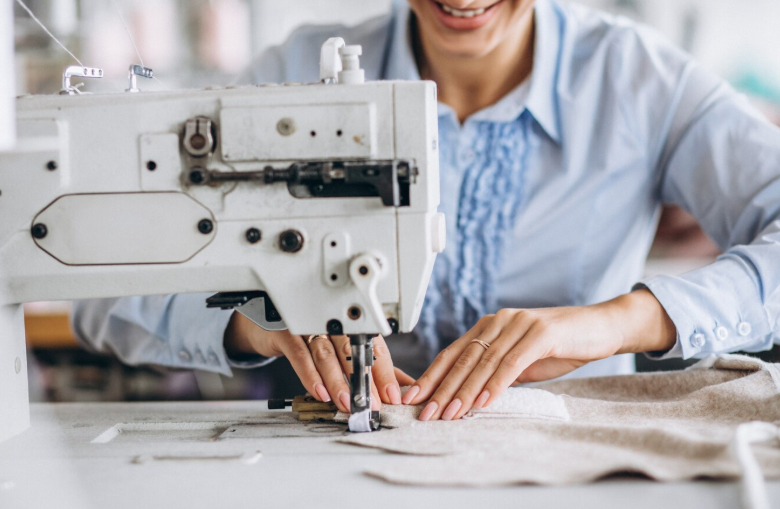
Sewing assembly brings all garment components together. Stitch quality, seam tension, and assembly sequence directly affect durability, comfort, and visual consistency. Sewing processes need to be standardized through clear SOPs and specialized training. Production lines are organized by product type, helping maintain stable quality and minimize variation across large production volumes.
Step 8: Quality Control
Quality control is an ongoing process, not a final checkpoint. Issues identified early are easier and less costly to correct than those discovered after production is complete. The manufacturer should integrate quality checks throughout production, from in-line inspections to final audits using AQL standards. Third-party inspections are also welcomed, providing brands with additional confidence before shipment.
Step 9: Packing
Packing is the final stage of production and plays an important role in brand presentation and product protection. Packaging requirements vary depending on brand positioning, distribution channels, and logistics needs.
| Step | Fashion Brand | Cut and Sew Manufacturer |
| Design Development | Provides tech packs, sketches, reference images, and specifications | Reviews designs, gives feedback on feasibility |
| Fabric Selection | Chooses and sources fabric | May assist in sourcing or receiving fabric from the brand |
| Trims & Accessories | Provides trims and accessories (e.g., labels, buttons, threads), or requests sourcing | May assist in sourcing; otherwise, uses trims provided by the fashion brand |
| Pattern Making | May provide patterns or request development | Develops patterns based on the tech pack |
| Sample Making | Reviews and approves samples | Creates prototypes for approval |
| Fabric Cutting | Oversees the accuracy of cut layout (optional) | Cuts fabric based on finalized patterns |
| Sewing/Assembly | Ensures alignment with brand quality (optional) | Assembles garments as per specifications |
| Quality Control | Approves the finished product | Conducts in-line and final inspections |
| Packing | Provides packaging instructions | Packs garments according to brand requirements |
3. Advantages & Disadvantages of Working with A Cut and Sew Manufacturer
Choosing to work with a cut and sew manufacturer can bring some benefits, but it also comes with certain limitations. Below are some key advantages and disadvantages to consider:
3.1. Advantages
Since cut and sew manufacturers focus specifically on cutting and sewing, they are ideal for brands that already have strong and established sourcing networks for fabrics and trims or want greater control over materials and construction. Below are more benefits of working with a cut and sew manufacturer that you need to know:
- A great option for smaller or growing brands: Cut and sew works well for brands that want distinctive designs, capsule drops, or limited collections without relying on generic blanks.
- Better cost efficiency for small production runs: Because brands usually source their own fabrics and trims, they can control material choices and avoid unnecessary markups, which helps optimize budgets.
- Stronger control over highly customized products: The flexibility of cut and sew makes it easier to manage niche designs, special features, or unique silhouettes while keeping costs predictable.
- Ability to adjust quickly during production: Since workflows are more focused than full-package manufacturing, cut and sew teams can often accommodate design tweaks or pattern changes faster.
Shorter sampling and revision cycles: Modifications can be made directly on patterns or samples, helping reduce lead times and avoid delays before bulk production.
Beyond these general benefits, understanding the unique Benefits of Working with Domestic Clothing Manufacturer can further refine your production strategy, offering advantages like faster communication, quicker turnaround times, and reduced shipping costs.
3.2. Disadvantages
Cut and sew gives you control and flexibility – but that control comes with real responsibilities. Here are the key challenges to consider before committing to this model:
- You’re responsible for sourcing materials yourself: Unlike full-package manufacturing, cut and sew manufacturers typically don’t source fabrics, trims, or accessories for you. Brands without an existing supplier network may find this process time-consuming and difficult to manage, especially when coordinating with an overseas factory.
- Finding the right manufacturer takes time: Not every factory can handle every garment type. Finding one that fits your product category, quality standards, and budget requires significant research and vetting – and many brands go through several factories before landing on the right one.
- You need a solid tech pack before anything can start: Cut and sew factories work from technical specifications. Without a clear tech pack, miscommunication is almost inevitable – leading to bad samples, wasted revision rounds, and delayed timelines.
- Sampling costs add up quickly: Most products require 2–3 rounds of samples before bulk production is approved. Each round takes time and money, and if revisions are needed, that cycle repeats – which can strain budgets for newer brands.
- Minimum order quantities (MOQs) can be a barrier: Many cut and sew manufacturers require a minimum of 300–500 units per style. For brands testing a new product or launching a small capsule collection, hitting that MOQ isn’t always feasible.
- Coordinating multiple parties increases complexity: When you’re managing fabric suppliers, trim suppliers, and the manufacturer separately, there are more moving parts – and more opportunities for delays or miscommunication that can push back your entire production timeline.
If you don’t want to do it all by yourself, a better option is to work with a full-package manufacturer.
4. What Products Are Commonly Made Using the Cut and Sew Process?
Cut and sew manufacturing is commonly used to produce a wide range of apparel and textile products. Instead of printing on pre-made garments, the fabric is first cut into individual pattern pieces and then sewn together to create the final product.
Common examples of cut and sew garments include t-shirts, hoodies, sweatshirts, dresses, jackets, polo shirts, leggings, and knitwear. More structured garments such as blazers, suits, and outerwear are also typically produced using this method because it allows for greater control over fit, construction, and design details.
For example, a cut and sew hoodie is made by cutting separate fabric pieces for the sleeves, body panels, pockets, and hood. These pieces are then assembled and sewn together to create the finished garment. The same process applies to many other clothing items, allowing brands to customize fabric selection, garment construction, sizing, and label placement.
Because of its flexibility and customization options, cut and sew manufacturing is widely used by fashion brands, independent designers, and private label clothing businesses looking to create unique, high-quality products.
5. Top 10 Cut and Sew Manufacturers That Are Best to Work With
It’s important to note that while many full-package manufacturers include cut & sew as part of their service, the reverse – finding cut & sew specialists that can also handle full-package production if needed is much less common. That’s why this list includes both types of partners to give you more flexible options.
>>> When searching for partners, brands are often keen to find the best high quality custom clothing manufacturers to ensure their products meet specific standards and stand out in the market.
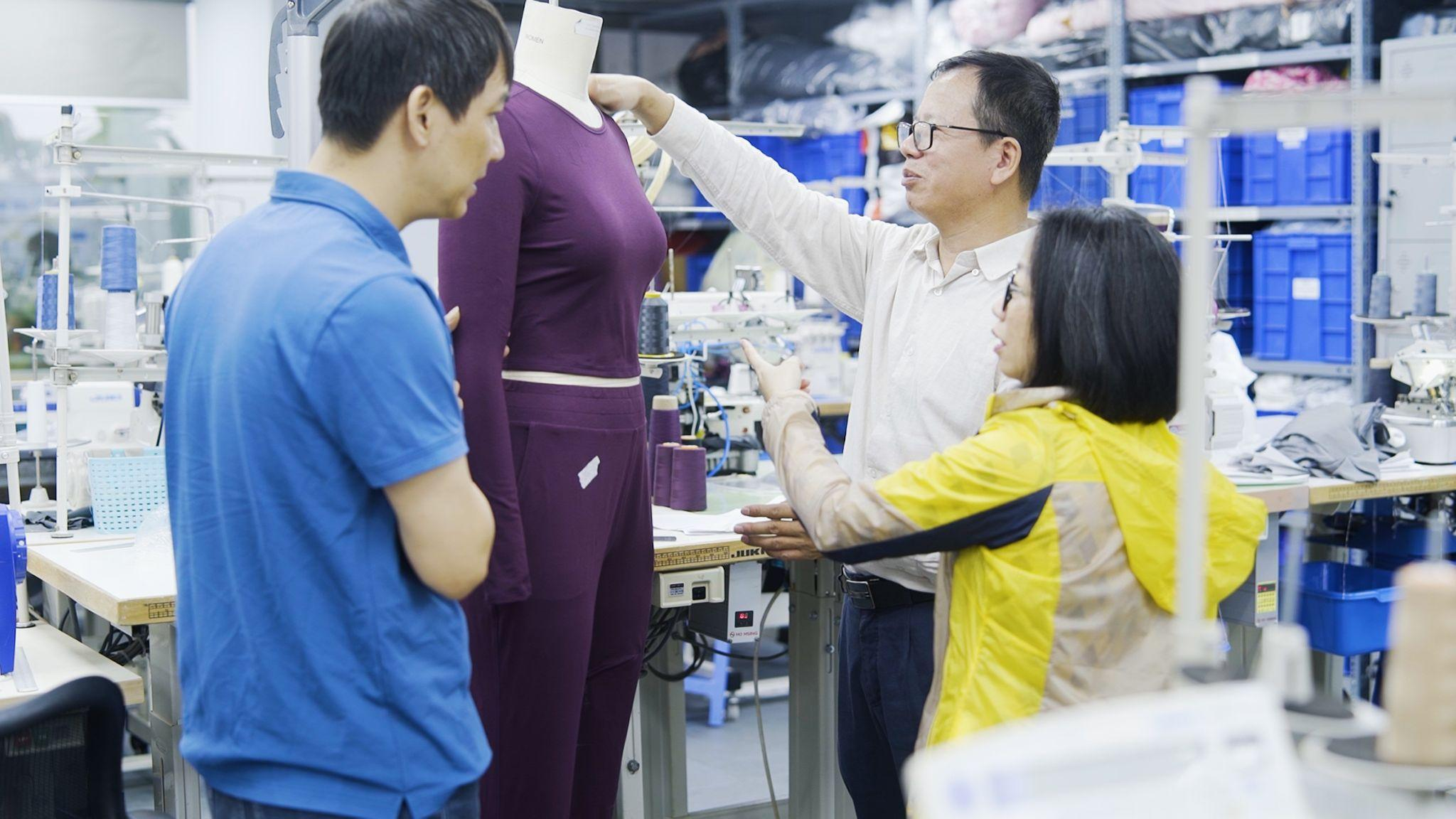
5.1. Thygesen Textile Vietnam
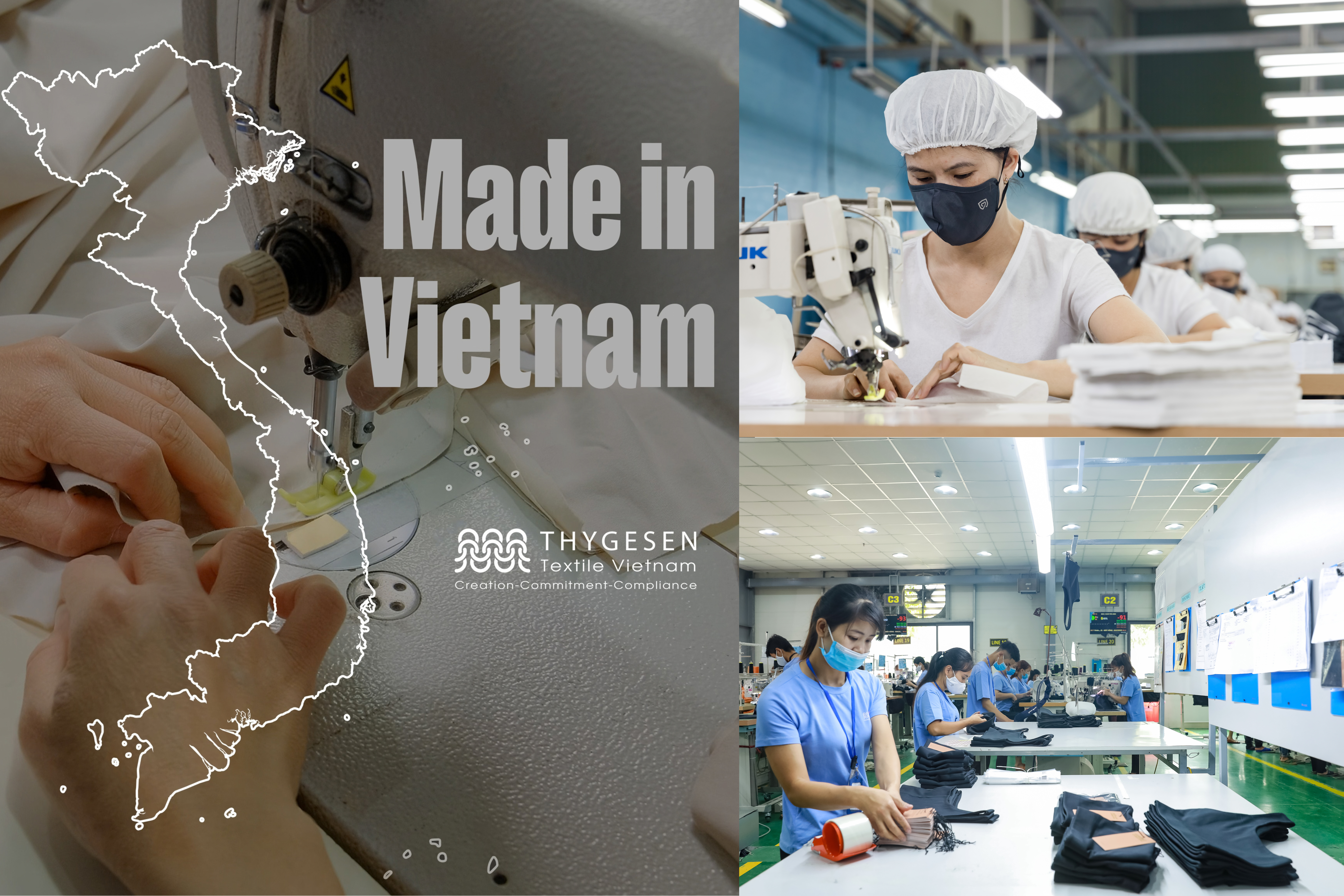
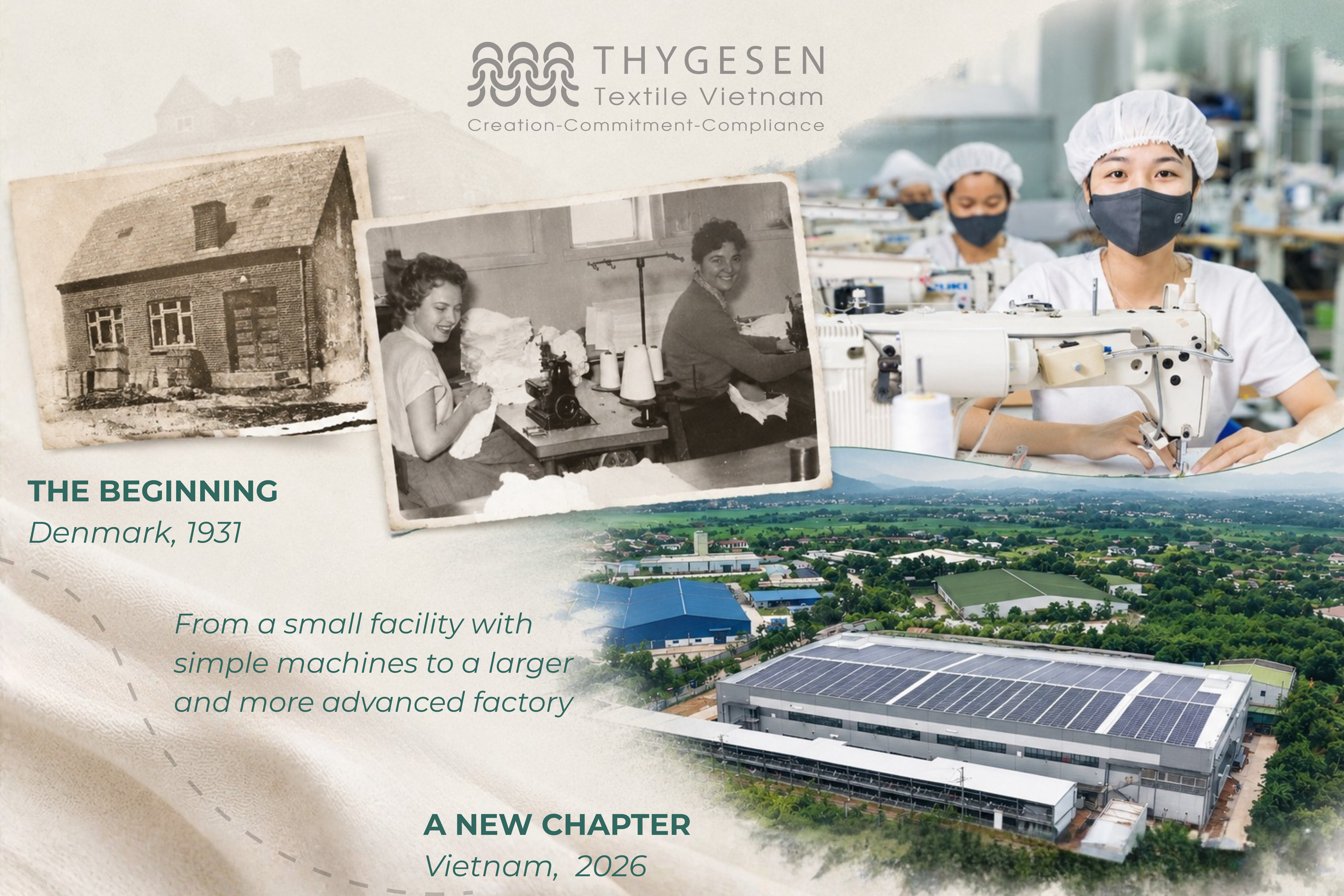
Thygesen stands out as an ethical full-package clothing manufacturer, providing a comprehensive range of services from design consultation, material sourcing to bulk production and shipping. With 90 years of expertise in the textile industry, we serve top global brands including Tommy Hilfiger, DKNY, Calvin Klein, Fjällräven, Girlfriend Collective, Ninepine, and Boody..
5.1.1. Production Flexibility
Thygesen is able to support both full-package manufacturing, from fabric sourcing and development to finished products and cut & sew services only, depending on the volume and type of product you require.
To help us provide the most suitable and cost-effective solution for your needs, we highly recommend that you share your project details as thoroughly as possible, including product specifications, brand information, and expected order quantity. With this information, our team can tailor a flexible production plan that best aligns with both your manufacturing goals and budget. For reference, our standard minimum order quantity (MOQ) to ensure optimal production efficiency is around 3,000 pieces per style.
5.1.2. Diverse Range of Products
Thygesen Textile Vietnam offers a broad and versatile product portfolio, covering categories such as activewear, underwear, kidswear, workwear, and fashion basics. As a leading athletic clothing manufacturer, we have deep expertise in performance fabrics and construction. We are also a trusted t-shirt manufacturer and a specialized seamless legging manufacturer, enabling us to support brands with diverse product needs, from technical performance garments to everyday essentials, all under one trusted manufacturing partner.
5.1.3. Full Customization
At Thygesen, we provide full customization to help brands bring their unique vision to life. From fabric development and garment design to prints, embroidery, packaging, and hang tag labeling, every stage of the production process can be tailored to your specific requirements.
Whether it’s choosing the right materials, perfecting the fit, or adding distinctive design details, we enable you to create products that truly reflect your brand identity and stand out in the market.
More importantly, having all these capabilities under one roof helps simplify your development process, shorten lead times, and reduce costs, while ensuring smooth coordination from concept to final delivery, making the entire production journey as efficient and hassle-free as possible
5.2. Shahi Exports
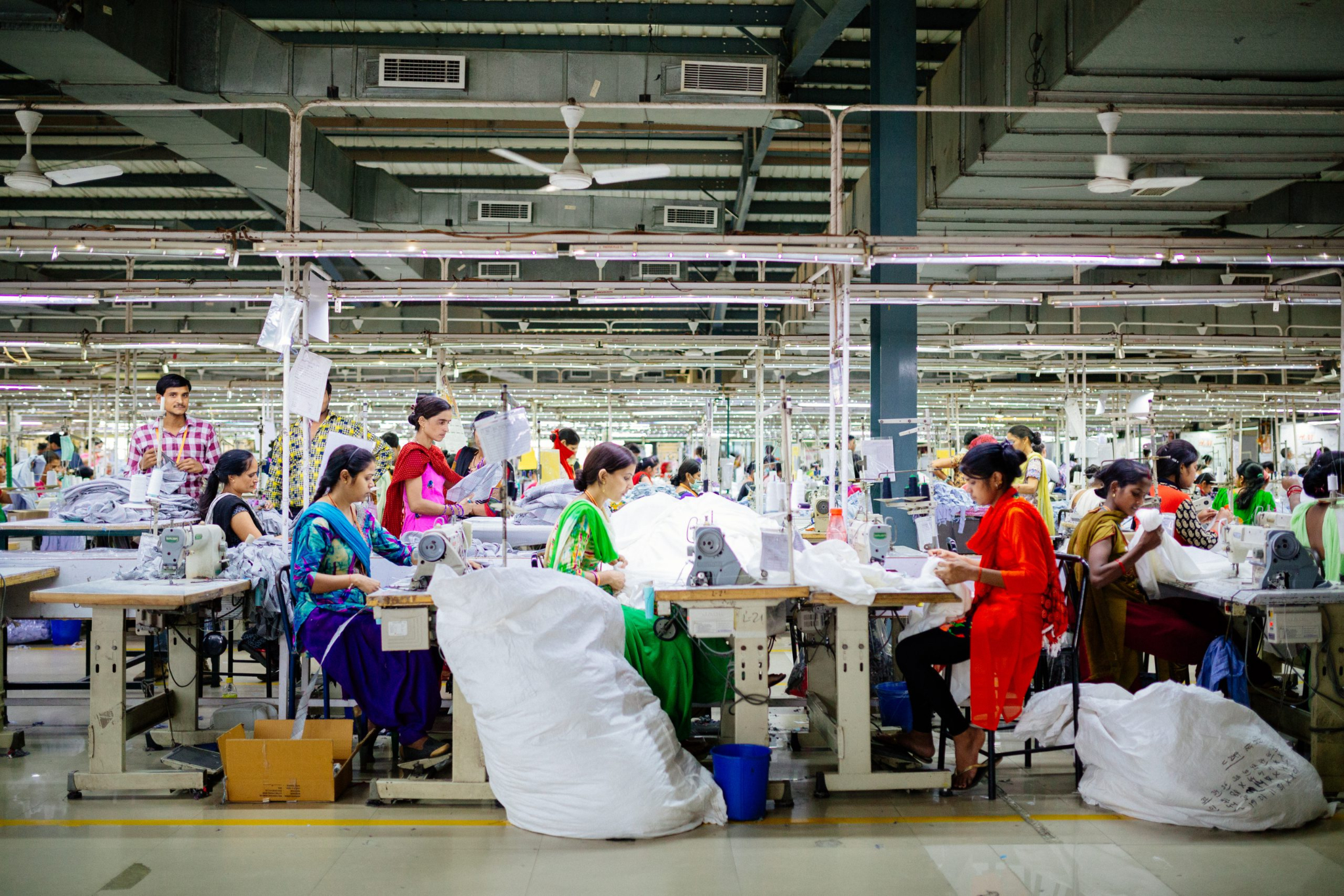
Shahi Exports stands as India’s largest apparel manufacturer and exporter, offering a complete and seamless Full-Package Service solution for global fashion brands. Shahi’s core differentiator lies in its unique vertically-integrated capability, which allows the company to maintain control over the entire supply chain from Spinning, Weaving, and Processing (Dyeing and Finishing) to Design and Garment Manufacturing.
5.3. Billoomi Fashion
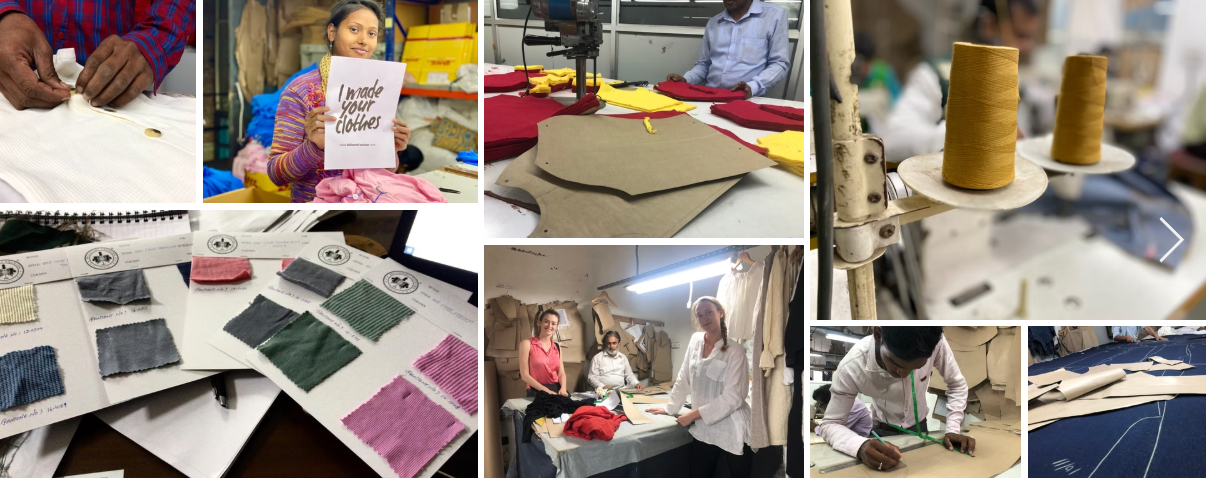
Billoomi Fashion is an apparel manufacturer based in India, renowned for its dedicated support for startups and emerging fashion labels, particularly through its specialized cut and sew services.
Clients can supply their own input materials (fabric, patterns, and trims), and Billoomi will precisely handle the bulk cutting, sewing, finishing, and packing according to the approved samples with unmatched accuracy.
5.4. SiATEX
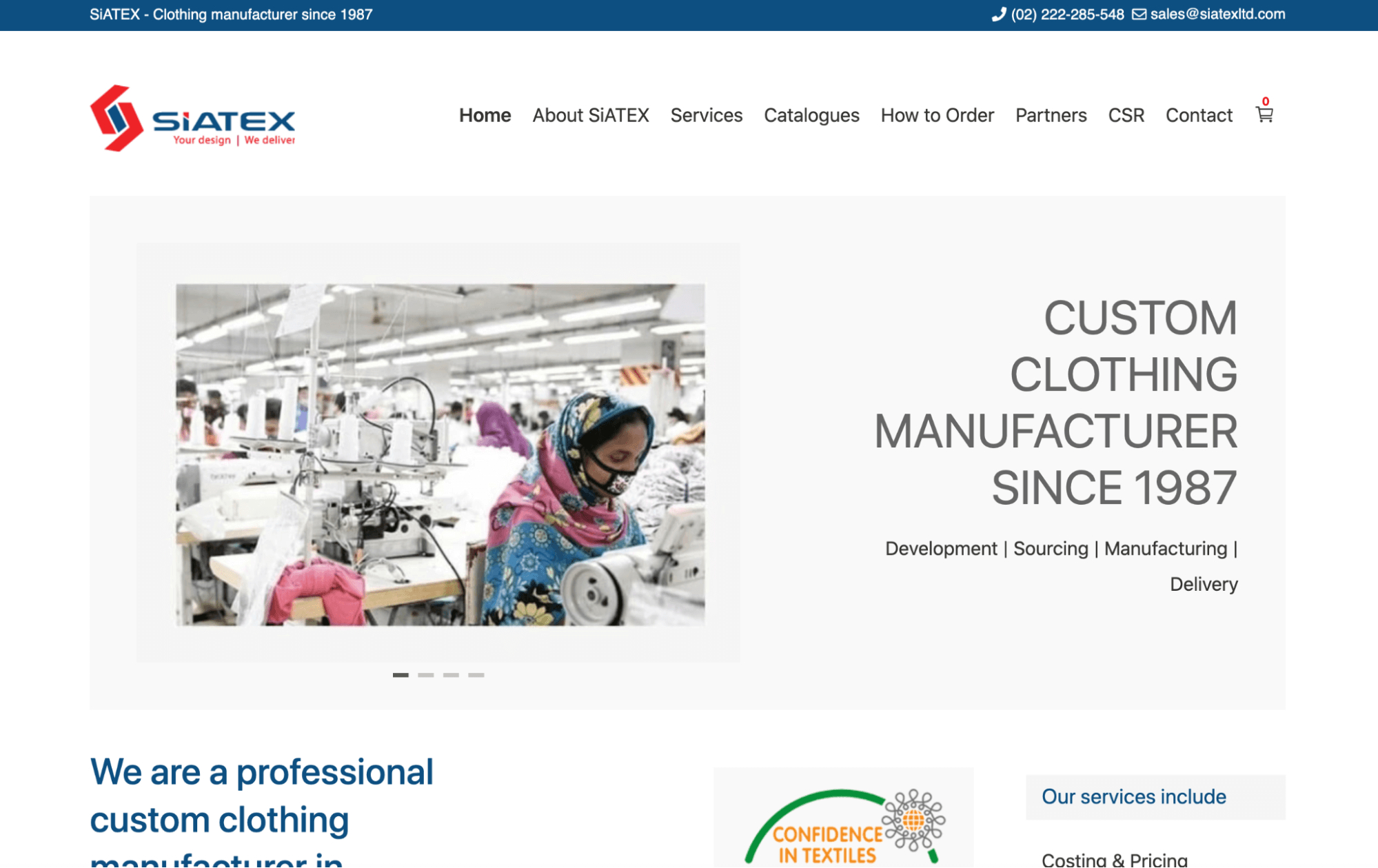
SiATEX is a full-package Original Equipment Manufacturer (OEM) clothing manufacturer based in Bangladesh, with operations since 1987. They are a major supplier of custom garments to brands across America, Europe, and the Middle East.
SiATEX is a full-service partner that handles every step of the process, which includes design, development, sourcing, bulk production, and export. They specialize in manufacturing a diverse range of categories, including men’s, women’s, and kids’ wear, such as T-shirts, polo shirts, hoodies, knitwear, trousers, jeans, workwear, uniforms, and sleepwear.
5.5. LP Garments
LP Garments is an ethical, family-owned clothing manufacturer in Melbourne, Australia, specializing in small-batch production for emerging fashion brands. They provide a comprehensive, tailored service to bring garment ideas to life locally, with an exceptionally low Minimum Order Quantity (MOQ) of just 5 items per style variation.
Their services cover Cut/Make/Trim (CMT) precision sewing, full sampling & pattern Making, and essential value-added services such as DTF printing, custom labeling, packaging, and fabric sourcing assistance.
5.6. Contrado
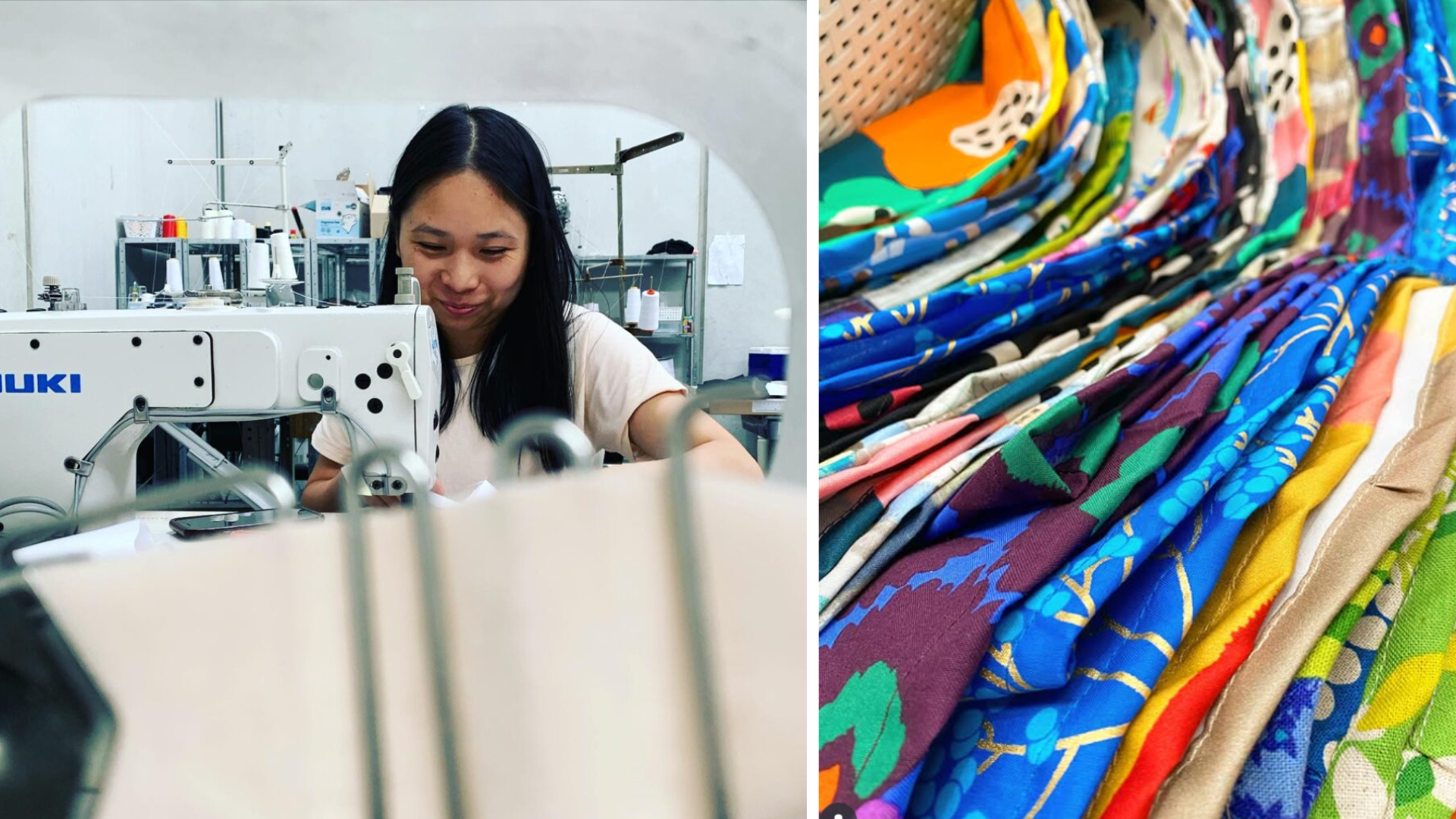
Contrado is a global cut & sew manufacturer specializing in high-quality print-on-demand (POD) and wholesale production based in London. They allow brands to launch anything from a single test design to a full collection with no minimum order. Known for their state-of-the-art digital printing and handmade quality, Contrado offers a wide range of apparel, accessories, and homeware that can be customized with original artwork using techniques like sublimation, reactive, and pigment printing. All products are produced on a white-label basis, with no Contrado branding included. Most apparel and accessory items can also be customized with your own labels and branding, helping you create a fully personalized brand experience.
5.7. AEL Apparel
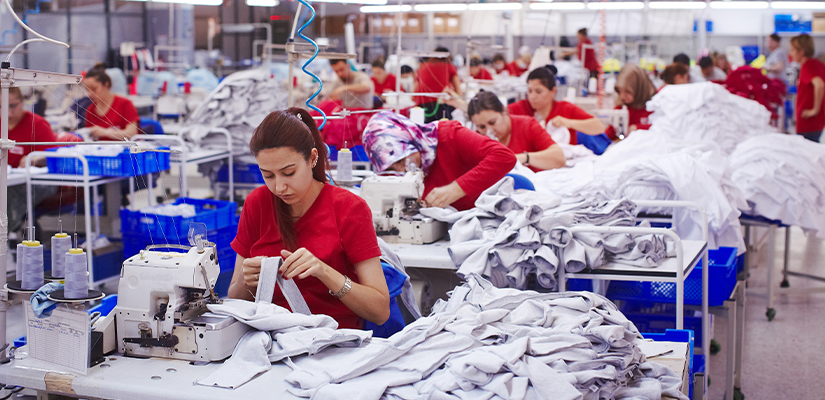
AEL Apparel is a custom clothing manufacturer, based in China, that offers a full-package, end-to-end production solution for fashion brands, from startups to established businesses. They emphasize sustainability by using ethically sourced and recycled materials, and prioritize fast turnaround times (7–20 days, or as fast as 3 days for urgent requests). Their expertise makes them a strong partner for brands looking for reliable legging manufacturers that can handle complex prints and embroidery.
AEL provides a simple, six-step manufacturing process that supports low Minimum Order Quantities (MOQs), full customization, and advanced techniques like screen printing, embroidery, and sublimation across a wide range of apparel, including activewear, denim, and loungewear.
5.8. Stylus Apparel
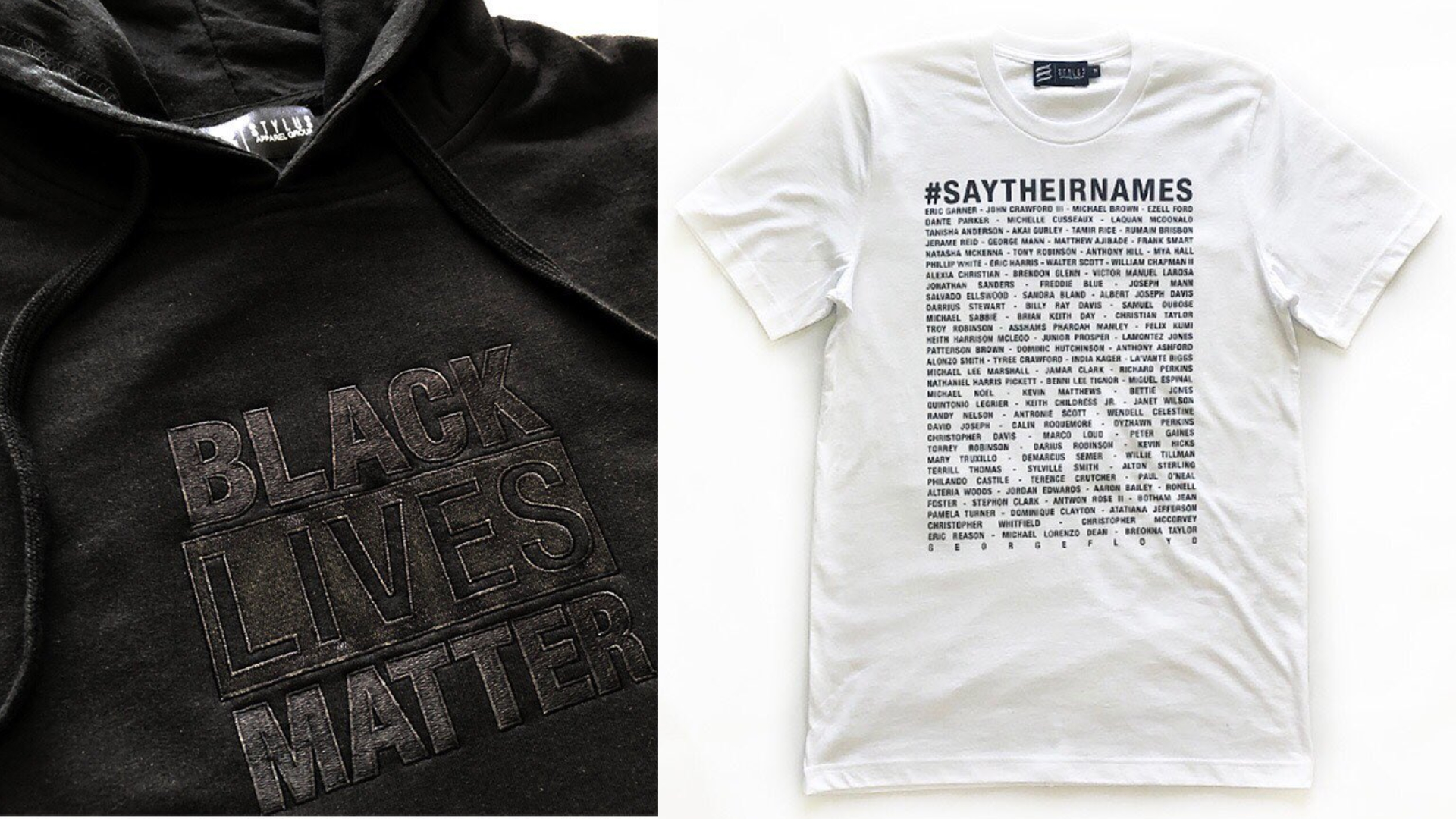
Stylus Apparel is a full-service apparel manufacturer based in the USA. They offer a complete, one-stop solution for clothing lines handling every step in-house. Their core services include custom cut & sew development and production, alongside a wide range of decoration options such as screen printing, embroidery, and sublimation. Stylus Apparel emphasizes American labor, high quality, and a commitment to handling the entire process, from design concept and sampling through to final distribution.
5.9. The Evans Group
The Evans Group (TEG) is a Los Angeles-based fashion development and production house that offers a premium, vertically integrated, full-service experience. TEG provides a complete process, often with no mandatory minimum orders for new designers, covering everything from design, fabric sourcing, and pattern-making to sample development, small-volume production, and even fashion mentorship.
5.10. LA Fashion Source
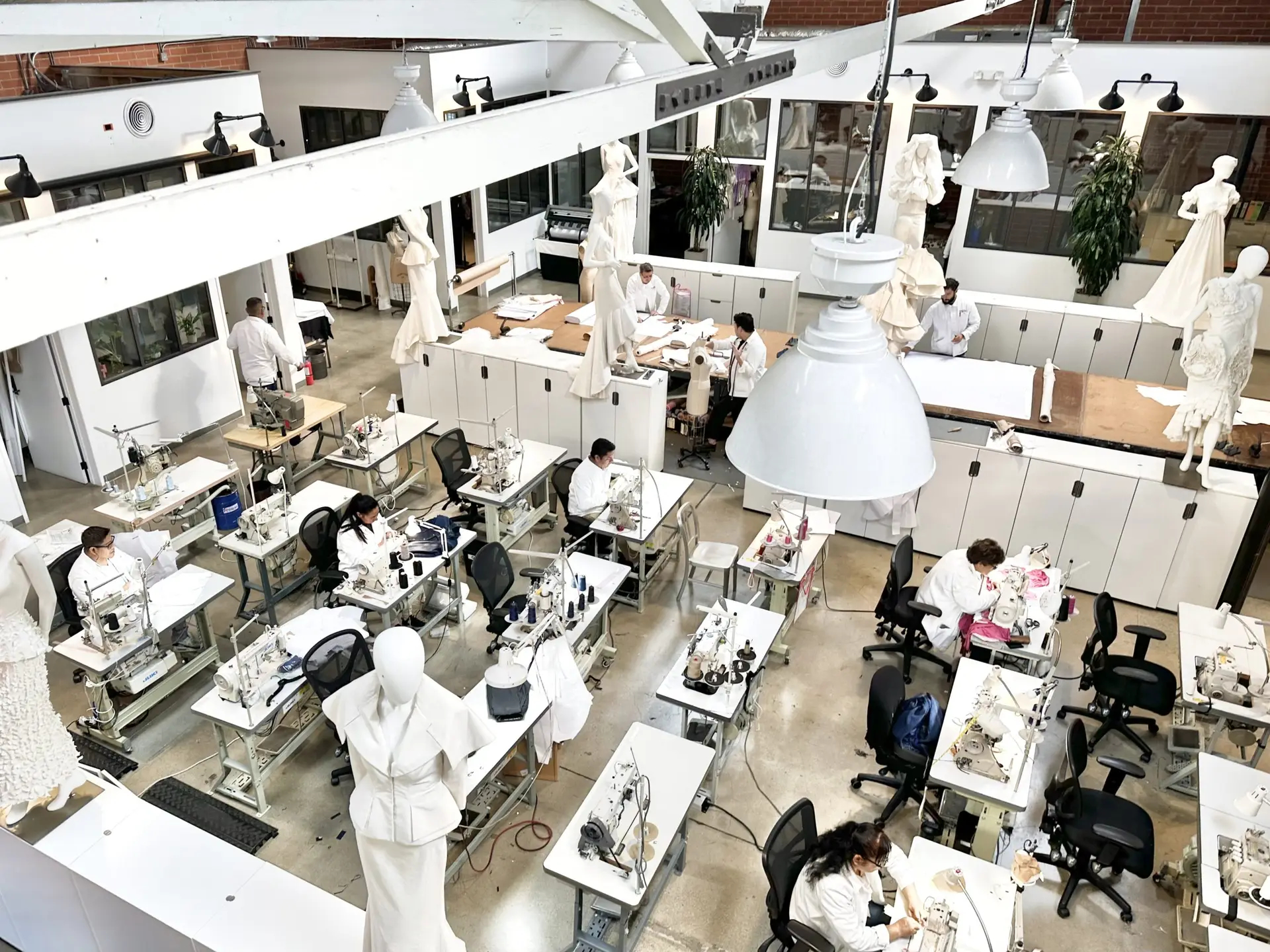
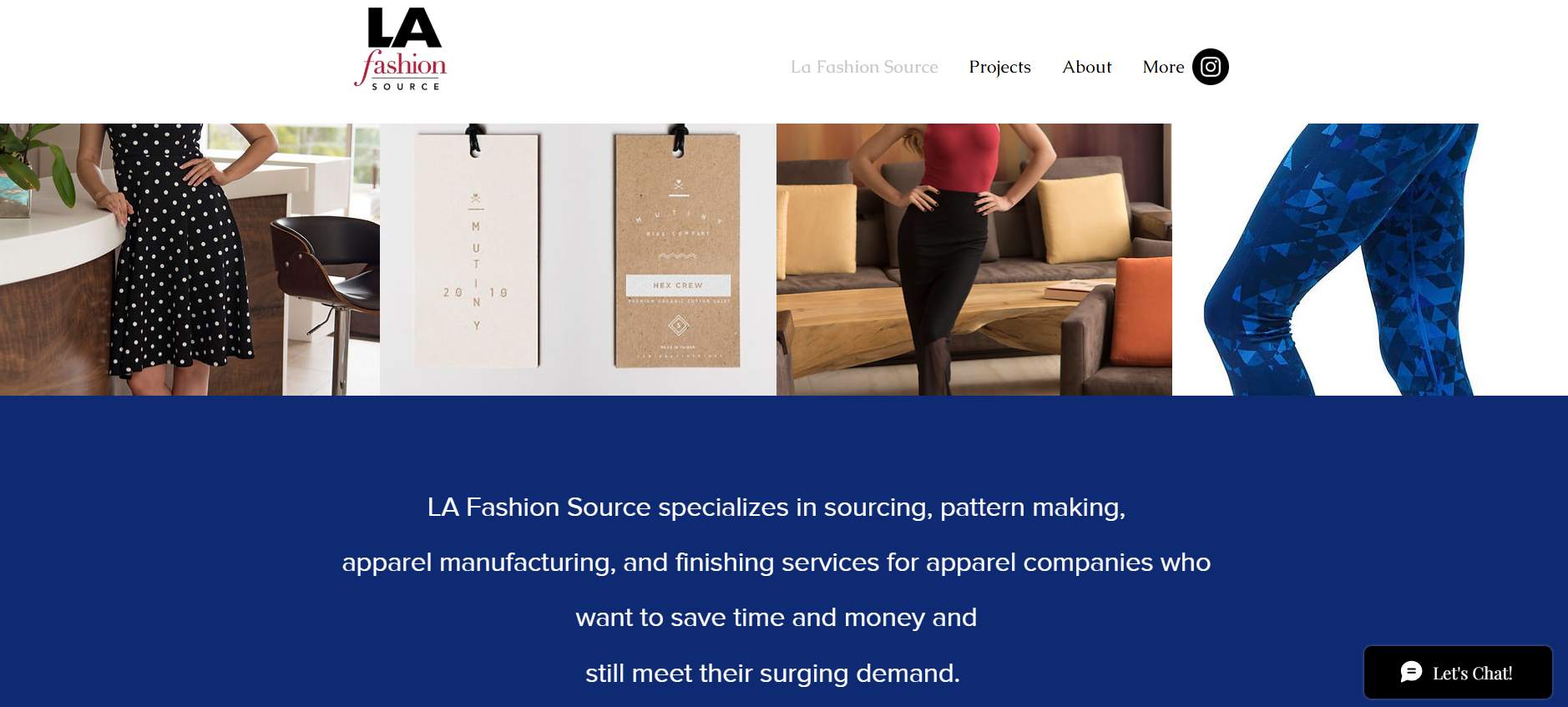
LA Fashion Source is a full-service apparel manufacturing company based in Los Angeles. They offer a complete process across developmental (design, sourcing, pattern, and sample making) and production (grading, cut & sew garment making, and finishing) phases. The company specializes in handling projects for high-volume quantities at affordable prices, utilizing a local network of professionals in LA and trusted overseas factories in Mexico and China for production.
6. 4 Important Tips to Work with A Cut and Sew Manufacturer
Here’s a quick guide to help you navigate a successful partnership with a cut & sew manufacturer:
- Experience and Expertise: Choose a manufacturer with a proven track record in producing the type of products you need. Review their portfolio and client list to evaluate quality and reliability.
- Communication: Work with a partner who is fluent in your language or at least English and transparent in their updates. Clear communication helps prevent misunderstandings, ensures timelines are met, and keeps you informed throughout the production process.
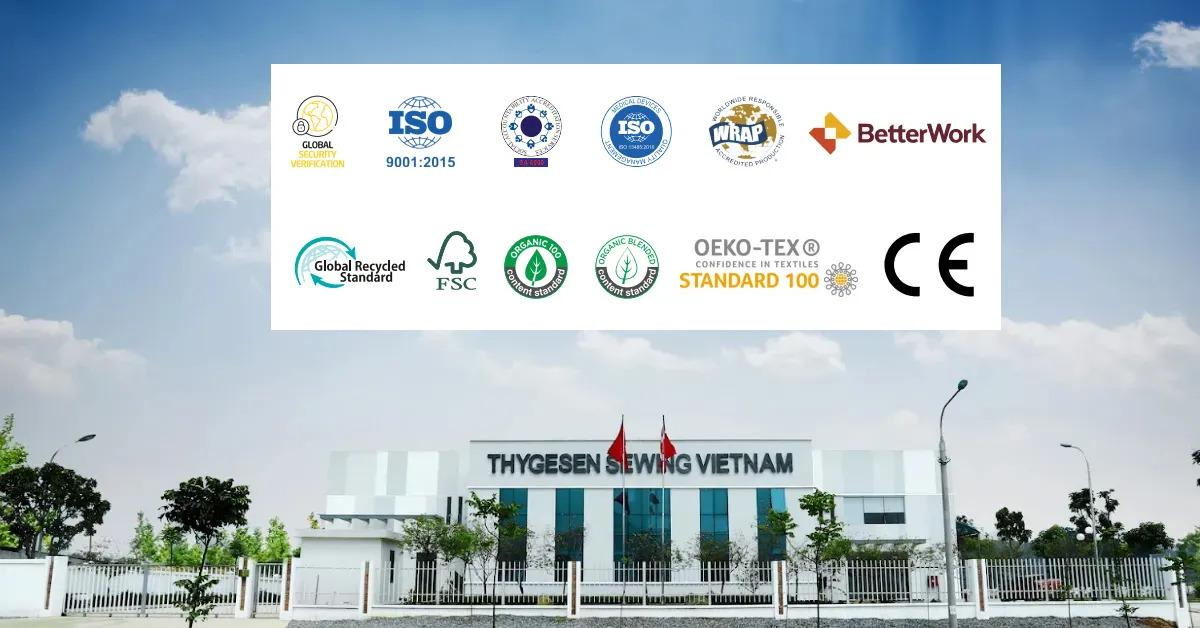
- Certifications: If sustainability or ethical production matters to your brand, look for manufacturers with relevant certifications such as GOTS, WRAP, SA800, or OEKO-TEX. These certifications guarantee responsible sourcing, safe materials, and compliance with environmental and labor standards.
- Request Samples: Always request a pre-production sample before placing a bulk order. Clothing manufacturers can offer a ready sample from the existing product range that closely matches your design in style and material, or develop new samples specifically for your project
7. How To Choose The Right Cut And Sew Manufacturer
Choosing the right cut-and-sew manufacturer goes beyond comparing prices or lead times. The right partner should understand your specific product category, support you technically throughout development, and communicate clearly at every stage of production.
- Check their experience with your product category: A factory that regularly makes leggings, hoodies, pajamas, or activewear will understand the technical details, common issues, and construction standards required.
- Review pattern-making and grading capabilities: A strong cut-and-sew partner should support pattern development, sample corrections, and size grading – not just stitching.
- Ask for sample quality: Request development samples to evaluate seams, stitching density, finishing, comfort, and whether the garment holds its shape after washing.
- Evaluate communication and technical support: Choose teams that clearly explain specs, ask questions, and provide feedback rather than only following instructions blindly.
- Understand their MOQ and flexibility: Make sure minimum order quantities align with your stage of growth, and ask how flexible they are with small or trial runs.
- Check sourcing support (if needed): Even if you supply fabrics and trims, it helps if the manufacturer can recommend alternatives, test fabrics, or flag quality concerns.
- Review production lead times: Confirm realistic timelines for sampling, revisions, and bulk production then ask how they handle urgent changes or delays.
- Look for transparent costing: You should clearly see how labor, cutting, sewing, finishing, and any additional services are priced so you can manage margins.
- Assess quality control processes: Ask how they check defects during cutting, sewing, and finishing – not only at the final inspection stage.
- Check references or previous work: Case studies, brand logos, or client references help verify reliability, consistency, and professionalism.
- Clarify IP and confidentiality: Make sure they protect your patterns, tech packs, and designs, especially if your products are highly customized
Understanding how to get a custom clothing manufacturer that aligns with your brand’s vision and quality standards is crucial for successful apparel production. In conclusion, cut and sew manufacturing is especially suitable for brands that already have strong and reliable supply chains for fabrics and trims. For those seeking a more comprehensive solution, Thygesen is your trusted apparel manufacturing partner. Send us an inquiry at sale@thygesen.com.vn or visit our website: thygesenapparel.com for more details.