The European Union’s Circular Economy Action Plan (CEAP) is a mandatory, sector-wide overhaul of how textiles are designed, produced, and managed. For apparel brands in the UK and EU markets, this is the most critical regulatory change happening now. This guide breaks down the core elements of the mandate, details the risks of non-compliance, and highlights the strategic advantages for brands that partner with manufacturers already prepared for a circular future.
1. The Policy Framework: Core Regulations You Must Know – A Deep Dive
The Circular Economy Mandate (CEM) is a coordinated legal tsunami. Understanding these three interconnected legislative drivers is essential for immediate risk mitigation and long-term business planning.
1.1. The Ecodesign for Sustainable Products Regulation (ESPR): Shifting the Design Paradigm
ESPR is the foundational rule. It empowers the European Commission to set specific performance requirements for products. Unlike previous voluntary guidelines, ESPR will introduce legally binding standards for textiles, focusing on:
- Mandatory Durability Metrics: Future standards will likely require manufacturers to publicly disclose and guarantee minimum product lifespans, measured through abrasion resistance tests, colorfastness, and resistance to washing cycles. This requires a fundamental shift in material selection and construction quality.
- Repairability and Spare Parts: Regulations will ensure that products are easily repairable and that essential replacement components (like zippers, buttons, or lining) remain available for a set period after the product is discontinued. This directly impacts the complexity of inventory and logistics management for brands.
- Recycled Content Targets: The regulation will phase in minimum percentages of verifiable recycled fibers. Crucially, the data confirming this content must be auditable, linking back to certified supply chains (e.g., GRS-certified sources).
- Strategic Takeaway: ESPR mandates that end-of-life considerations must be integrated into the initial design phase. Sourcing cheaper, low-durability materials now is a guaranteed path to non-compliance and financial penalties later.
>>> Understanding Why Durability and Reparability for Apparel Matters in the EU Sustainability Journey is crucial for brands seeking long-term success and compliance.

1.2. Waste Framework Directive & Extended Producer Responsibility (EPR): Financial Risk and Opportunity
EPR is the financial lever of the Circular Economy. It assigns the full financial responsibility for textile waste management (collection, sorting, recycling) to the producer (the brand).
- The Modulating Fee Structure: The future EPR system will not charge a flat fee. Instead, brands will pay a modulated fee based on the product’s Ecodesign performance. Products deemed highly durable, easily repairable, and readily recyclable (e.g., mono-material items) will benefit from lower fees, while products made from complex blends, difficult to recycle, or containing hazardous chemicals will incur significantly higher fees.
- A Direct Link to Profitability: Designing for circularity is now a direct cost-saving measure. By partnering with a manufacturer who follows DfD/DfR (Design for Durability/Repairability) principles, a brand can actively reduce its future EPR compliance costs and improve margins.
1.3. Digital Product Passport (DPP): The Transparency Requirement and Data Interoperability
The DPP is the mechanism for traceability, making sustainability data immediately accessible via a unique digital identifier. The challenge for brands lies in two areas:
- Data Granularity: The DPP demands detailed, verifiable information (e.g., Tier 4 material origin, precise chemical inputs, repair instructions). Generic certifications are no longer enough; granular, batch-level data is required.
- Data Interoperability: Data must be structured so it can be seamlessly exchanged and understood by different parties (manufacturer, brand, customs, recyclers) across the EU. This requires adherence to global data standards (e.g., GS1) and a digital infrastructure that allows for smooth integration.
The Manufacturing Imperative: The success of the DPP hinges entirely on the manufacturing partner’s capability to capture, validate, and structure this data at the point of production. Without robust factory-level digitization, the DPP is impossible to complete.
>>> To ensure full compliance with these new mandates, understanding and achieving traceability and transparency in the EU apparel supply chain is paramount.

2. Manufacturing Apparel in a Circular Future: Strategic Shifts Required
Traditional linear production is structurally incompatible with the CEM. Compliance requires fundamental changes in three key operational areas, demanding close strategic alignment between the brand and the manufacturer.
2.1. Material Innovation: Prioritizing the Circular Input
The materials matrix must shift from cost-first to circular-first:
- Certified Recycled Sources (GRS/RCS): Brands must insist on using GRS-certified materials. This not only verifies the percentage of recycled content but also assures the supply chain practices (social and environmental) throughout the recycling process are compliant. This data directly feeds the DPP.
- Adopting Low-Impact Processes (Solution Dyeing): This process, where color pigment is added during the fiber extrusion stage, drastically reduces the water and chemical usage associated with traditional piece dyeing. This verifiable process data is crucial for demonstrating environmental performance under the ESPR.
- Mono-Material Focus: Prioritizing mono-material construction (e.g., 100% cotton or 100% polyester) simplifies the recycling process, making the product more attractive under the EPR’s modulating fee structure.
2.2. Design for Circularity (DfC): From Concept to Construction
Compliance starts on the drawing board. DfC encompasses two critical operational shifts:
- Design for Durability (DfD) Protocol: Manufacturers must implement quality control that goes beyond basic AQL (Acceptable Quality Limit). This involves rigorous pre-production testing of components (zippers, seams, elasticity) and a focus on high-quality construction techniques (e.g., reinforced seams, double-stitched stress points) that guarantee the product meets the minimum lifespan expected by ESPR.
- Design for Disassembly (DfD): This principle requires the manufacturer to simplify the garment’s construction, making it easy for future recyclers to separate different material types (e.g., using detachable hardware, minimizing trims, avoiding mixed-fiber compositions). This directly reduces the brand’s potential EPR costs.
2.3. Traceability & Data Integration: Mastering the Digital Supply Chain
To fulfill the DPP requirements, the manufacturer must become a Data Partner, not just a production facility:
- Batch Tracking Protocol: The core operational requirement is a robust system to maintain Chain of Custody (CoC). This means proving that the certified material input (e.g., GOTS organic cotton batch) matches the final garment output. TGS must use digital tracking systems (like internal MES/ERP) to link unique batch IDs from incoming materials to the unique Garment IDs of finished products.
- Data Integrity and Standardization: Data captured must be clean, standardized, and ready to be integrated into the brand’s own compliance platform. This requires a dedicated focus on data quality control at every stage of the factory’s process.
3. Mitigating Risk and Seizing Opportunity with a Certified Partner: Thygesen Vietnam
The complexity of the CEM – integrating Ecodesign, DPP data capture, and EPR cost management—is too great for most brands to handle alone, especially small and mid-sized enterprises (SMEs). Partnering with a circular-ready manufacturer is the most effective and accelerated path to compliance.
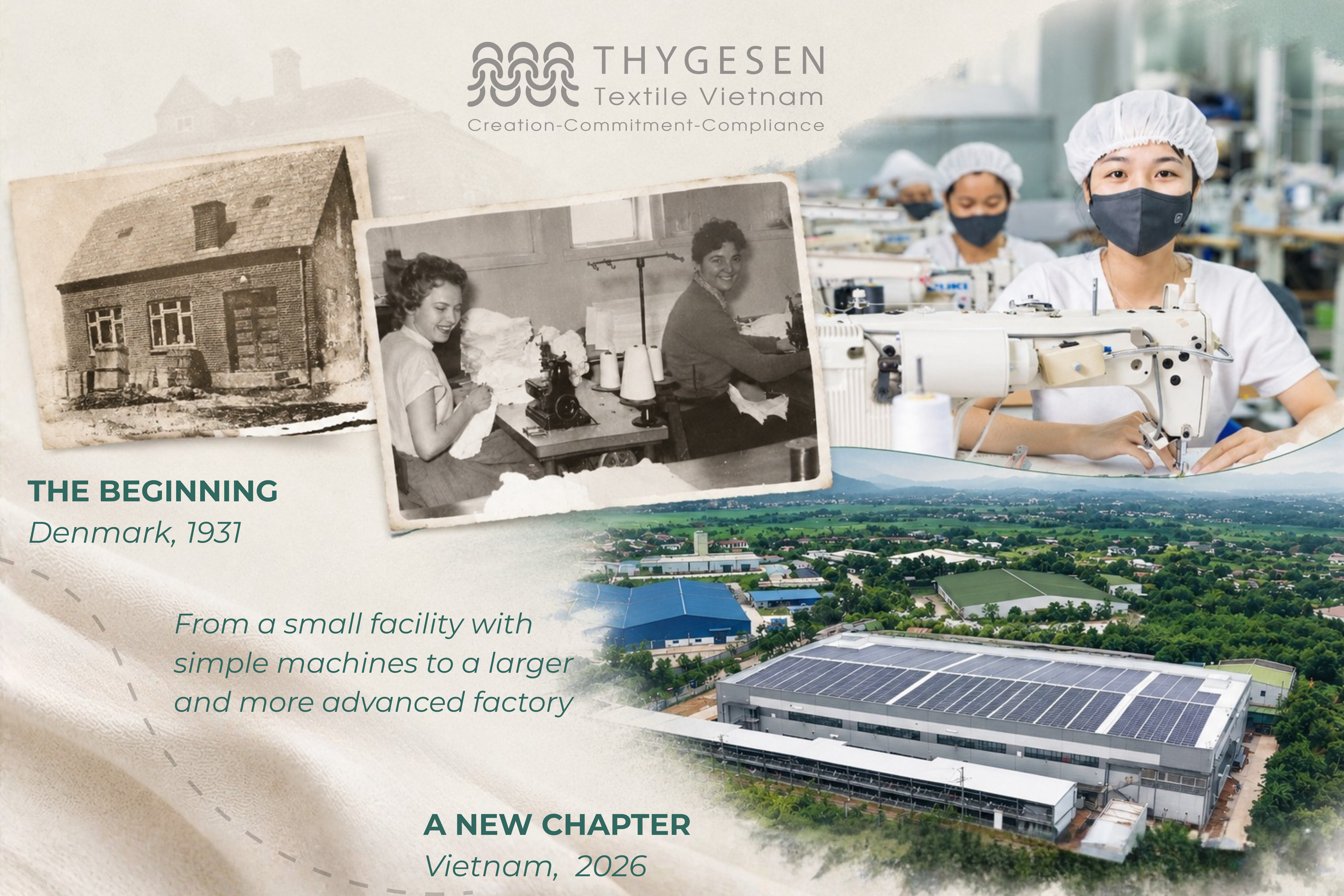
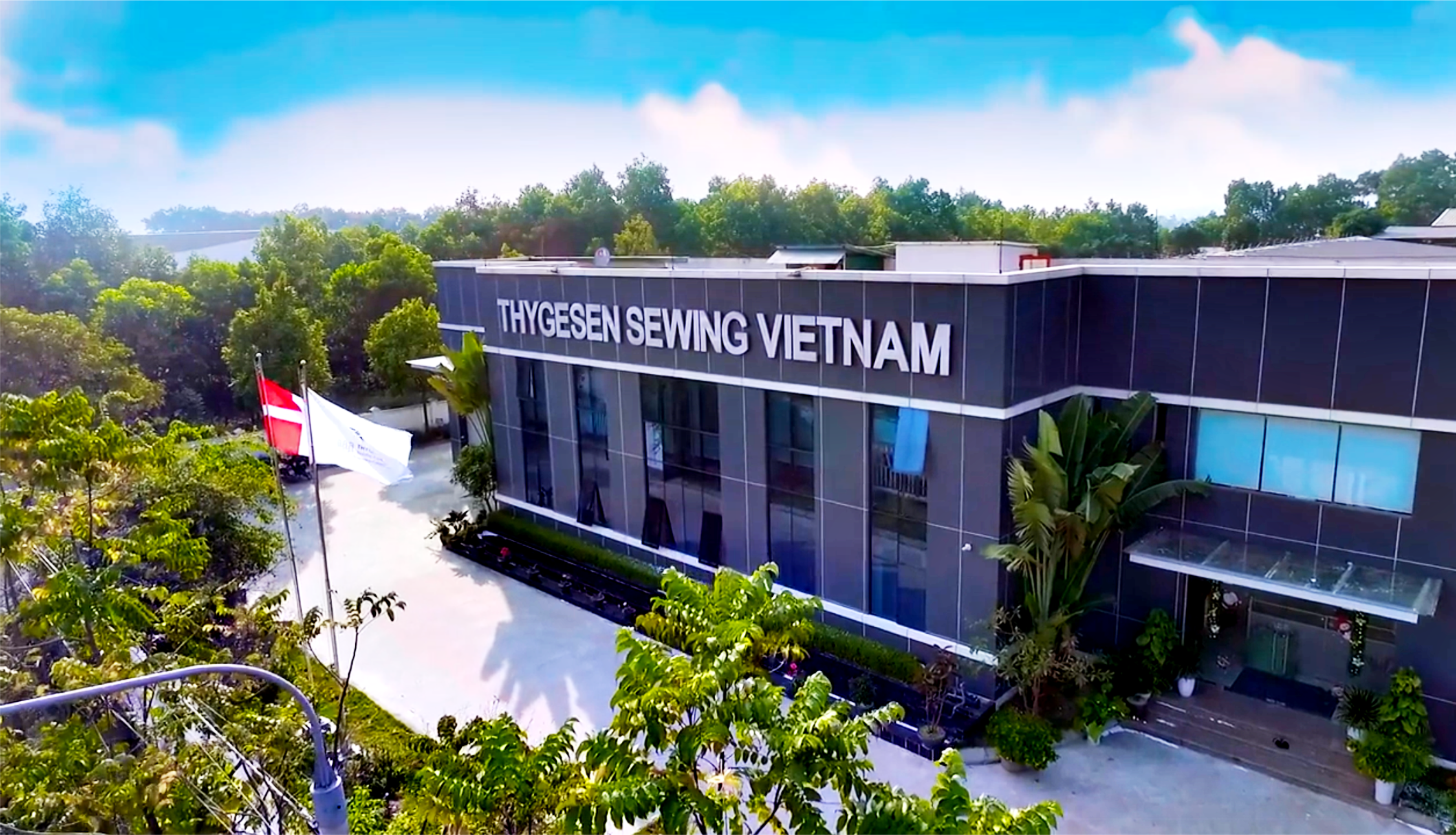
Thygesen Textile Vietnam (TGS) has proactively invested in the systems and operational culture necessary to be a reliable partner for the circular transition in the EU/UK market.
3.1. TGS’s Circular Compliance Workflow – From Input to Passport:
| Circular Pillar | TGS Operational Step | DPP/ESPR Compliance Achieved |
| Material Sourcing | Exclusive use of GRS/GOTS/OCS certified suppliers; rigorous incoming material inspection with CoC documentation. | Verifiable Material Origin and Recycled Content data for the DPP. |
| Production & Data Capture | Integration of batch tracking systems into the ERP/MES. Dedicated chemical control protocol (OEKO-TEX 100). | Batch-level traceability and Chemical Safety data, meeting ESPR rules. |
| Product Design | Consultation on mono-material feasibility and high-quality construction (DfD) upon request. | Reduced EPR fees and increased product Durability metrics. |
| Output Readiness | Providing structured, standardized production data (Process, Material, Compliance) ready for the brand’s DPP platform. | Accelerated Time-to-Compliance and risk mitigation. |
3.2. Thygesen Vietnam: A Strategic Advantage for the EU Market
Thygesen Vietnam is not just a compliant manufacturer; we are a strategic partner for cost efficiency and risk reduction:
- Reduced Audit Burden: Leveraging TGS’s existing social (Sedex/WRAP) and environmental certifications minimizes the time and cost your brand spends on factory audits.
- Expertise in Complex Fibers: TGS’s experience in handling and processing specialized fibers (including complex recycled blends) ensures production quality is maintained even with challenging sustainable inputs.
- Vietnam’s Advantage: Positioned as a key manufacturing hub, TGS offers stability and reliability in a supply chain facing increasing geopolitical and operational volatility.
- Category Breadth: This circular-ready capability spans TGS’s full product range – whether you’re vetting a reliable hoodie manufacturer for casualwear lines or sourcing through trusted athletic clothing manufacturers for performance collections, the same compliance infrastructure applies.
Thygesen Textile Vietnam: Your Partner in Circular Compliance
TGS is positioned to take the complexity out of compliance. By leveraging our established, certified, and digitized production ecosystem, your brand can confidently launch products that meet the EU’s demanding Ecodesign and transparency mandates. We help you future-proof your product lines by building durability and recyclability into the initial design.
4. Conclusion: The Race to Circularity is On
The EU’s Circular Economy Mandate is not a trend to be followed; it is a legal reality that will fundamentally define market access and profitability. Brands that continue with linear thinking will soon face non-compliance risks, crippling fines, and soaring EPR fees.
>>> This fundamental shift in regulation aims to prevent what is greenwashing and how clothing manufacturers can help brands deliver real sustainability by demanding concrete, verifiable actions.
The smart strategy is to act decisively and choose a partner with proven circular capability. Thygesen Textile Vietnam provides the certified materials, the digitized process, and the necessary data infrastructure to ensure your brand moves from regulatory risk to strategic advantage.
=> Secure your brand’s future in the European market. Partner with Thygesen Textile Vietnam today to ensure your products are designed for durability, backed by verifiable data, and fully prepared for the Circular Economy of 2025 and beyond.