If you are a fashion brand aiming to classify T-shirts for a new collection, or if you are simply interested in learning more about the many types of T-shirt, this comprehensive guide will help you gain a clearer, more structured view of T-shirt classification.
>>> If you are also exploring other outer-wear options, check out our companion article, Your Comprehensive Guide to 20+ Types of Jackets, for detailed classifications and insights.
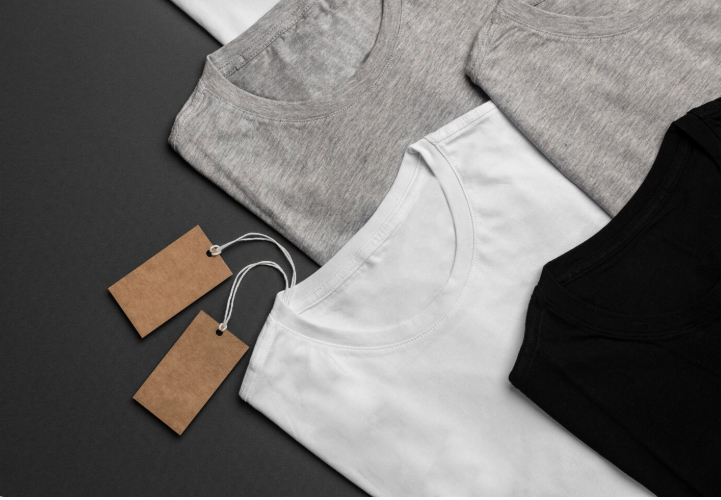
>>> For brands looking to translate diverse t-shirt styles into a cohesive streetwear collection, a capable manufacturing partner is essential. Thygesen offers comprehensive OEM services, ready to support unique design requirements as a specialized streetwear clothing manufacturer. This ensures visions for distinct garment types, from oversized graphics to tailored tees, are brought to life with precision and efficiency.
1. By Neckline & Collar
For fashion brands developing a T-shirt collection, categorizing styles by neckline and collar helps create clear product differentiation and guides design decisions.
1.1. Crew Neck
The crew neck is the classic T-shirt silhouette, defined by a rounded neckline that sits close to the base of the neck. It creates a clean, balanced look and works easily across everyday basics, uniforms, and unisex styles. Because of its simplicity and structure, it layers well and remains the most widely recognized T-shirt shape.
Crew neck T-shirts are ideal for daily wear, casual outings, uniforms, promotional apparel, and basic collections. They are also commonly used for light physical activities, travel, and layering under jackets or hoodies due to their comfort and versatile fit. If your brand is also developing a hoodie line to pair with these basics, take a look at our curated list of hoodie manufacturer to find the right production partner.
1.2. V-Neck
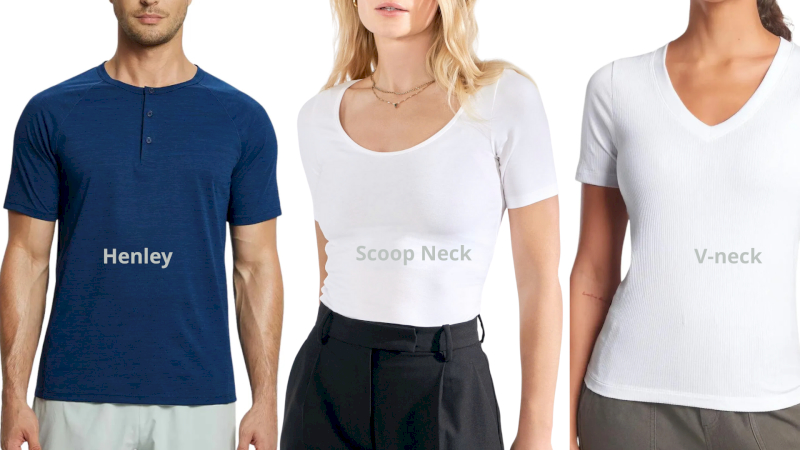
The V-neck replaces the rounded collar with a tapered V-shaped opening, visually elongating the neckline and adding a slightly dressier touch. It bridges the space between basic casualwear and lifestyle fashion, making it suitable for layered outfits and more refined everyday looks.
V-neck T-shirts work well for casual social settings, smart-casual environments, and lifestyle wear. They are often chosen for going out, travel, or light office settings where a polished yet relaxed appearance is desired.
1.3. Henley
A Henley features a collarless neckline paired with a short button placket. This added construction creates a subtle sense of structure and brings a rugged, utilitarian character to the T-shirt. The design balances comfort with detail, making it feel considered without becoming formal.
Henley T-shirts are well suited for casual outdoor activities, weekend wear, travel, and relaxed lifestyle use. They are popular in workwear-inspired collections, outdoor casualwear, and transitional seasons where layering is common.
1.4. Scoop/U-Neck
Scoop or U-neck T-shirts open wider and lower across the neckline than standard crew styles. The shape softens the upper chest area, highlights the collarbone, and delivers a relaxed, airy aesthetic. It is especially associated with womenswear, warm-weather apparel, and athleisure silhouettes.
Scoop and U-neck T-shirts are commonly worn for leisure activities, warm-weather outings, yoga, light workouts, and casual indoor or outdoor wear. They are also frequently used in fashion-forward or athleisure collections where comfort and femininity are emphasized.
1.5. Polo/Collared Tee
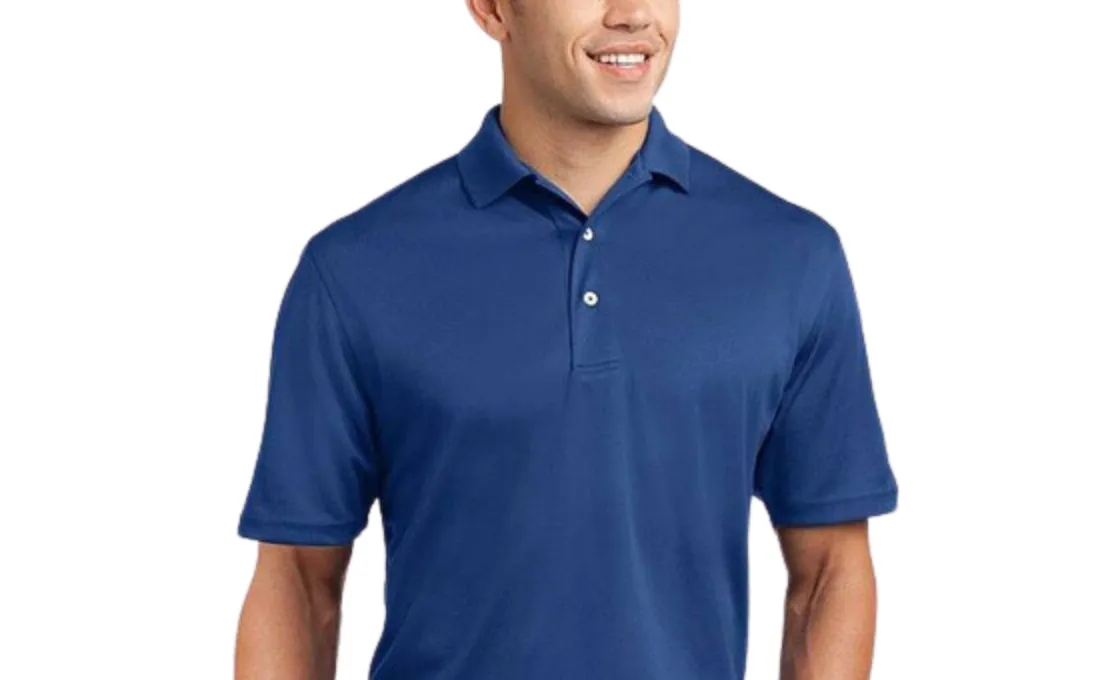
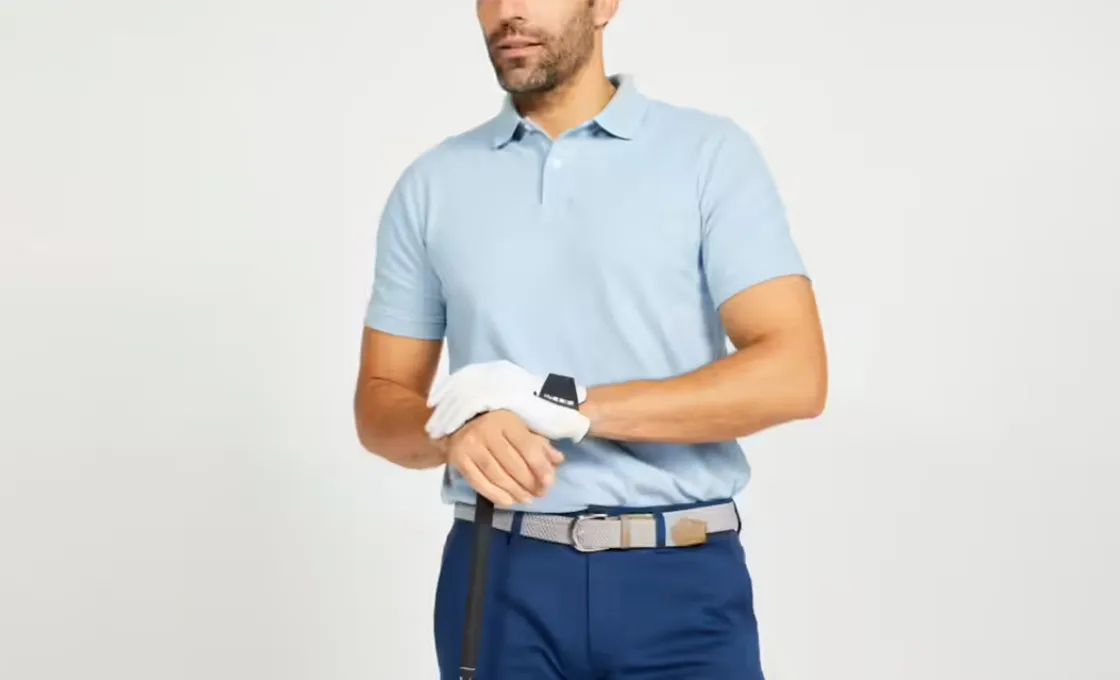
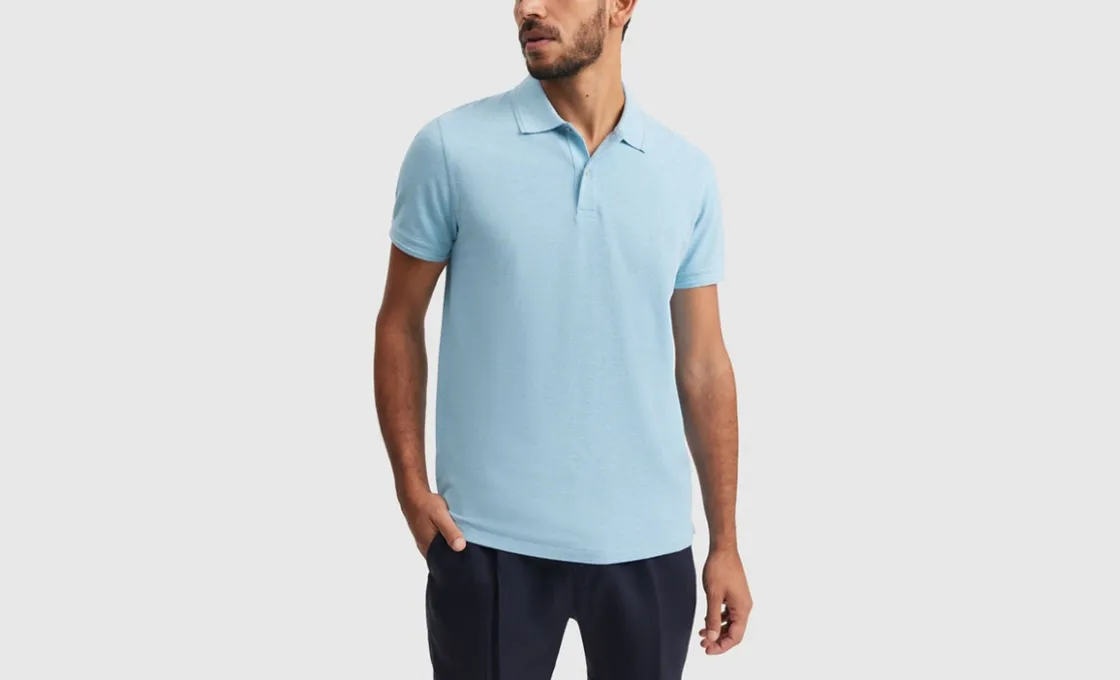
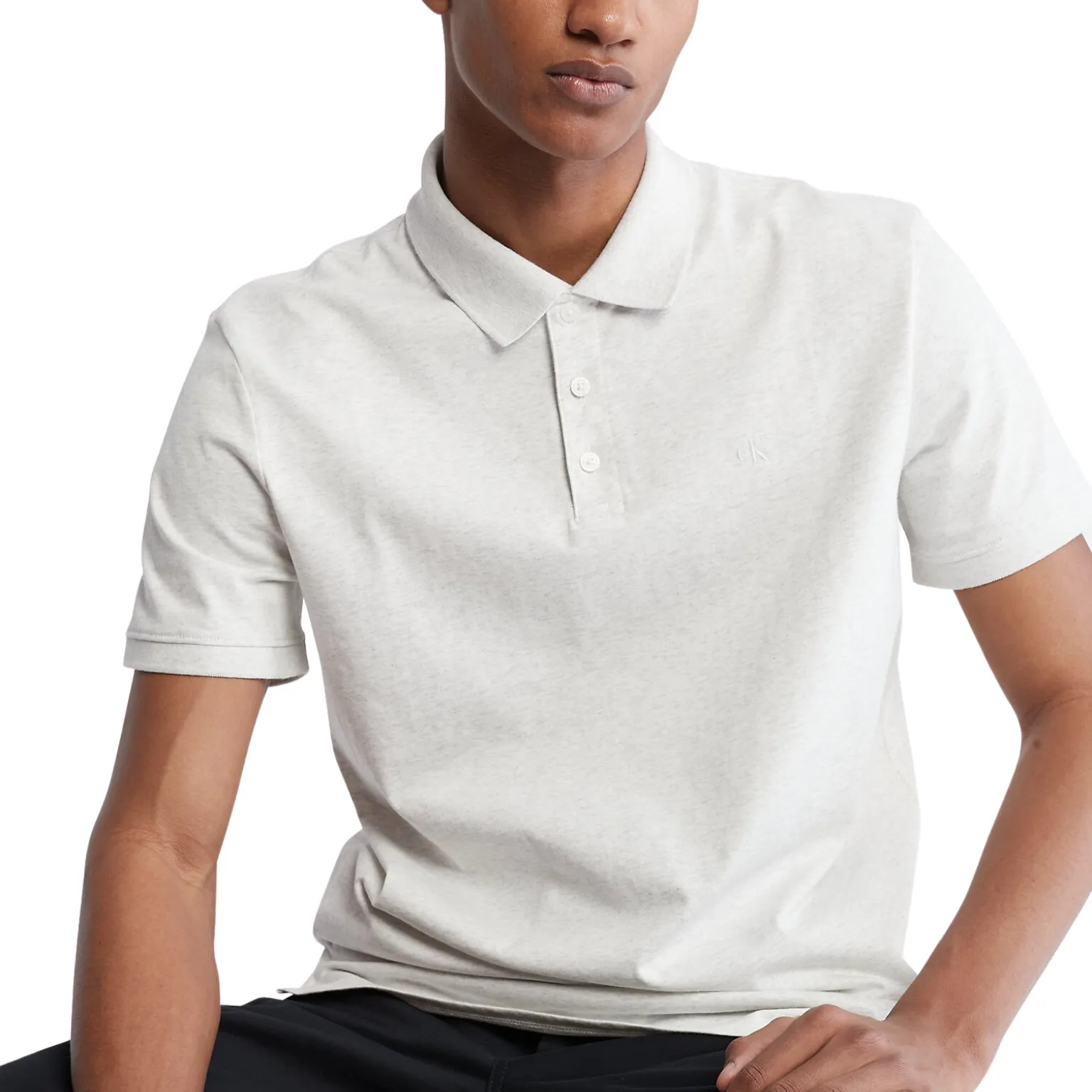
The polo combines T-shirt comfort with shirt-like structure through its collar and button placket. It maintains a neat, organized appearance while remaining lightweight and flexible, sitting between casualwear and understated workwear.
Polo shirts are suitable for work environments with a smart-casual dress code, golf and leisure sports, travel, and casual business settings. They are also widely used for uniforms, corporate wear, and brand merchandising thanks to their clean and professional look.
>>> Understanding the nuances of various t-shirt types, from fabric blends to specific cuts, is crucial for production excellence. Thygesen stands as a responsible t shirt manufacturer, adhering to ISO-based quality management systems and internationally recognized certifications to ensure every garment meets stringent material, performance, and ethical standards. This commitment helps brands mitigate sourcing risks while delivering superior products.
2. By Sleeve Length & Style
Beyond neckline and collar, sleeve length and style offer an important framework for understanding different T-shirt types and how they perform across seasons and activities.
2.1. Short Sleeve
Short-sleeve T-shirts typically extend to mid–upper arm, offering a balanced proportion that works across most body types. This sleeve length provides maximum flexibility and comfort, making it the most widely used option in T-shirt collections.
They are best suited for everyday wear, casual activities, work-from-home, uniforms, and promotional apparel. Short sleeves perform well in warm to mild weather and are commonly designed as unisex, making them suitable for menswear, womenswear, and gender-neutral collections.
2.2. Long Sleeve
Long-sleeve T-shirts usually extend to the wrist or just below, offering additional coverage while maintaining a relaxed, lightweight feel compared to sweaters or outerwear. The longer sleeve creates a more elongated silhouette and adds styling versatility.
This style is ideal for layering, travel, casual outdoor activities, and transitional seasons such as spring and autumn. Long-sleeve T-shirts work best in mild to cool weather and are widely used in menswear, womenswear, and unisex streetwear collections.
2.3. Cap Sleeve
Cap sleeves are very short, typically covering only the shoulder cap and extending no more than a few centimeters beyond the shoulder line. This sleeve length emphasizes the shoulder and upper arm, creating a soft and feminine silhouette.
Cap-sleeve T-shirts are best suited for casual fashion wear, leisure activities, and warm-weather styling. They are commonly used in womenswear collections and perform well in hot or summer climates, where breathability and lightness are key.
2.4. Raglan Sleeve
Raglan sleeves extend from the collar to the underarm in a diagonal seam, offering increased arm mobility and a relaxed fit. Sleeve length may vary from short to long, but the defining feature is the construction rather than the length itself.
This sleeve style is particularly suitable for sportswear, activewear, casual outdoor activities, and athleisure. Raglan T-shirts perform well in mild to cool weather depending on fabric weight and are commonly designed as unisex, with strong appeal in both menswear and athletic collections. For brands building out a performance-focused collection, explore our roundup of leading athletic clothing manufacturers to find the right fit for your activewear line.

>>> When developing various t-shirt silhouettes, from classic crew necks to intricate V-necks, the precision of manufacturing is paramount. Thygesen operates with full supply chain transparency and responsiveness, providing detailed insight into every stage of the production process as experienced cut and sew manufacturers. This collaborative approach fosters trust and ensures seamless execution of diverse apparel designs.
3. By Fit & Cut
In addition to neckline and sleeve design, T-shirts can also be categorized by fit and cut, which determine how the garment drapes and interacts with the body.
3.1. Classic/Regular Fit
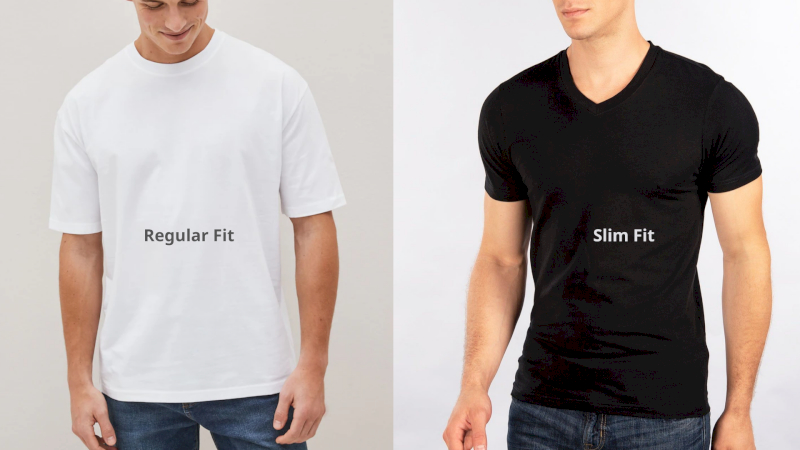
Classic or regular fit T-shirts feature balanced proportions through the chest, waist, and hem, offering a natural drape without clinging to the body. This fit prioritizes comfort and ease of movement while remaining visually clean and timeless, making it highly adaptable for everyday wear, work-from-home, travel, casual activities, and uniforms.
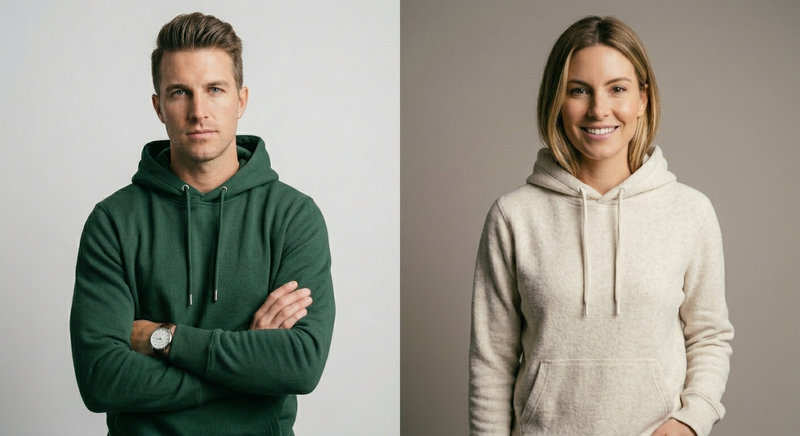
Regular-fit T-shirts are typically unisex, suitable for menswear, womenswear, and gender-neutral collections, and their broad size adaptability, high comfort, and universal appeal make them a reliable choice for any brand’s core collection.
3.2. Oversized
Oversized T-shirts are intentionally cut with extra volume through the body, shoulders, and sleeves, often featuring dropped shoulders and extended lengths. The added space creates a relaxed yet bold silhouette that emphasizes shape through proportion rather than tailoring.
This fit is ideal for streetwear, casual lifestyle wear, creative settings, and youth-focused fashion, and is commonly unisex, appealing to both menswear and womenswear. Its combination of comfort, styling flexibility, and strong visual impact makes oversized T-shirts central to modern, trend-driven collections.
3.3. Slim Fit
Slim-fit T-shirts taper through the chest and waist to follow the body’s natural lines, resulting in a more tailored and streamlined appearance. This fit is well suited for smart-casual environments, social occasions, layered outfits, and fashion-driven looks, and is commonly used in menswear and fitted womenswear collections.
Slim-fit T-shirts offer a polished, clean silhouette that enhances layering potential while providing a modern, body-conscious look, making them ideal for brands targeting trend-savvy consumers.
3.4. Crop Top
Crop T-shirts feature a shortened body length that typically hits at or above the waist, drawing attention to the midsection and creating a bold, expressive silhouette. They are best suited for athleisure, casual fashion, dance, leisure activities, and warm-weather wear, and are predominantly used in womenswear, though they also appear in gender-neutral and fashion-forward collections.
The crop fit’s ability to highlight proportions while offering breathability, freedom of movement, and strong trend appeal makes it a dynamic choice for contemporary fashion lines.
>> While this guide focuses on the expansive world of t-shirt designs, successful brands often require a manufacturing partner capable of producing a broader product portfolio. Thygesen collaborates with brands on a diverse range of apparel, extending its expertise beyond t-shirts to specialized garments. For instance, Thygesen is also a recognized legging manufacturer, offering comprehensive solutions for brands seeking to develop cohesive collections across various apparel categories.
>>> Explore Thygesen’s capabilities in manufacturing custom underwear, including a variety of different types of boxers, to complement your brand’s collection.
4. By Fabric & Weight
Among the various types of T-shirts, classification by fabric and weight helps brands and designers choose materials that optimize comfort, durability, and style for different uses and weather conditions.
4.1. 100% Cotton
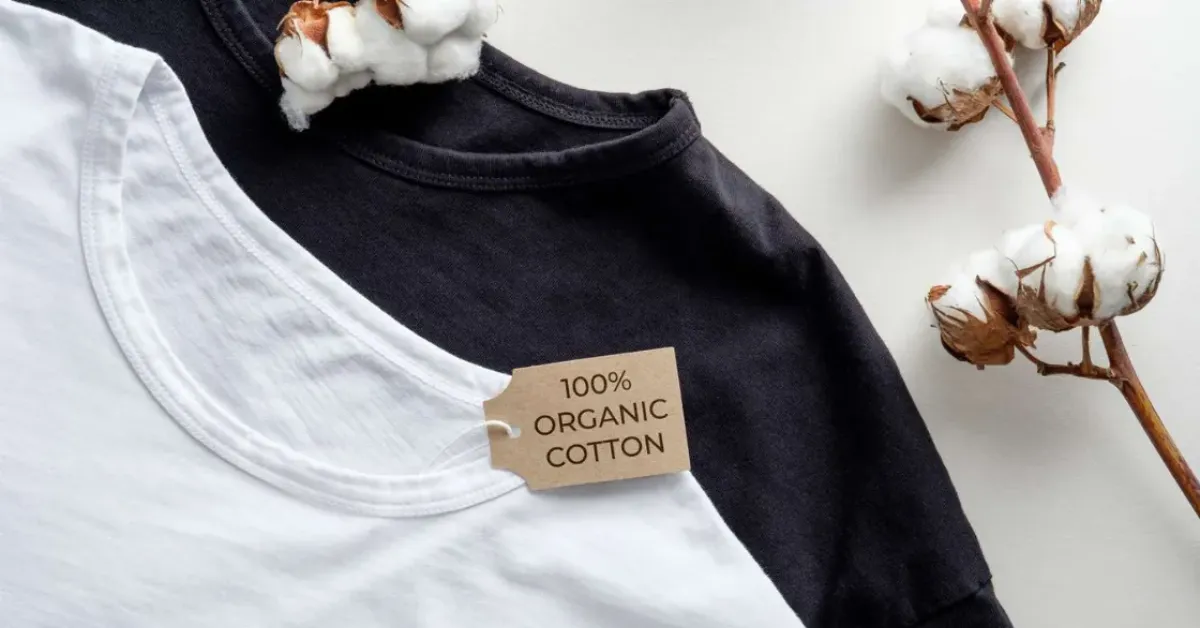
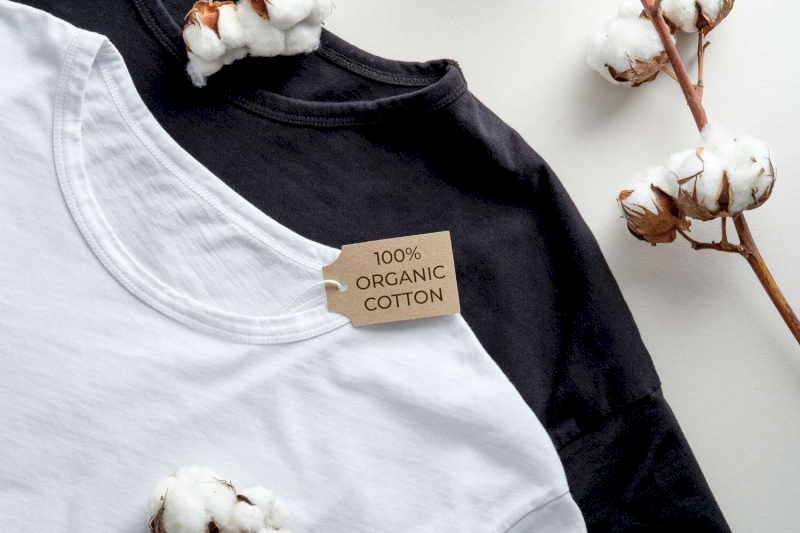
Pure cotton T-shirts offer natural softness, breathability, and comfort against the skin, creating a classic look and feel that becomes more characterful with wear. This fabric is highly absorbent, hypoallergenic, and naturally temperature-regulating, making it ideal for daily casualwear, core collections, and basics. Cotton fabrics are often certified with OEKO-TEX Standard 100 or GOTS for organic cotton, which assures safety, sustainability, and consumer confidence. Brands rely on 100% cotton for t-shirts that prioritize comfort, versatility, and longevity across menswear, womenswear, and unisex lines.
4.2. Cotton Blends
Cotton blends combine the natural softness, breathability, and comfort of cotton with the functional benefits of other fibers to enhance durability, shape retention, and wrinkle resistance. These blends are highly versatile, suitable for casualwear, uniforms, corporate programs, and high-wear lifestyle collections, and are commonly unisex for both menswear and womenswear.
Popular blends include cotton-polyester (50/50, 60/40, 65/35, 80/20) for durability and print stability, cotton-modal or cotton-rayon (70/30, 60/40) for a softer, drapey feel, cotton-spandex (95/5, 98/2) for stretch and fitted silhouettes, cotton-Tencel/Lyocell (70/30, 80/20) for a smooth, eco-friendly hand feel, and cotton-bamboo (70/30, 60/40) for natural softness and antimicrobial properties.
Many of these fabrics carry certifications such as OEKO-TEX Standard 100 or GOTS for organic cotton, and some incorporate recycled polyester or sustainable fibers to meet eco-conscious brand requirements. These blends offer a balance of comfort, durability, breathability, and versatility, making them ideal for a wide variety of T-shirt collections.
4.3. Triblends
Triblends are typically a combination of cotton, polyester, and rayon, but can also include fibers like Tencel, modal, bamboo, or spandex to create different textures, drape, and stretch. They provide a soft, lightweight, and premium hand feel with excellent color retention, smooth texture, and a relaxed, vintage-inspired look. Triblends are perfect for casualwear, athleisure, lifestyle, and trend-led fashion, and are commonly unisex or used across menswear and womenswear lines.
Popular ratios include 50/25/25 cotton/polyester/rayon for softness and durability, 50/30/20 cotton/polyester/modal for a softer, drapey feel, 60/30/10 cotton/polyester/Tencel for lightweight comfort with eco-friendly appeal, 40/40/20 cotton/polyester/bamboo for stretch, breathability, and moisture management, and 50/30/20 cotton/polyester/spandex for flexible, fitted silhouettes.
4.4. Heavyweight Cotton
Heavyweight cotton knits deliver structure, density, and a more architectural drape. They maintain shape over time, are more resistant to wear and sagging, and strongly support streetwear, premium casual, and layering-oriented collections. Heavyweight cotton is typically 180-220 gsm (or higher) and can be 100% cotton or blended with polyester for added durability. This fabric is ideal for sweatshirts, structured T-shirts, and garments where body and shape retention are key design elements.
4.5. Lightweight/Linen
Lightweight cottons and linen blends, typically ranging from 120-150 gsm, provide excellent breathability, softness, and airflow, making garments cool and comfortable in warm climates. These fabrics drape lightly, move easily with the body, and are perfect for summer collections, resortwear, casual everyday wear, and leisure activities.
They are commonly used in womenswear, menswear summer lines, and unisex designs, offering a relaxed yet polished aesthetic. Popular blends include cotton-linen (70/30, 55/45), cotton-rayon-linen (60/20/20), linen-Tencel/cotton (60/40 or 50/50) for extra softness and drape, and cotton-bamboo-linen for a breathable, naturally antibacterial option.
5. By Design & Detail
For fashion brands, understanding design and detail allows for differentiation in collections, guiding styling choices and helping create signature looks that resonate with target consumers.
5.1. Graphic Tee
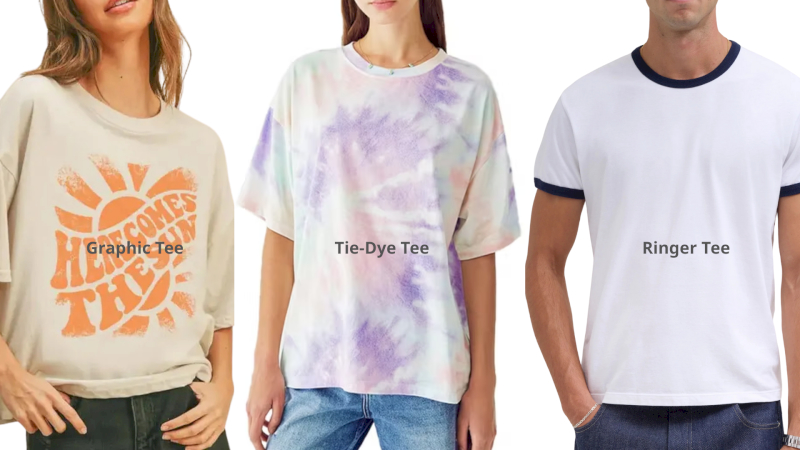
Graphic T-shirts serve as visual canvases, featuring screen prints, digital prints, sublimation, or heat transfers to display artwork, logos, typography, or photographic designs. High-quality fabrics with smooth surfaces help preserve print clarity, vibrancy, and durability over repeated washes. Graphic tees are ideal for casualwear, lifestyle collections, merchandise, and promotional programs, appealing to both menswear and womenswear audiences. Their ability to convey brand identity, storytelling, or creative expression makes them a versatile choice for fashion-forward and mass-market lines alike
5.2. Pocket Tee
Pocket T-shirts feature a small chest pocket, which can be plain, embroidered, printed, or accented with trims such as contrast stitching or applique. The pocket adds subtle dimension and utility while maintaining the simplicity of the silhouette. Pocket tees are suitable for everyday casualwear, workwear, or lifestyle collections, unisex or gender-specific, and their understated detail elevates a basic T-shirt without compromising versatility. This style is often used in mid-tier and premium collections to add functional style cues and brand differentiation.
5.3. Ringer Tee
Ringer T-shirts are defined by contrasting trims on the collar and sleeve cuffs, often using ribbed or woven fabric, piping, or stitched color blocks to create a retro-inspired aesthetic. The design emphasizes edges, framing the shoulders and neckline, and gives the garment a distinct visual identity. Ringer tees are ideal for casualwear, retro-themed collections, streetwear, and lifestyle lines. They appeal to both menswear and womenswear and are frequently used to convey nostalgic or sporty design cues, making them suitable for both seasonal drops and evergreen collections.
5.4. Tie-Dye Tee
Tie-dye T-shirts use dye-resist techniques, hand-twisting, folding, or machine-assisted patterning to produce swirling, irregular color patterns. Each garment is slightly unique, giving a playful, expressive, and artisanal character. Tie-dye tees are perfect for casualwear, festival or leisure collections, and youth-focused lifestyle lines. They are commonly unisex, suitable for both menswear and womenswear, and popular in summer or warm-weather collections. This style allows brands to offer limited-edition or statement pieces while emphasizing individuality, creativity, and visual impact.
Thygesen – Trusted Partner for T-shirt Manufacturing
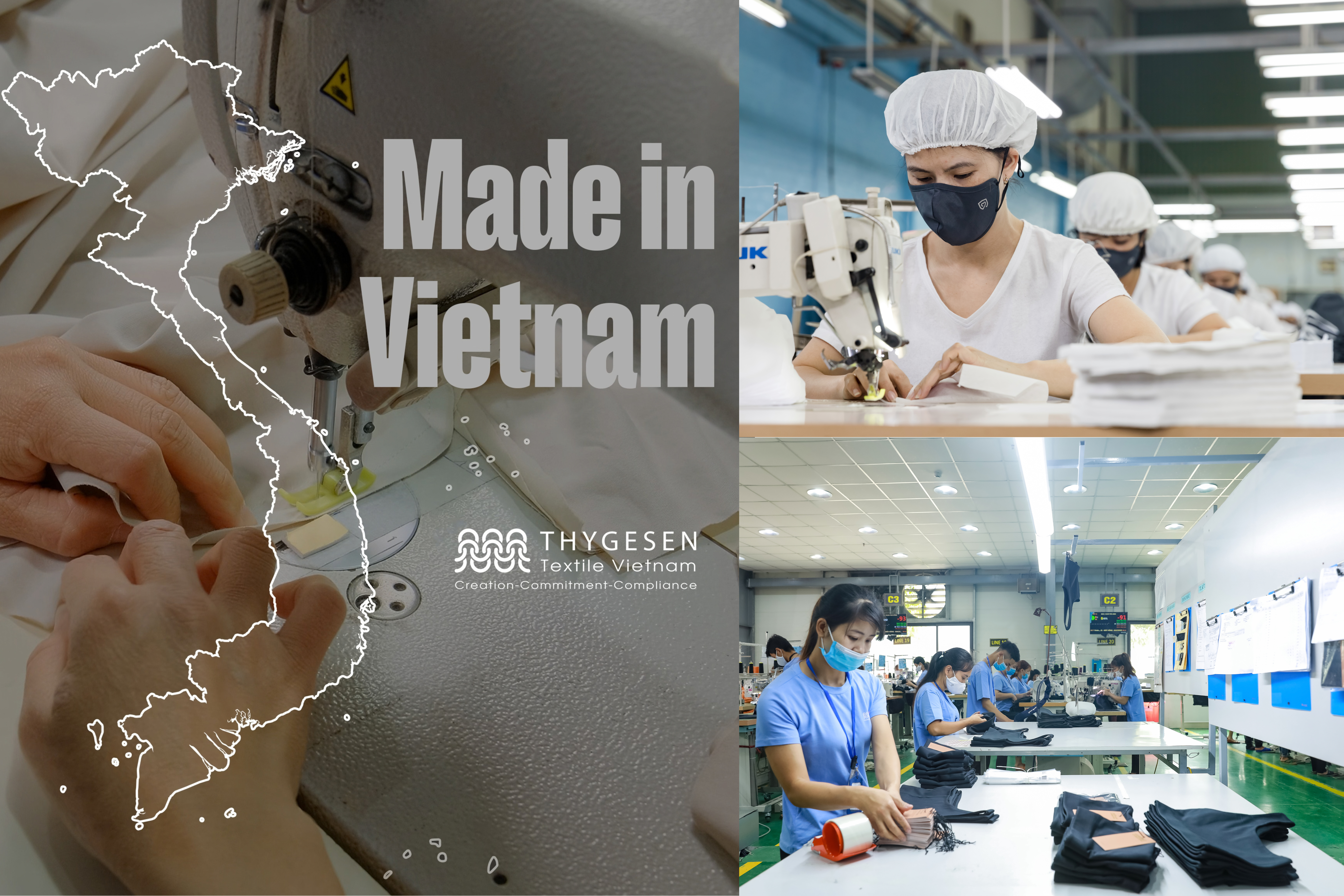
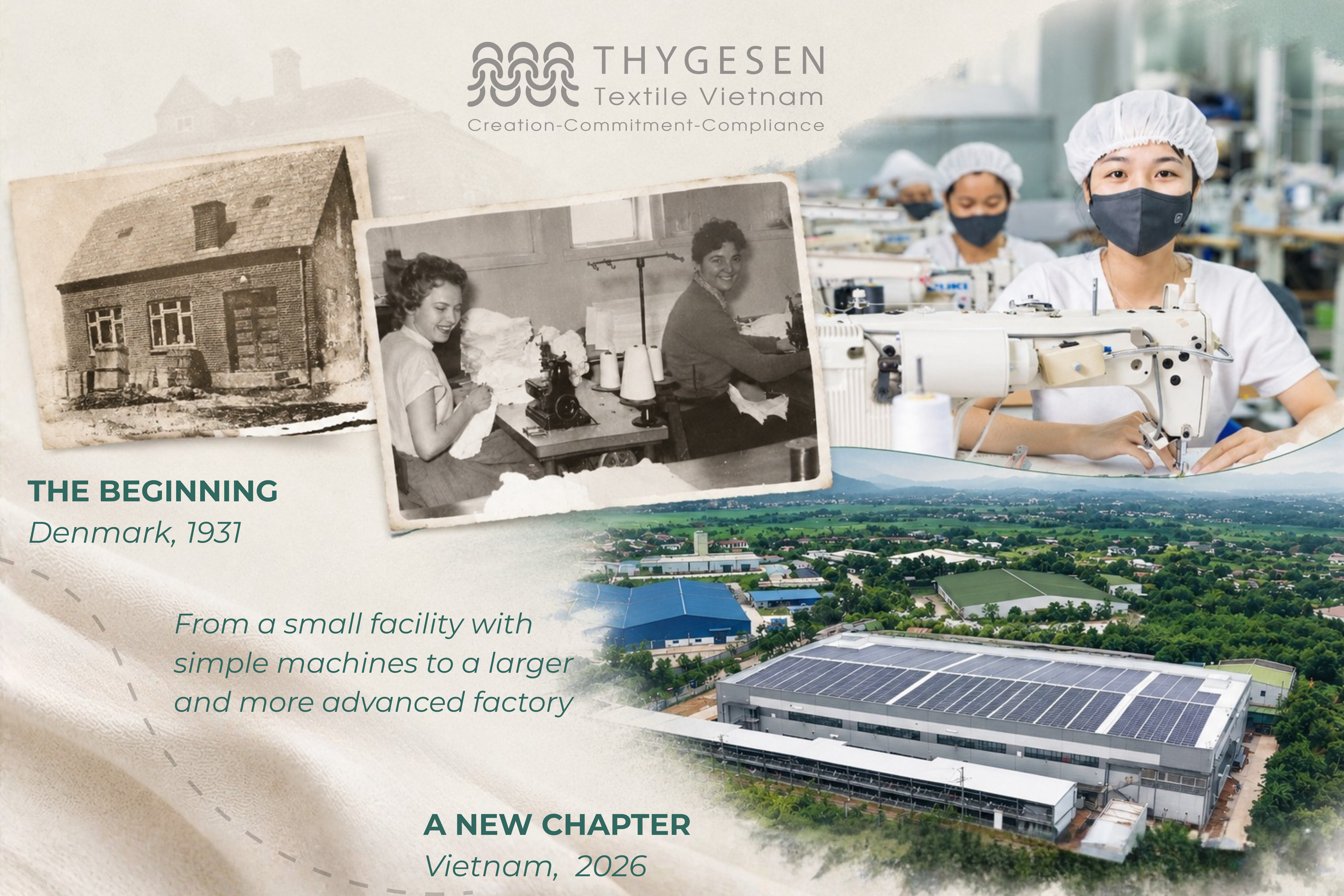
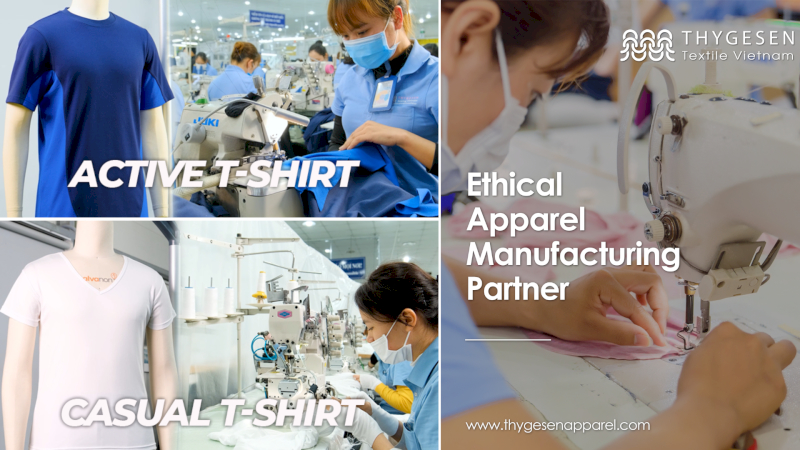
Thygesen Textile Vietnam is one of the ethical apparel manufacturers in Vietnam, with over 90 years of experience in the textile industry and trusted by many global brands including Tommy Hilfiger, DKNY, Calvin Klein, Fjällräven, Girlfriend Collective, Ninepine, and Boody.
>>> For further insights into garment production, including details like Where Are Hoodies Made? – Thygesen Textile Vietnam, consider their comprehensive manufacturing solutions.
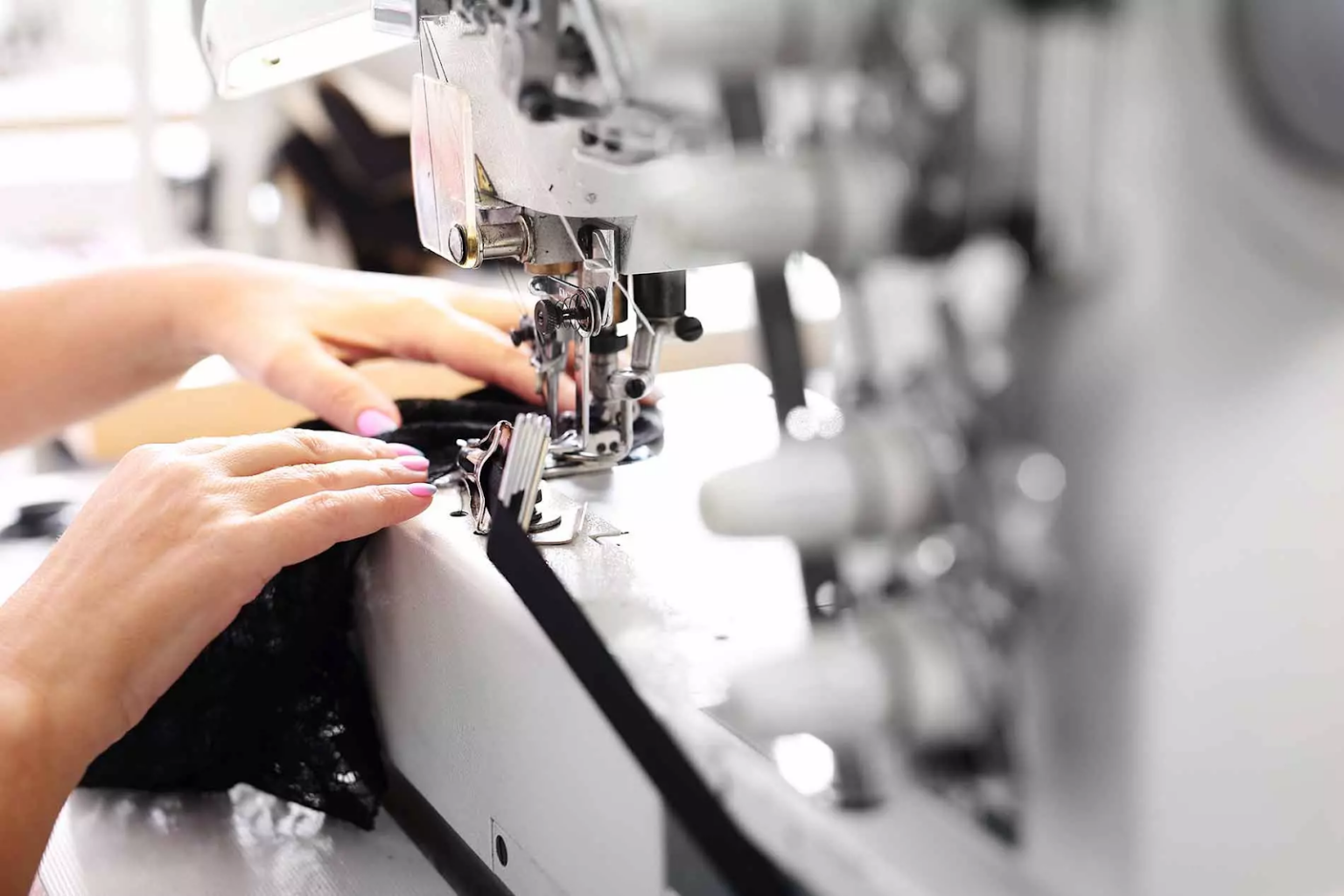
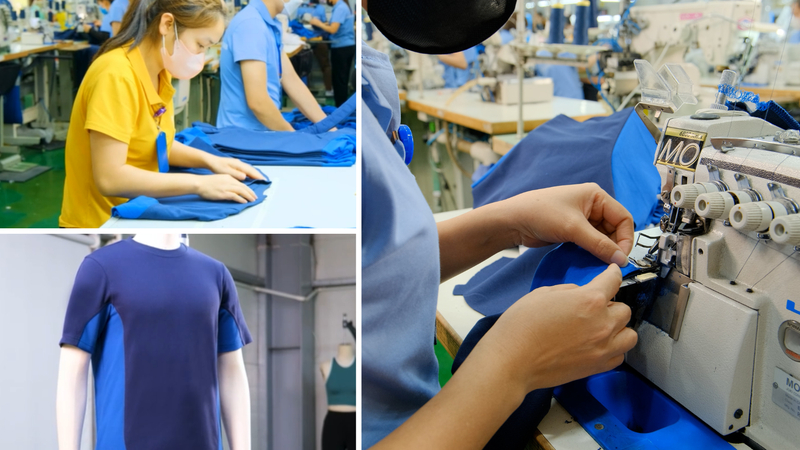
Thygesen is highly capable in T-shirt production, covering both activewear performance and casual & fashionwear. We can produce a wide range of T-shirts: active T-shirts designed for high stretch, breathability, sweat-wicking, and performance, as well as casual and fashion T-shirts featuring classic styles like crew neck, V-neck, pocket tees, oversized fits, and trend-led designs such as striped, square neck, or graphic prints — suitable for both menswear and womenswear.
Key strengths of Thygesen for T-shirt manufacturing include:
- Fabric Sourcing & Development: Thygesen collaborates with a global network of trusted fabric suppliers to source and develop fabrics that are traceable, high-quality, and suitable for each product. Upon request, fabrics with certifications such as OEKO-TEX, GOTS, GRS, OCS, recycled polyester, or organic options can be provided.
- Full Customization: We offer custom patterns, fits, embroidery, prints, hang tags, labels, packaging, and other design elements, enabling brands to create unique and on-brand T-shirt collections.
- Strict Quality Control: Every production step is monitored, including incoming fabric inspection, 100% end-line inspection, final checks, and third-party verification, ensuring consistent quality and minimal defects even when producing hundreds of thousands to millions of T-shirts.
- Ethical & Sustainable Manufacturing: Thygesen’s factories are certified with WRAP and SA8000, ensuring ethical labor practices and safe working conditions. Production follows LEAN manufacturing principles, emphasizing efficiency, sustainability, and responsible operations.
In conclusion, type of T-shirts can be classified in multiple ways – by neckline and collar, sleeve length and style, fit and cut, fabric and weight, and design details. For global brands looking for custom T-shirt manufacturing. Thygesen Textile Vietnam provides end-to-end solutions, from fabric sourcing to full customization, ethical production, and strict quality control. Explore more at thygesenapparel.com or send inquiries to sale@thygesen.com.vn.