The wide range of types of panties reflects the evolving demands of modern consumers for comfort, functionality, and style. From classic bikini panties and full-coverage briefs to seamless thongs and performance-driven period underwear, each type is designed to support different outfit needs and wearer preferences. Brands looking to develop their own underwear line can explore Thygesen’s custom panties manufacturing capabilities, covering a full range of styles from basics to specialty designs with OEM/ODM support.
1. By Coverage
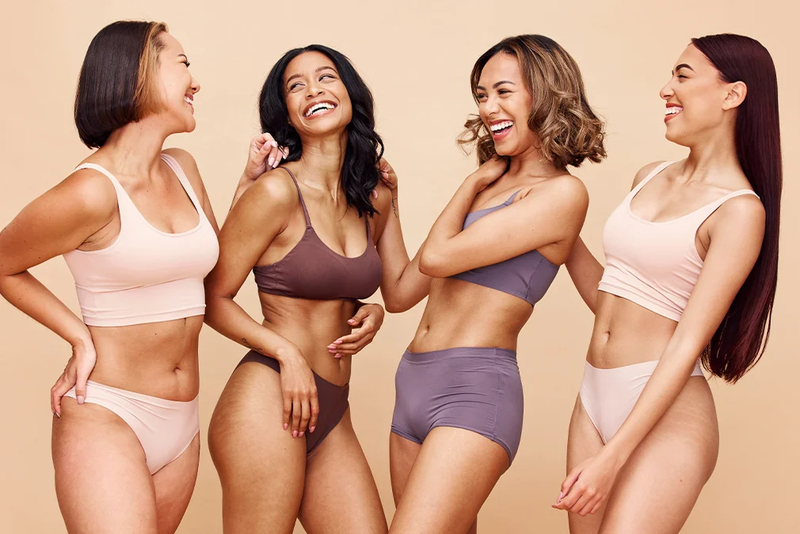
One of the most common ways to classify the different types of panties is by the level of coverage they provide. Some styles are designed for maximum support and modesty, while others prioritize minimal coverage to remain invisible under fitted clothing.
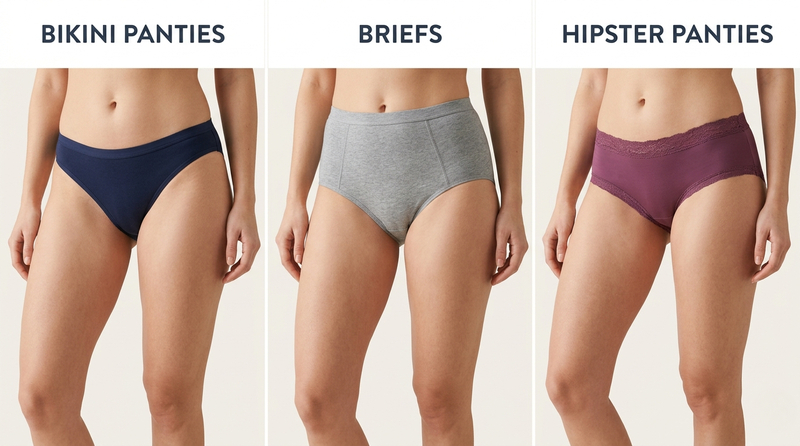
1.1. Bikini Panties
Bikini panties are one of the most popular and versatile types of panties, offering moderate front and back coverage with a lower-rise waist that typically sits below the natural waistline. The leg openings are cut higher than those of traditional briefs, creating a flattering silhouette while maintaining everyday comfort. This balanced design makes bikini panties a staple in most underwear collections, suitable for a wide range of body shapes and outfit styles.
Bikini panties are commonly made from cotton, modal, microfiber, lace, or seamless synthetic blends. They are ideal for daily wear because they provide enough coverage without feeling bulky under clothing. In manufacturing, attention is often given to soft waistbands, elastic recovery, and precise leg binding to ensure comfort and durability. Many brands offer bikini panties in basic, seamless, and decorative variations to accommodate both functional and aesthetic preferences.
Many brands offer bikini panties in basic, seamless, and decorative variations to accommodate both functional and aesthetic preferences. This style is also frequently developed for younger markets, where girls’ panty collections often feature bikini silhouettes combined with soft cotton fabrics and playful print options.
1.2. Briefs
Briefs are known for their full front and back coverage and a waistband that usually sits at or slightly below the natural waist. This classic silhouette prioritizes support and comfort, making it one of the most practical and widely used underwear styles. The leg openings are relatively low, providing secure coverage and minimizing movement throughout the day.
Briefs are particularly favored by consumers who prefer maximum coverage, including maternity customers, older demographics, and those seeking reliable everyday underwear. They are often produced in breathable cotton or cotton-spandex fabrics, although modal and microfiber versions are also common. In manufacturing, briefs require careful shaping of the crotch panel, elastic waistband construction, and flat seams to ensure a comfortable and durable fit.
In manufacturing, briefs require careful shaping of the crotch panel, elastic waistband construction, and flat seams to ensure a comfortable and durable fit. Given their reliance on natural fibers, Thygesen’s cotton panty manufacturing service is well-suited for brands developing briefs and full-coverage styles with breathable, skin-friendly fabric specifications.
1.3. Hipster Panties
Hipster panties feature a low-rise waistband that sits directly on the hips and provide moderate to full coverage across the back. Their wider side panels and lower profile create a modern, comfortable silhouette that works well with low-rise jeans and casual clothing. Compared with bikini panties, hipsters offer slightly more side and back coverage while maintaining a relaxed fit.
Hipster panties are commonly made from cotton, modal, microfiber, and seamless fabrics. They are especially popular among consumers who want a secure fit without the higher waist of briefs. In production, manufacturers focus on maintaining even stretch distribution and preventing the waistband from rolling or shifting. Hipster panties are often included in both basic essentials collections and premium seamless ranges.
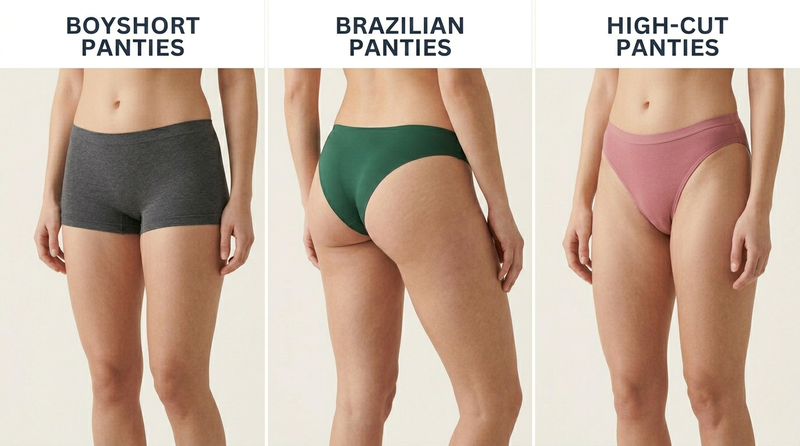
1.4. Boyshort Panties
Boyshort panties are inspired by men’s boxer briefs and are characterized by a straight-across waist and extended leg openings that cover the upper thighs. They provide full front and back coverage and a smooth, sporty appearance. This silhouette offers a comfortable and secure fit while reducing visible panty lines under skirts, dresses, and fitted garments.
Boyshorts are frequently made from cotton-spandex, modal, microfiber, and lace. They are favored for loungewear, sleepwear, and everyday use due to their excellent coverage and freedom of movement. From a manufacturing perspective, boyshorts require precise leg hem construction and balanced stretch to prevent riding up. Seamless and laser-cut versions are also popular for creating a clean, no-show finish.
Seamless and laser-cut versions are also popular for creating a clean, no-show finish. For brands developing extended coverage styles, Thygesen’s full-cut panty manufacturing capabilities cover boyshort and full-coverage constructions with precise leg hem engineering and consistent elastic performance across bulk production.
>> Boyshort panties provide full front and back coverage with extended leg openings, much like the functionality and comfort focus of athletic leggings. Both essentials share similar manufacturing priorities: precise leg hem construction, balanced stretch distribution, and seamless finishing—skills that experienced legging manufacturers also excel in delivering.
1.5. Brazilian Panties
Brazilian panties combine the front coverage of bikini styles with a more revealing back that offers partial cheek exposure. This design creates a flattering silhouette that enhances the natural shape of the body while providing more coverage than a thong. The waistband may sit at low-, mid-, or high-rise positions depending on the intended design.
Brazilian panties are commonly produced in lace, microfiber, modal, and seamless fabrics and are especially popular in fashion-focused and premium lingerie collections. They are often chosen for their balance between sensuality and everyday comfort. In manufacturing, careful attention is required to shape the back panel and leg openings so that the garment fits smoothly without cutting into the skin.
1.6. High-Cut Panties
High-cut panties are distinguished by leg openings that extend higher toward the hips, visually elongating the legs and creating a sleek, feminine silhouette. Depending on the design, they may provide moderate to full back coverage and are available in both low-rise and high-rise versions. This style became particularly popular for its flattering fit and vintage-inspired aesthetic.
High-cut panties are often made from cotton, nylon-spandex, microfiber, and lace. They are suitable for consumers who want a combination of comfortable coverage and a leg-lengthening effect. In production, accurate shaping of the curved leg openings and stable elastic application are essential to ensure the garment stays in place without discomfort.
2. By Minimal Coverage Styles
Beyond full and moderate coverage options, panties also come in minimal coverage styles that prioritize a lighter feel, reduced fabric visibility, and a more seamless look under clothing. These designs are especially popular for fitted outfits, active lifestyles, and fashion-forward preferences, where comfort and invisibility are key considerations.
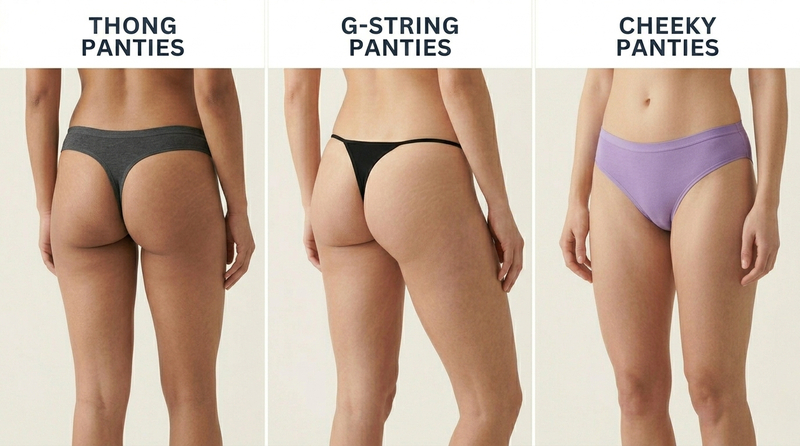
2.1. Thong Panties
Thong panties are designed with minimal back coverage, eliminating excess fabric to prevent visible panty lines under tight-fitting garments. The narrow back strip typically sits between the buttocks, while the front provides moderate coverage and support. This makes thongs a practical choice for bodycon dresses, leggings, fitted skirts, and slim trousers where a smooth silhouette is essential.
Thong panties are commonly made from lightweight and stretchable materials such as cotton-spandex, microfiber, lace, or seamless fabrics. In manufacturing, precision in elastic tension and soft-edge finishing is crucial to ensure comfort despite the minimal structure. Modern thong designs also include seamless laser-cut versions, which enhance invisibility while maintaining wearability for everyday use.
2.2. G-String Panties
G-string panties represent the most minimal form of intimate coverage, featuring an extremely narrow waistband and a thin string at the back. Compared to thongs, they use even less fabric, making them virtually invisible under clothing. This design is often chosen for occasions or outfits that require maximum discretion and a barely-there appearance.
G-strings are typically crafted from delicate materials such as lace, satin, microfiber, or lightweight elastic blends. Due to their minimal structure, manufacturing focuses heavily on softness, precise stitching, and durable elastic components to prevent discomfort. While often associated with lingerie collections, G-strings are also incorporated into fashion-forward underwear ranges for special styling needs.
2.3. Cheeky Panties
Cheeky panties offer a balanced alternative between full coverage and minimal styles, featuring moderate front coverage with reduced back fabric that partially exposes the lower buttocks. This design creates a flattering, lifted appearance while still maintaining everyday comfort. Cheeky styles are widely appreciated for their playful yet practical silhouette.
They are commonly made from cotton, modal, microfiber, lace, or seamless blends, making them suitable for both daily wear and fashion lingerie collections. In production, the key focus lies in shaping the back cut to ensure it enhances body contours without causing discomfort or rolling. Cheeky panties are especially popular for their versatility, as they work well under most outfits while adding a more modern, stylish touch.
Cheeky panties are especially popular for their versatility, as they work well under most outfits while adding a more modern, stylish touch. This style also lends itself well to fashion-driven colorways and surface treatments – brands interested in developing printed panty styles will find cheeky and bikini silhouettes among the most commonly used base styles for all-over prints and pattern-based designs.
3. By Functional & Specialty Design
In addition to coverage-based and minimal styles, panties can also be classified by their functional and specialty design features, which are developed to address specific needs such as comfort enhancement, body shaping, hygiene, and performance. These styles go beyond aesthetics, focusing on technical innovation and practical benefits for different lifestyles and usage scenarios.
3.1. Seamless Panties
Seamless panties are constructed using advanced knitting or bonding techniques that eliminate bulky seams and visible elastic edges, creating a smooth and invisible finish under clothing. This makes them especially suitable for fitted garments such as bodycon dresses, leggings, and lightweight fabrics where visible lines are undesirable. The minimalist construction also enhances comfort by reducing friction against the skin.
These styles are commonly made from microfiber, nylon-spandex blends, or seamless knitted fabrics that offer high stretch and recovery. In manufacturing, techniques such as laser cutting and heat-bonding are often used to ensure clean edges and durability. Seamless panties are widely used in both everyday essentials and activewear collections due to their versatility and second-skin feel.
>> Seamless panties require advanced knitting and bonding techniques, laser cutting, and heat-bonding to eliminate bulky seams and create smooth, invisible finishes. Expert cut and sew manufacturers bring the precision craftsmanship necessary to deliver clean edges and durable construction at scale.
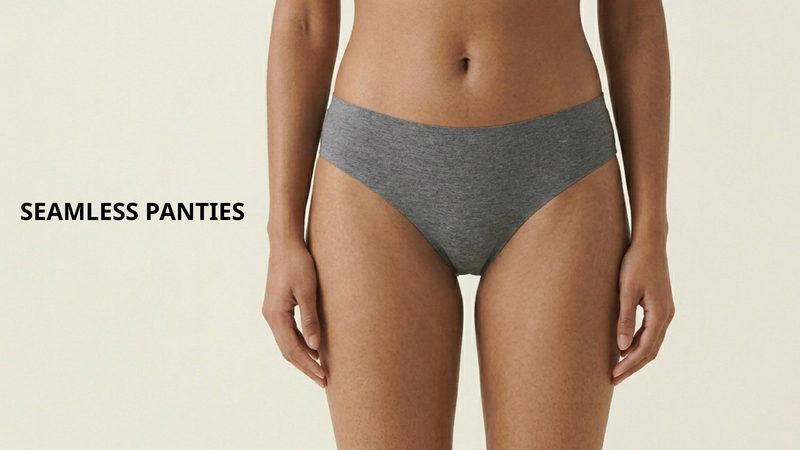
Seamless panties are widely used in both everyday essentials and activewear collections due to their versatility and second-skin feel. For brands developing seamless styles, nylon panty manufacturing is a core production capability at Thygesen, supporting nylon-spandex seamless constructions with laser-cut finishing and consistent stretch recovery across size ranges.
3.2. Control Top/Shapewear Panties
Control panties are designed with targeted compression zones that help smooth and shape the waist, tummy, and hips, creating a more streamlined silhouette under clothing. They bridge the gap between lingerie and shapewear by offering both aesthetic enhancement and functional support. Depending on the level of compression, they can range from light smoothing to firm shaping effects.
These garments are typically made from high-stretch, high-recovery fabrics such as nylon-spandex or power mesh, often combined with reinforced panels for added support. Manufacturing focuses on tension control, ergonomic panel placement, and breathable construction to maintain comfort during extended wear. Many designs also incorporate silicone grips or bonded seams to prevent rolling and ensure stability.
3.3. Period Panties
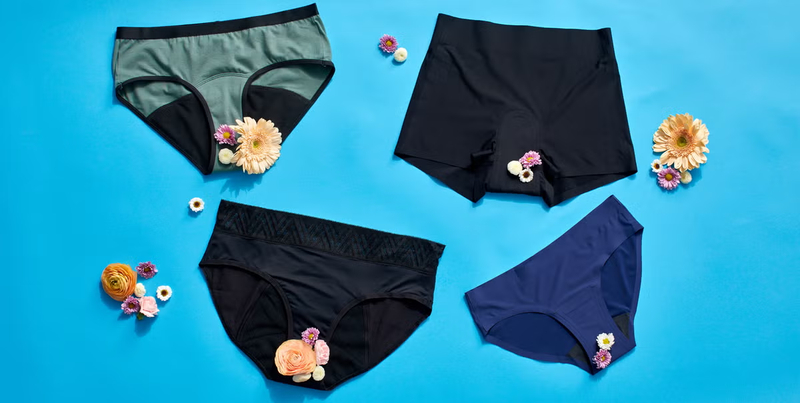
Period panties are engineered with multiple absorbent layers designed to manage menstrual flow while providing comfort and leak protection. The inner layers typically wick moisture away from the skin, the core layer absorbs fluid, and the outer layer acts as a leak-proof barrier. Depending on absorbency level, they can be used alone or as backup protection with other menstrual products.
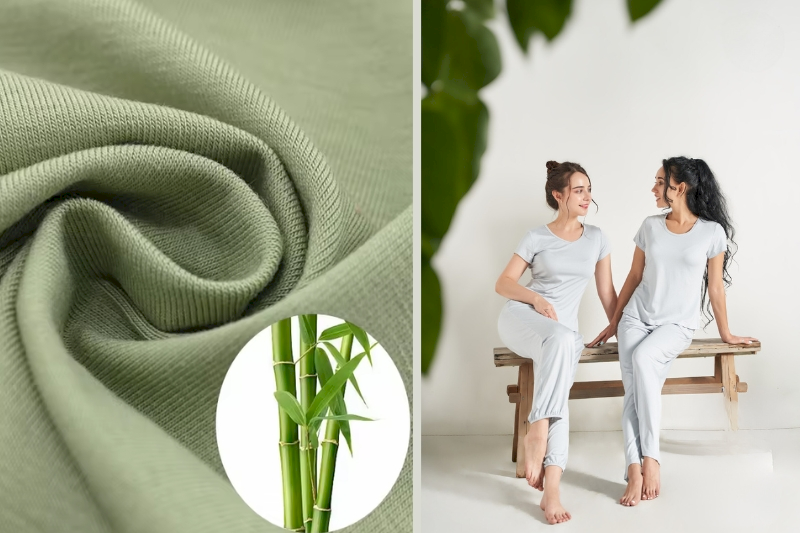
These products are commonly made from cotton blends, bamboo viscose, modal, and technical polyester fabrics combined with waterproof membranes such as TPU (thermoplastic polyurethane). In production, key considerations include absorbency capacity, breathability, and odor control. Period panties are increasingly popular as a sustainable alternative to disposable hygiene products.
3.4. Maternity Panties
Maternity panties are specially designed to accommodate body changes throughout pregnancy, offering gentle support without pressure on the abdomen. Features such as high-rise waistbands, soft stretch fabrics, and seamless construction help reduce discomfort while adapting to a growing belly. They are designed to provide stability and ease during daily movement.
Common materials include cotton-spandex, modal, and bamboo blends due to their softness, breathability, and elasticity. In manufacturing, emphasis is placed on non-restrictive waistband design and smooth seam construction to prevent irritation. Some maternity styles also include light support panels to help relieve lower back pressure.
3.5. Moisture-Wicking Panties
Moisture-wicking panties are designed to keep the skin dry by drawing sweat away from the body and allowing it to evaporate quickly. This makes them particularly suitable for activewear, warm climates, travel, and high-movement activities. In addition to moisture control, many designs also include quick-dry and anti-odor properties for enhanced comfort and hygiene.
These garments are typically made from performance fabrics such as polyester, nylon, and elastane blends, often treated with hydrophilic finishes or antimicrobial technologies. Some advanced versions incorporate bamboo charcoal fibers or merino wool blends for natural odor resistance. In manufacturing, breathability, fabric weight, and ventilation zones are key factors to ensure optimal performance during wear.
>> Moisture-wicking panties designed for activewear, warm climates, and high-movement activities require specialized technical fabrics and performance engineering. Partnering with experienced athletic clothing manufacturers ensures your intimate apparel meets the same functional standards as sportswear for durability, breathability, and moisture management.
4. By Rise & Waistband Height
Another important way to classify panties is by rise and waistband height, which determines how the garment sits on the body and influences both comfort and styling compatibility.
4.1. Low-Rise Panties
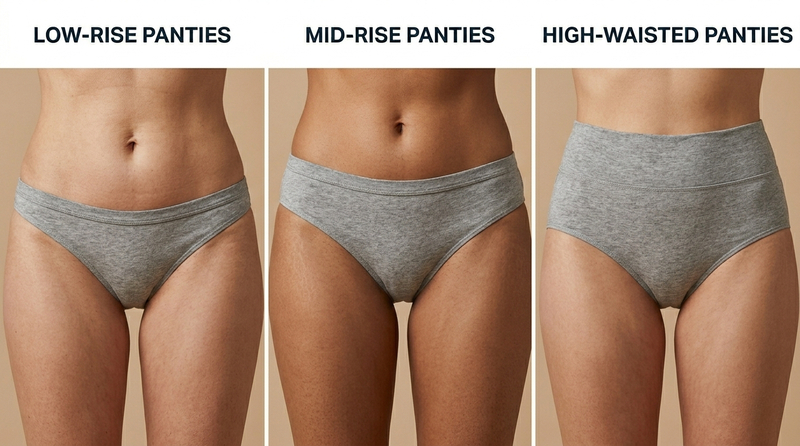
Low-rise panties are designed to sit below or directly on the hip bones, making them an ideal match for low-waisted jeans, skirts, and trousers. This rise creates a modern, youthful silhouette that emphasizes minimal coverage around the waist area while maintaining essential comfort and support. Because of their lower positioning, they help prevent fabric from peeking above low-rise garments, ensuring a clean and seamless look.
These styles are typically constructed using lightweight and flexible materials such as cotton-spandex, microfiber, lace, or seamless knits to allow comfortable movement around the hips. In manufacturing, careful attention is given to waistband elasticity and fit stability, as the lower placement requires secure grip without digging into the skin. Low-rise panties are especially popular in fashion-forward and casualwear segments due to their sleek and discreet appearance.
Low-rise panties are especially popular in fashion-forward and casualwear segments due to their sleek and discreet appearance. Brands developing this silhouette can refer to Thygesen’s dedicated low-waist panty manufacturing service, which covers waistband fit engineering, elastic stability at lower placements, and full-package production for fashion and essentials collections.
4.2. Mid-Rise Panties
Mid-rise panties sit comfortably between the hips and the natural waistline, offering a balanced fit that combines coverage, support, and everyday versatility. This rise is widely considered the most universal option, as it works well with both mid-rise and high-rise bottoms, making it a staple in most underwear collections. The design provides a secure fit without feeling too restrictive or too revealing.
They are commonly made from breathable and stretchable fabrics such as cotton, modal, microfiber, or blended knits. From a manufacturing perspective, mid-rise panties are favored for their stable fit and broad market appeal, as they accommodate a wide range of body shapes. This category often serves as the “core basic” in retail assortments due to its practicality, comfort, and consistent demand across demographics.
4.3. High-Waisted Panties
High-waisted panties extend above the natural waistline, offering enhanced coverage, gentle compression, and a smoothing effect around the midsection. This silhouette is widely appreciated for its ability to shape the waist and provide a secure, supportive feel throughout the day. It is often associated with vintage-inspired lingerie styles as well as modern shapewear-influenced designs.
These garments are typically constructed from high-stretch fabrics such as nylon-spandex, power mesh, cotton blends, or modal with elastane for added support. In production, panel construction and fabric tension control are critical to ensure both shaping performance and comfort. High-waisted panties are also frequently used in maternity and shaping collections due to their stability, coverage, and body-contouring benefits.
High-waisted panties are also frequently used in maternity and shaping collections due to their stability, coverage, and body-contouring benefits. This rise is equally important in plus-size panty manufacturing, where high-waisted constructions are often preferred for their ability to provide comfortable coverage and gentle support across extended size ranges.
5. Key Considerations When Producing Panties at Scale
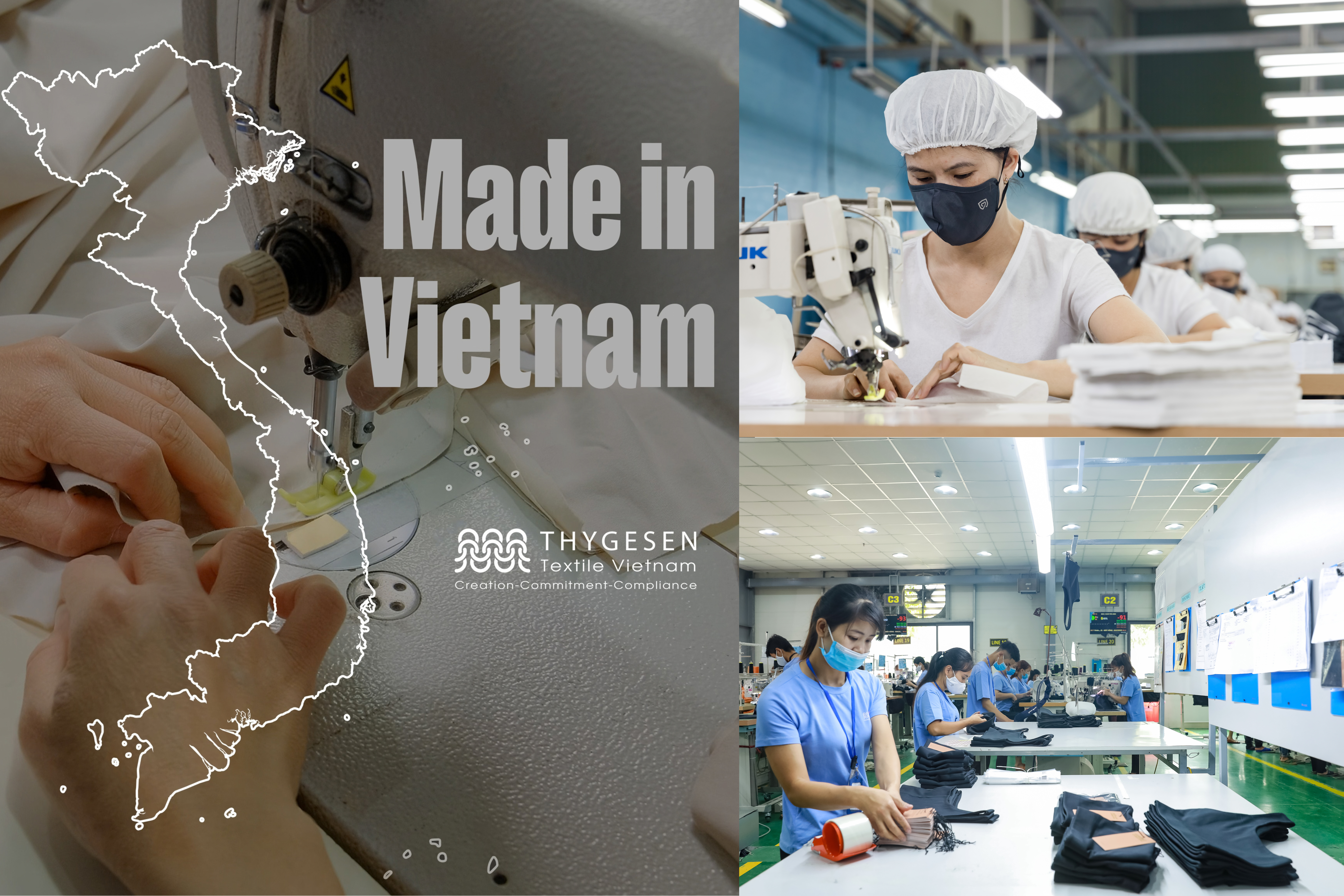
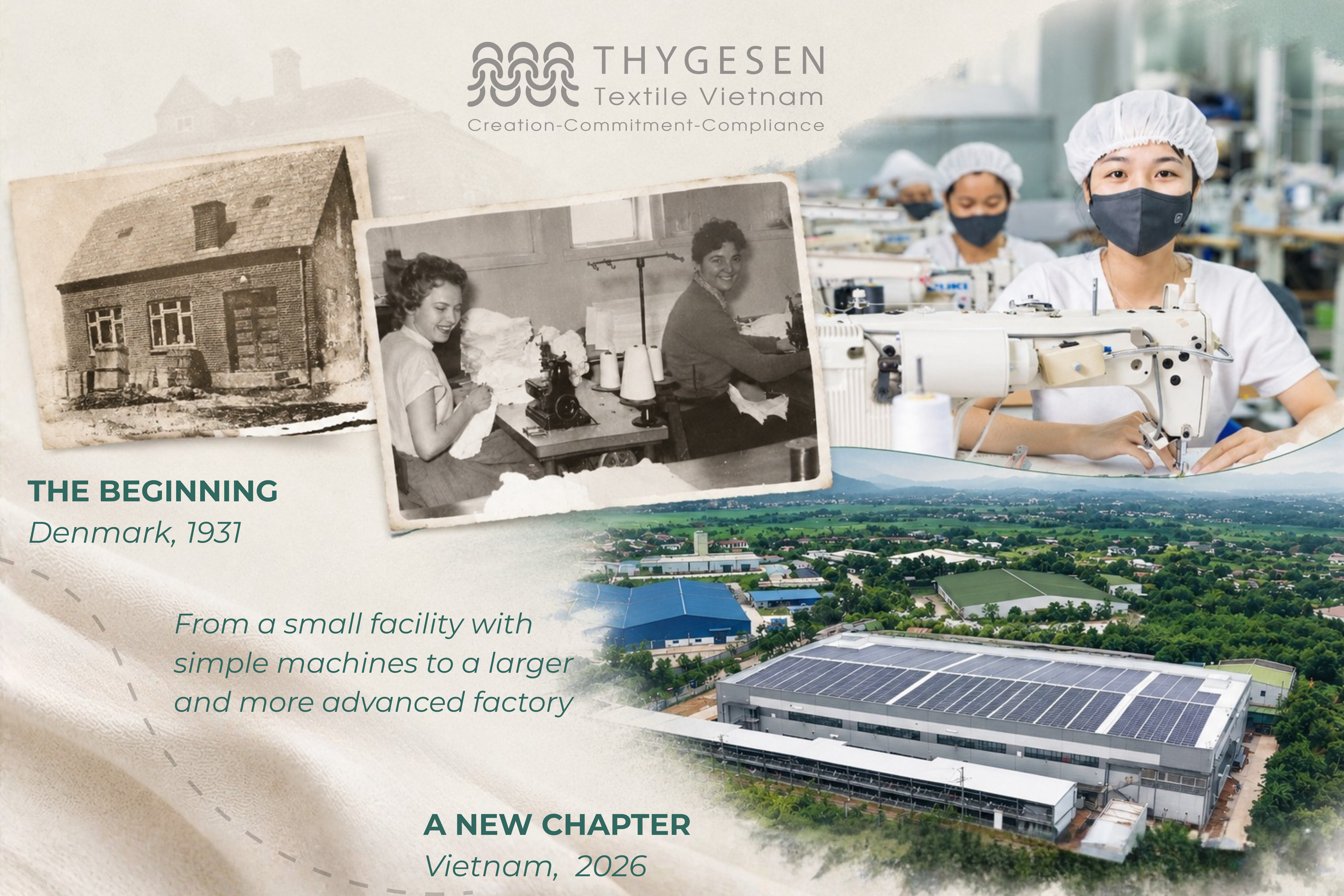
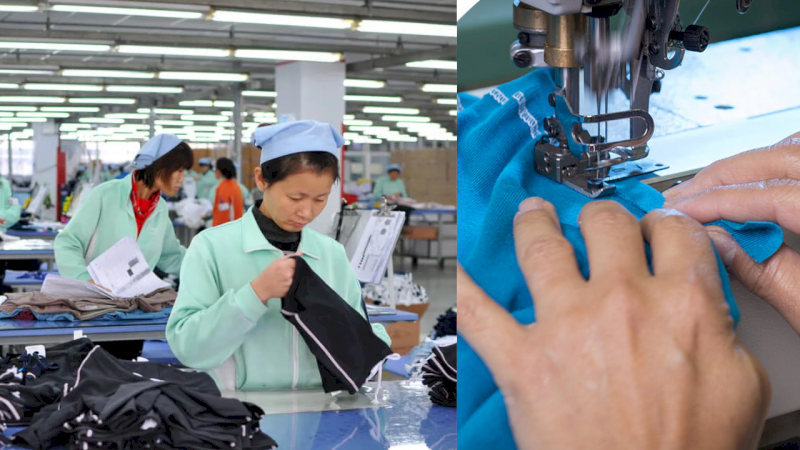
With decades of experience, Thygesen Textile Vietnam has been manufacturing high-quality underwear for both men and women for a wide range of global brands, covering everything from basic styles to seamless designs with a strong focus on comfort, fit, and hygiene. Our customization service also helps brands develop unique products that reflect their own identity.
From this experience, we have identified several key insights in panties manufacturing at scale, including material selection, construction methods, consistency, and quality control – factors that directly impact both product performance and production efficiency.
- MOQ & Fabric Consumption: Panties often require higher MOQs than items like T-shirts or leggings due to very low fabric consumption per unit, which pushes suppliers to set higher minimums to meet fabric mill efficiency thresholds (e.g., 3,000 pcs for T-shirts vs. up to 10,000 pcs for basic underwear depending on fabric and supplier).
- Fabric Selection & Testing Requirements: Fabric and functional features for panties must go through key tests such as stretch & recovery, seam durability, breathability, wash stability, and skin-friendliness to ensure long-term comfort and performance in direct skin contact products.
- Added Features & Sustainability Considerations: Additional functional features such as anti-bacterial treatment, odor control, cooling effect, or fabric finishing technologies can enhance product performance; however, brands should carefully evaluate chemical usage, environmental impact, and compliance with global safety standards (e.g, OEKO-TEX) to ensure both product safety and sustainable manufacturing practices.
- Seamless Production Capability: For seamless panties, brands need to clearly confirm whether the factory has in-house seamless knitting machines or relies on subcontractors, as this directly affects production lead time, cost structure, and quality consistency.
- Quality Control (QC) Factors: Essential QC checks include size accuracy, waistband elasticity, seam smoothness, color consistency, fit stability, and defect rate control to ensure uniform quality across large-scale production batches.
>> Thygesen Textile Vietnam brings decades of manufacturing expertise across diverse apparel categories—from intimate apparel to outerwear. Like our experience as a hoodie manufacturer, we understand the critical balance between design, fabric selection, construction techniques, and quality control required for consistent production at scale.
In conclusion, understanding the different types of panties helps brands develop more functional and well-structured underwear collections tailored to consumer needs in comfort, fit, and performance. At Thygesen Textile Vietnam, we provide expert underwear manufacturing solutions with a strong focus on quality and consistency. Contact us at sale@thygesen.com.vn or visit thygesenapparel.com to learn more.