Behind every T-shirt, pair of jeans or sports bra is a line of specialised machines. So what is an industrial sewing machine, how is it different from the machine you use at home, and which types of industrial sewing machines do garment factories rely on? This guide explains the definition, the key differences, how the machines are classified, 14 common types and their uses, plus practical tips on choosing the right one.
What Is an Industrial Sewing Machine?
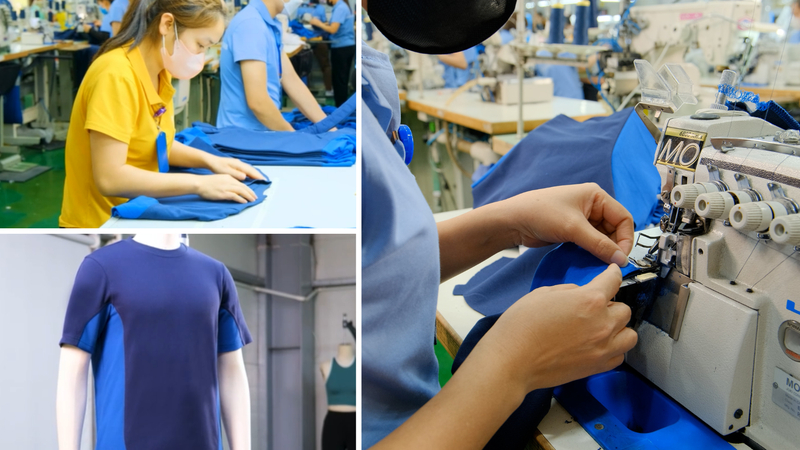
An industrial sewing machine is a heavy-duty, high-speed machine built for factories and workshops that sew large volumes every day. It is designed to run through long production shifts, handle materials from light fabrics to thick leather and upholstery, and produce the same consistent stitch on every piece. Because of this industrial workload, it has much larger shafts, bearings and gears than a home sewing machine.
Unlike a home machine that tries to do many jobs, each industrial machine usually specialises in one operation or one stage of production – joining seams, finishing edges, attaching buttons or reinforcing stress points. A garment factory therefore combines many types of industrial sewing machines along the production line, and the right combination directly affects product quality, output and competitiveness in export markets.
Industrial machines have come a long way, from mechanical treadle sewing machines to electronic, computer-controlled models with automatic thread trimming, programmable stitch patterns and production monitoring.

An industrial sewing machine is built for continuous, high-speed stitching in garment factories and workshops.
Understanding the initial stages is crucial, and mastering the sample development process is key to successful product launches.
To fully understand how these machines integrate into modern textile production, delve deeper into Apparel Lean Manufacturing: Everything You Need To Know – Thygesen Textile Vietnam.
Industrial vs Household Sewing Machines – Key Differences
Industrial and household sewing machines differ in speed, durability, material capability and the number of jobs each one is designed to do:
- Speed: A household machine typically runs at around 400-500 stitches per minute (SPM), while an industrial sewing machine typically runs at around 3,000-8,000 SPM.
- Duty cycle: An industrial sewing machine is built to operate continuously through full production shifts. Household machines are meant for a few hours of use at a time and wear out quickly if pushed harder.
- Materials: Industrial sewing machines sew through heavy materials such as multi-layer canvas, denim and leather, which can jam or break a household machine.
- Construction and motor: Industrial models use heavier frames, larger shafts, bearings and gears, and stronger motors. Household machines are compact and light, so they are easy to move and store in small spaces.
- Function: A household machine combines many functions – straight stitching, zigzag, simple edge finishing and buttonholes – in one unit. Industrial sewing machines are specialised: one machine sews straight seams, another finishes edges, another attaches buttons.
- Typical users: Industrial machines serve garment factories and production workshops making goods in large quantities. Household machines suit home sewing, clothing repairs and small tailoring jobs.
To optimize production timelines and efficiency, it is important to understand what is lead time in garment industry.
How Industrial Sewing Machines Are Classified
Before looking at individual models, it helps to know the three ways an industrial sewing machine is usually grouped. Suppliers and factories use the same groupings when they describe or select equipment:
- By stitch type: Lockstitch machines interlock an upper needle thread with a lower bobbin thread for a strong, stable seam. Chain stitch machines form looped stitches that are more elastic. Overlock and cover stitch machines finish raw edges and create stretchy seams for knitwear.
- By bed type: Flatbed machines have a flat work surface and suit most garment panels – most standard lockstitch and chain stitch machines use this design. Cylinder-bed machines have a narrow arm for tubular parts such as sleeves and cuffs, post-bed machines have a raised column for three-dimensional items such as shoes and bags, and long-arm machines give extra space for large pieces.
- By feed mechanism: The feed moves the fabric under the needle. Common options are drop feed (feed dogs under the needle plate), needle feed (the needle moves together with the fabric), walking foot or unison feed (the presser foot and feed dogs move together to grip thick layers) and differential feed (two sets of feed dogs that stop knits from stretching or puckering).
Types of Industrial Sewing Machines
Below are 14 common types of industrial sewing machines found in garment factories, with what each one does and where it is used.
1. Single Needle Lock Stitch Machine
The single needle lock stitch machine is the workhorse of garment production. It uses one upper needle thread and one lower bobbin thread to form a lockstitch (stitch class 301), mainly to sew straight seams that join two or more fabric plies, in materials ranging from lightweight to heavy fabrics.
Modern single needle machines add useful functions such as speed adjustment, automatic backtacking and automatic thread trimming, which save operators time on every seam. The machine is compact, so it saves floor space and is easy to maintain. Many brands make this type of industrial sewing machine, including Brother, Juki, Jack and Sunstar, each with its own features.
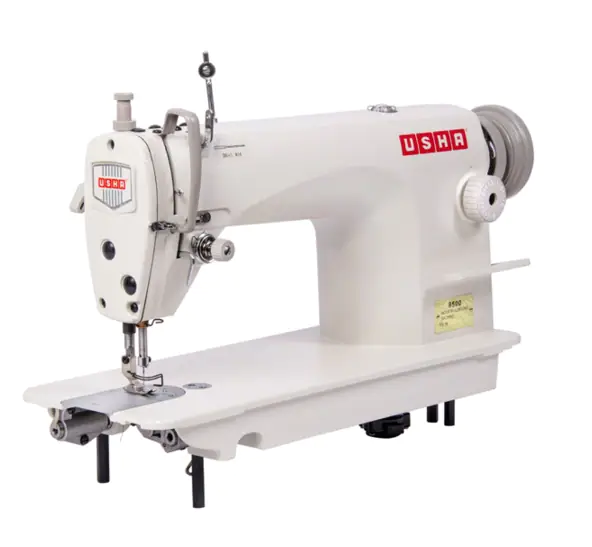
The single needle lock stitch machine sews strong straight seams with one needle thread and one bobbin thread.
2. Double Needle Lock Stitch Machine
A double needle lock stitch machine works on the same principle as the single needle model but uses two needles and two bobbins to sew two parallel rows of stitches at once. This cuts stitching time whenever a double row of stitching is needed, for example on coats, bags, suitcases, sofas, gloves, camping gear, shoes and leather goods.
Many models combine bottom feed with needle feed, and some add an alternating presser foot, so thick layers move evenly under both needles. Electronic versions can also trim threads and backtack automatically.
3. Overlock/Serger Machine
An overlock machine, also called a serger, is an industrial sewing machine that sews over the edge of the fabric while a knife trims the excess, so the seam is joined and finished in one step and the raw edge does not fray. It is widely used for knitted garments such as T-shirts, activewear and underwear.
Overlock machines come in 3-thread, 4-thread and 5-thread versions and form overedge stitches such as stitch classes 503, 504 and 512. The 5-thread version adds a separate chain stitch line next to the overedge stitch for extra seam strength. Many models also use differential feed to keep stretch fabrics from waving or puckering.
4. Flatlock/Cover Stitch Machine
A cover stitch machine usually has 2-3 needles. The needle threads pass through the fabric and are interlooped on the underside by a looper thread, forming a cover stitch such as stitch class 406 – neat parallel lines on the face of the garment and a looped stitch covering the raw edge on the back.
Flatlock machines come in flatbed and cylinder-bed versions. They are mainly used to hem sleeves and the bottoms of knitted garments, to attach binding and elastic, and for decorative stitching on any part of the garment.
5. Single Needle Chain Stitch Machine
A single needle chain stitch machine forms a chain of interlocked thread loops instead of locking the needle thread with a bobbin thread. The stitch is more elastic than a lockstitch, which suits stretchy materials, and the machine has a simple structure that is easy to install and maintain, runs fast and has a low cost.
The trade-off is security: a chain stitch can unravel if the thread breaks. For this reason, it is often chosen where elasticity or speed matters more than maximum seam strength, or for temporary seams.
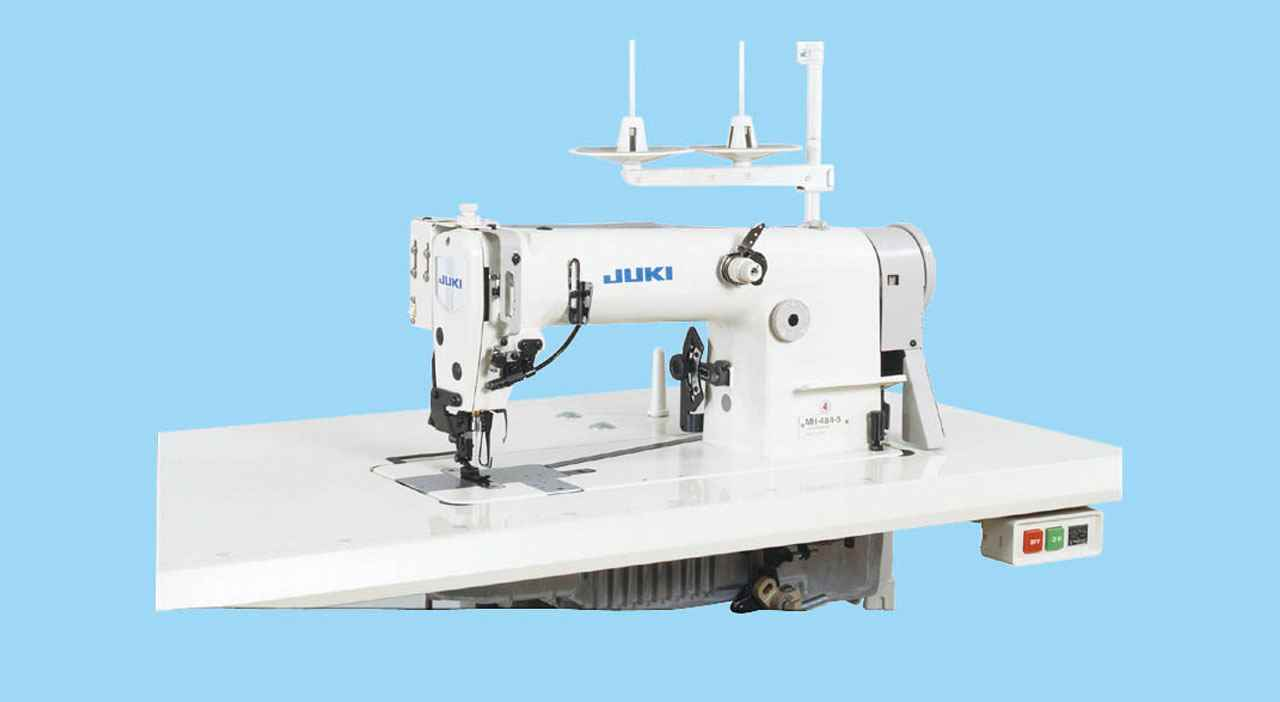
A single needle chain stitch machine forms looped, elastic stitches that suit stretchy materials.
6. Feed-off-the-Arm Machine
A feed-off-the-arm machine sews a chain stitch with two needle threads while the fabric is fed off the end of a narrow arm. This design lets operators sew tubular parts and produce flat-felled (lapped) seams, in which the raw edges are folded inside the seam for a strong, clean finish.
It is commonly used for the inseams of jeans and the side seams of shirts, and it handles heavy fabrics such as denim well, including sewing through several folded layers. The needle size is chosen according to the thickness of the fabric.
7. Blind Stitch Machine
A blind stitch machine is an industrial sewing machine that joins two pieces of fabric, or hems a folded edge, with stitches that are almost invisible on the right side of the garment. The needle only catches a few threads of the outer fabric on each stitch, so the seam stays hidden inside the fold.
The stitching can only be seen when the folded material is pulled apart. That is why blind stitching is used for garment hems and for joining two folded edges, as well as for attaching pockets and trims without a visible seam line.
8. Button Attaching Machine
A button attaching machine sews buttons and other small fasteners, such as hooks, onto garments. Basic models use a single-thread chain stitch: one needle thread forms chain links that lock themselves under the material to hold the button in place.
Settings can be adjusted for different button sizes and for the number of stitches per button, and the machine handles common 2-hole and 4-hole flat buttons. Automatic thread trimming at the end of each cycle keeps the operation fast.
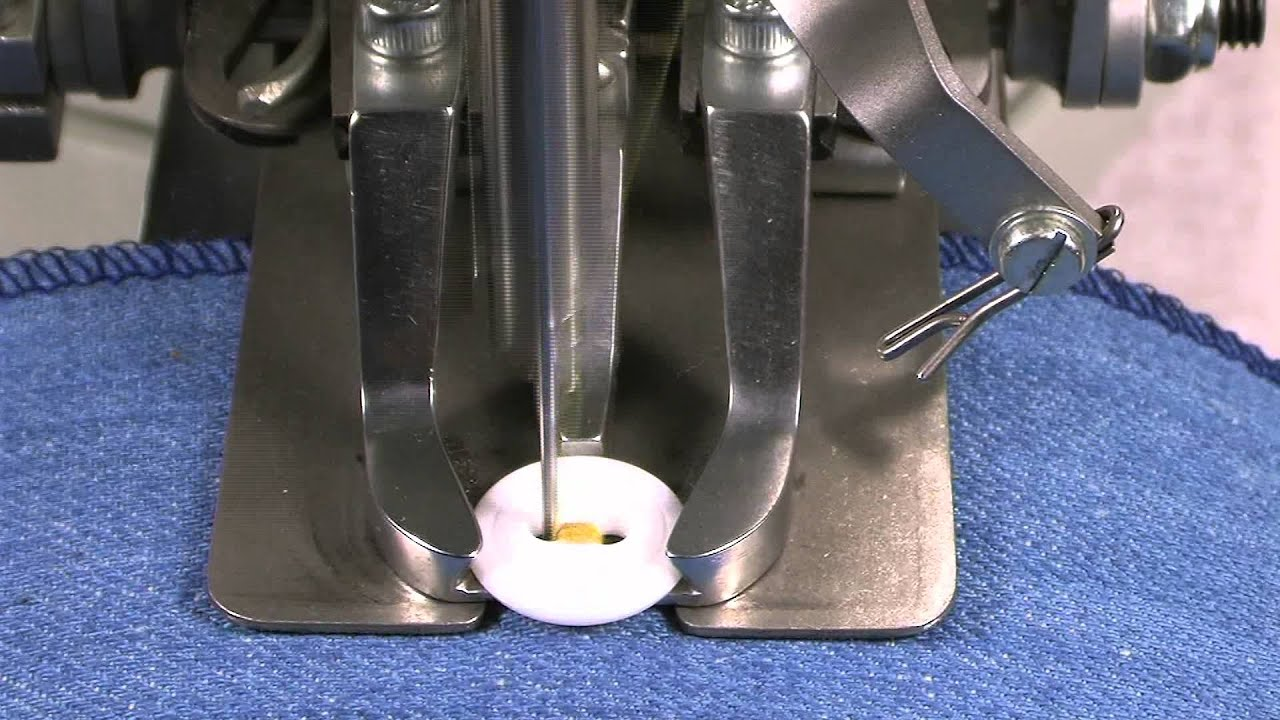
A button attaching machine sews 2-hole and 4-hole buttons with a set number of stitches in each cycle.
9. Buttonhole Machine
A buttonhole machine stitches the edges of a buttonhole and cuts the opening in one automatic cycle. Depending on the model, it uses a lockstitch or a chain stitch, and the stitch density can be adjusted for different fabrics.
Although many home machines can make a buttonhole, an industrial buttonhole machine produces uniform buttonholes much faster, which matters for shirts, trousers and polo shirts made in volume.
10. Bartack Sewing Machine
A bartack machine is an industrial sewing machine that sews a short, dense group of stitches, called a bartack, to reinforce points that take stress during wear. Typical uses are belt loops, pocket openings and pocket corners.
Bartacking is used on menswear and womenswear, jeans, knitwear, underwear and luggage. Electronic, computer-controlled bartack machines can store different stitch patterns, so one machine can switch between reinforcement shapes for different products.
11. Zigzag Sewing Machine
A zigzag machine is a lockstitch industrial sewing machine whose needle swings from side to side to form a zigzag pattern. Because the stitch can stretch with the fabric, it is useful for joining and finishing elastic and stretch materials.
In garment factories, zigzag machines are commonly used in bra and jacket manufacturing, for example to attach elastic or to join panels that need to flex with the body.
12. Multi-Needle Chain Stitch Machine
A multi-needle chain stitch machine sews several parallel rows of chain stitch at the same time. It is used for decorative and functional operations such as smocking and pin-tucking, where many evenly spaced rows of stitching are needed in a single pass.
13. Longarm Quilting Sewing Machine
A longarm quilting machine has a very long arm and a large work area, so it can stitch through the three layers of a quilt – the top fabric, the middle volume-forming layer and the backing – in one pass. It is used mainly for quilts and quilted products rather than everyday garments, and it helps workshops finish large pieces quickly.

A longarm quilting machine offers a large work area for stitching the top, middle and backing layers of a quilt together.
14. Computer-Controlled Cycle Machine
A computer-controlled cycle machine is pre-programmed to sew a fixed pattern automatically, such as labels, logos and decorative designs. The operator loads the part, and the machine completes the whole stitching cycle with consistent quality from piece to piece.
Some models connect to dedicated software, so factories can monitor and control production directly from the sewing line. This makes the computer-controlled industrial sewing machine a practical choice for repeat operations on small, precise items.
How to Choose the Right Industrial Sewing Machine
Whether you are equipping a workshop or choosing a manufacturer for your brand, these factors decide which industrial sewing machine fits the job:
- Material: Light woven fabrics, stretch knits, denim and leather need different machines, needles and feed systems. Knits usually call for overlock and cover stitch machines with differential feed, while thick layers need a walking foot or needle feed.
- Seam requirements: Decide whether each seam needs strength (lockstitch), stretch (chain stitch, overlock, cover stitch or zigzag), an invisible finish (blind stitch) or reinforcement (bartack).
- Production volume: For large orders, speed, automatic thread trimming and programmable cycles save time on every piece.
- Bed configuration: Flat panels suit a flatbed machine, sleeves and cuffs are easier on a cylinder bed, and bags or shoes may need a post bed.
- Fit with the production line: Check how the machine works alongside the other operations and machines in your line.
- Serviceability: Choose machines with available spare parts, needles and technicians so that downtime stays short.
For most fashion brands, the practical question is not which machine to buy, but whether a manufacturer has the right mix of equipment and skilled operators for your product.
Thygesen Textile Vietnam – Your Garment Manufacturing Partner in Vietnam
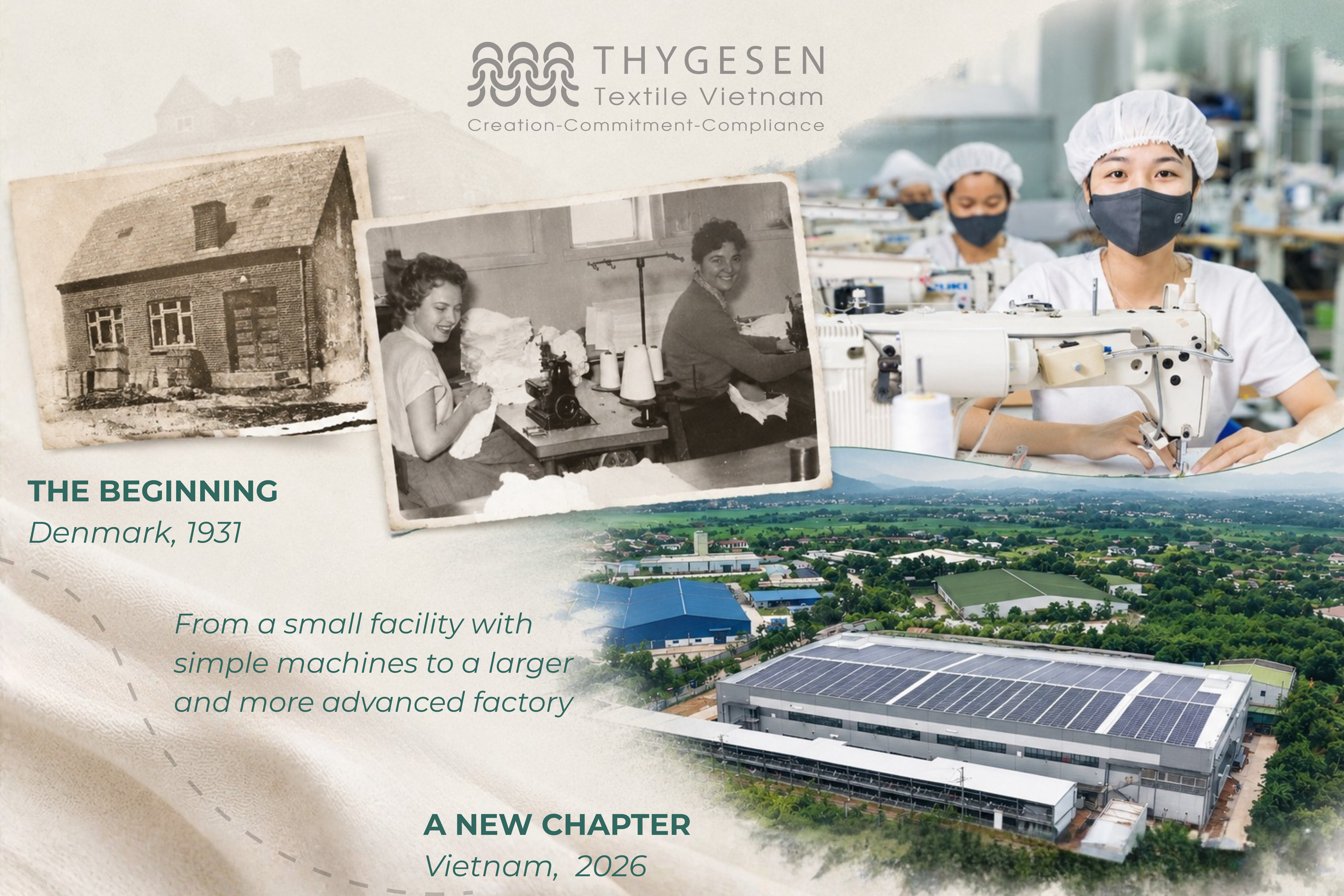
At Thygesen Textile Vietnam, we bring more than 90 years of experience in textiles and garment manufacturing. We work with international brands across different product groups, from underwear and activewear brands such as Boody, Girlfriend Collective and B Free Australia to outdoor apparel brands such as Fjällräven, K-Way and Descente.
Key strengths include:
- Long experience: More than 90 years of know-how in textiles and garment production.
- Responsible factories: Our factories hold SA8000 and WRAP certifications, and we follow the ISO 9001:2015 quality management standard.
- Material certifications: GRS, GOTS, OEKO-TEX STANDARD 100, FSC and OCS certifications support brands that need recycled, organic and tested materials.
- Direct contact: Reach our team at sale@thygesen.com.vn to discuss your next product.
FAQs About Industrial Sewing Machines
What is an industrial sewing machine?
It is a heavy-duty, high-speed machine built for continuous production. It sews faster than a household machine, handles heavier materials and usually specialises in one operation, such as straight seams, edge finishing or buttonholes.
How many types of industrial sewing machines are there?
There is no single fixed number, because machines can be grouped by stitch type, bed type and feed mechanism. This guide covers 14 common types used in garment production, from single needle lock stitch and overlock machines to bartack and computer-controlled cycle machines.
How fast does an industrial sewing machine sew?
An industrial sewing machine typically runs at around 3,000-8,000 stitches per minute, compared with around 400-500 stitches per minute for a household machine. Actual speed depends on the model, the material and the operation.
Which industrial sewing machines are used for activewear and stretch fabrics?
Stretch garments usually rely on overlock machines for seams, flatlock/cover stitch machines for hems and binding, and zigzag or chain stitch machines where the seam needs to stretch with the fabric. Differential feed helps prevent knits from stretching out during sewing.
Is it worth buying an industrial sewing machine?
It is worth it if you sew every day, work with heavy materials or produce in volume. For fashion brands that do not run their own factory, partnering with an experienced manufacturer is usually more practical, since a complete garment needs many different machines and trained operators.
Conclusion
In conclusion, an industrial sewing machine is a specialised, high-speed tool built for continuous production, and each of the 14 types above plays its own role – from joining and finishing seams to attaching buttons and reinforcing stress points. Understanding these machines helps brands set realistic quality standards and work more effectively with their manufacturer. To discuss your next collection with Thygesen Textile Vietnam, visit thygesenapparel.com or email sale@thygesen.com.vn.