Hoodies come in a wide range of styles, and understanding the different types of hoodies can help brands choose the right design for their target market. From classic pullover and zip-up hoodies to oversized silhouettes and performance fleece styles, each type varies in fit, construction, fabric, and intended use.

1. By Hoodie Style & Construction
One of the most common ways to classify the different types of hoodies is by their style and construction. This category focuses on key design features such as closure type, silhouette, and structural details, which influence both the garment’s appearance and functionality.
>> Understanding construction techniques is essential for quality hoodie production. Working with a skilled cut and sew manufacturer ensures precise pattern alignment, accurate seam placement, and consistent quality across pullover, zip-up, and oversized silhouettes.
1.1. Pullover Hoodie
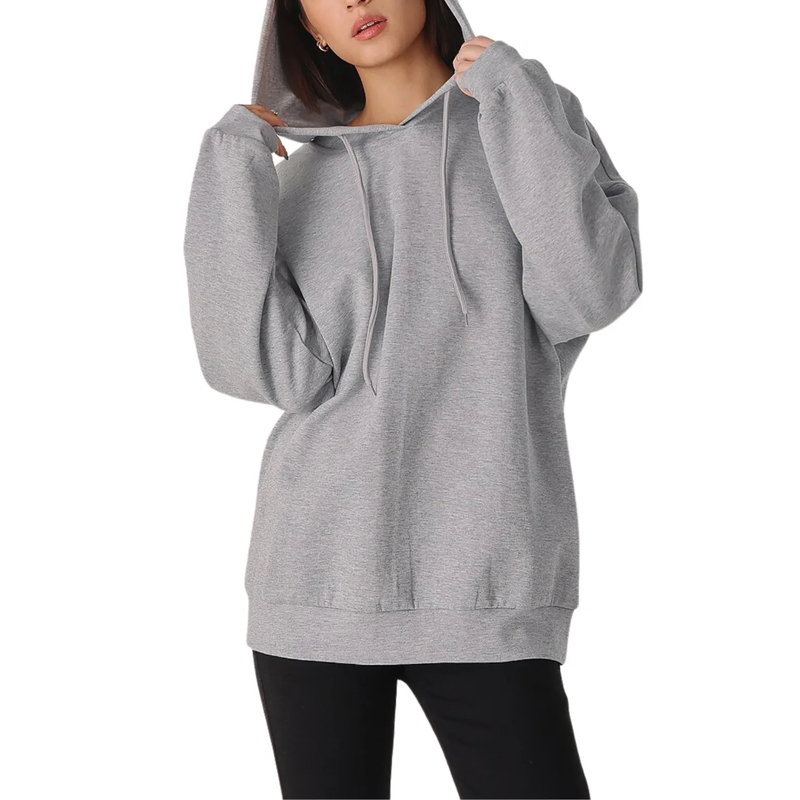
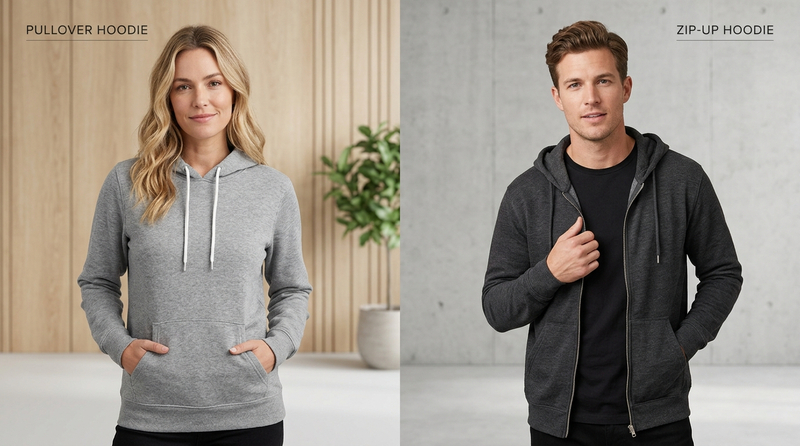
The pullover hoodie is the most classic and widely recognized among all types of hoodies. In terms of style and construction, it is defined by its slip-on design with no front opening or zipper, creating a clean and seamless appearance. This one-piece front construction not only enhances durability but also provides better insulation by minimizing openings where heat can escape.
A typical pullover hoodie features an attached hood with adjustable drawstrings, a large kangaroo pocket on the front, and ribbed cuffs and hem to help retain shape and improve comfort. Its straightforward construction makes it a versatile choice for casualwear, streetwear, sportswear, and promotional apparel, offering both practicality and timeless appeal. For brands looking to develop this style, Thygesen offers dedicated pullover hoodie manufacturing services with full OEM/ODM capabilities, from fabric selection to finished product.
In addition to mainstream casualwear styles, some brands are also investing in modest fashion collections, where working with an experienced hijab hoodie manufacturer is essential for balancing comfort, coverage, and functional design.
1.2. Zip-Up Hoodie
The zip-up hoodie is distinguished by its full-length front zipper, which allows the garment to open completely from top to bottom. From a style and construction perspective, this design offers greater versatility and easier layering compared to pullover hoodies. The front panel is divided into two sections, with the zipper serving as both a functional and aesthetic element.
Common construction features include an attached hood, side or split kangaroo pockets, and ribbed cuffs and hem. The zip-up hoodie is widely used in activewear, teamwear, and casual collections due to its convenience, adjustable ventilation, and adaptable styling. Thygesen’s zip-up hoodie manufacturing capabilities cover this style end-to-end, supporting brands across fabric sourcing, construction detailing, and bulk production with consistent quality standards.
1.3. Oversized Hoodie
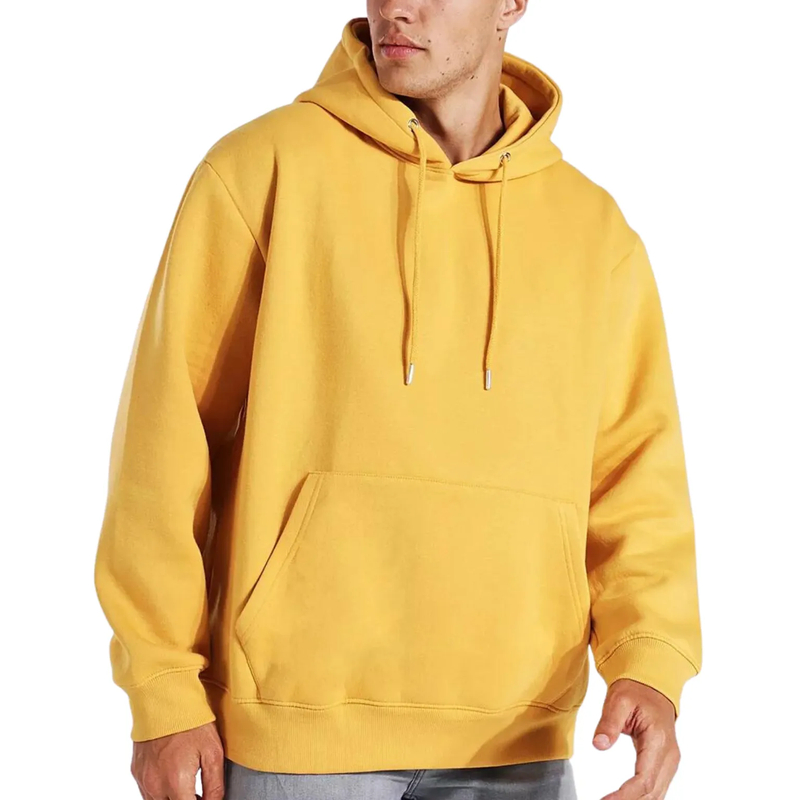
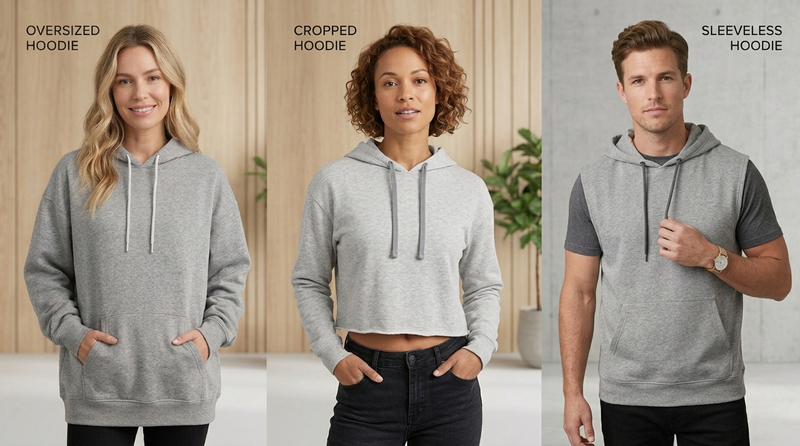
The oversized hoodie is characterized by a deliberately loose and relaxed silhouette, featuring dropped shoulders, extended body length, and wider sleeves. In terms of construction, additional fabric is incorporated to create a roomy fit that emphasizes comfort and a contemporary streetwear aesthetic.
Despite sharing core hoodie elements such as a hood, front pocket, and ribbed trims, the oversized hoodie stands out through its exaggerated proportions. This style is especially popular in fashion-forward and youth-oriented collections, where comfort and bold silhouettes are key design priorities. Brands developing this style can work with Thygesen’s oversized hoodie manufacturing team, which brings technical expertise in proportion grading, fabric weight selection, and silhouette consistency across size ranges.
1.4. Cropped Hoodie
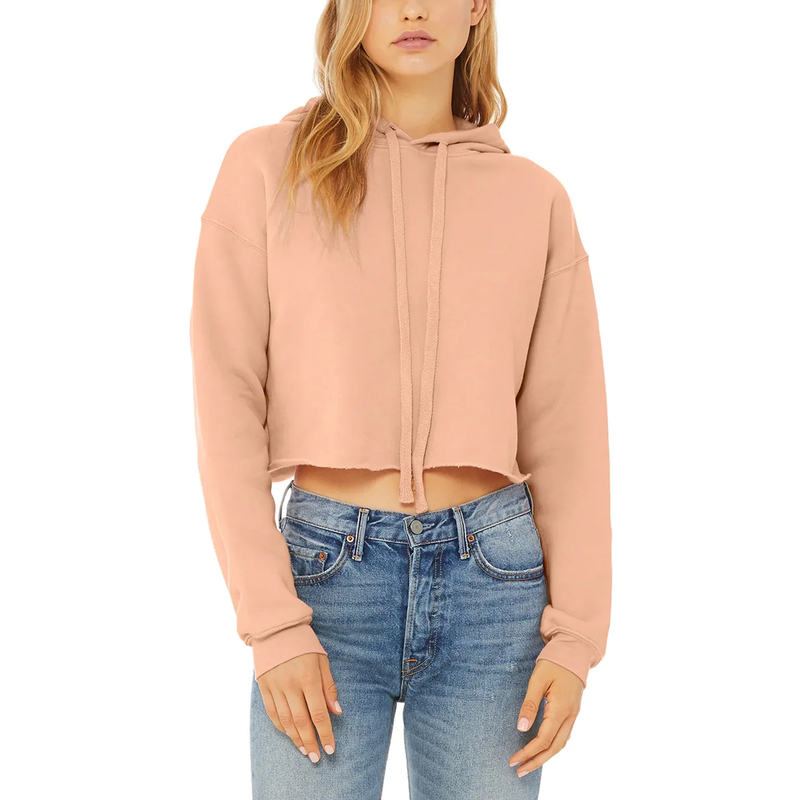
The cropped hoodie features a shortened body length that typically ends at or above the waist. From a construction standpoint, the torso panels are intentionally cut shorter while maintaining standard hoodie components such as an attached hood, long sleeves, and ribbed cuffs.
This design creates a modern and sporty silhouette, making it particularly popular in women’s activewear and athleisure collections. The cropped hoodie combines the casual appeal of a traditional hoodie with a more fashion-conscious shape – a balance that Thygesen’s hooded crop top manufacturing service is specifically built to deliver, with focused expertise in fit precision, length grading, and women’s activewear construction standards.
1.5. Sleeveless Hoodie
The sleeveless hoodie retains the essential structure of a hoodie while eliminating the sleeves entirely. Its construction includes an attached hood and a body similar to a standard hoodie, with armholes finished using binding or ribbed trims for durability and comfort.
This style offers increased freedom of movement and improved breathability, making it well suited for gym wear, training apparel, and casual streetwear. The sleeveless hoodie blends athletic functionality with a distinctive urban aesthetic.
1.6. Half-Zip Hoodie
The half-zip hoodie, also known as a quarter-zip hoodie in some designs, features a partial zipper extending from the neckline to the chest. From a construction perspective, this design combines the clean silhouette of a pullover hoodie with the added convenience of adjustable ventilation.
It typically includes an attached hood, a front pocket or side pockets, and ribbed cuffs and hem. The half-zip hoodie is commonly used in sportswear and outdoor apparel, where ease of wear and temperature control are important.
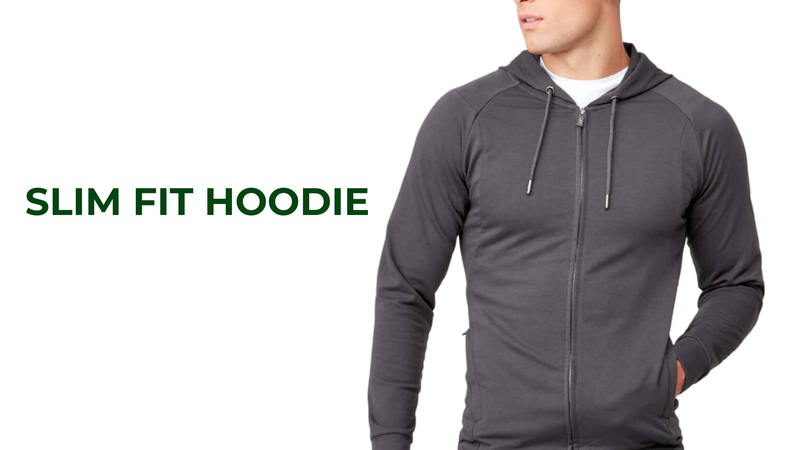
1.7. Slim-Fit Hoodie
The slim-fit hoodie is designed with a more tailored silhouette that follows the natural contours of the body. In terms of construction, the garment features narrower body panels, fitted sleeves, and reduced ease compared to regular-fit hoodies.
Standard hoodie elements such as an attached hood, front pocket, and ribbed trims are maintained, but the refined proportions create a cleaner and more streamlined appearance. Slim-fit hoodies are popular in both casualwear and performance apparel, offering a polished look without sacrificing comfort.
2. By Fabric & Performance
Another practical way to classify the different types of hoodies is by the fabrics they are made from and the performance features they provide. This category focuses on material composition and functional properties such as warmth, breathability, moisture management, stretch, and weather resistance, helping brands choose the most suitable hoodie for specific climates, activities, and consumer needs.
For a deeper breakdown of material options and their technical characteristics, our guide on hoodie fabric types covers the most commonly used fabrics in hoodie manufacturing and what to consider when selecting materials for your collection.
2.1. Fleece Hoodie
A fleece hoodie is made from knitted fabric that is brushed on the inside, and sometimes on both sides, to create a soft and insulating surface. Common fiber compositions include 60-80% cotton blended with 20-40% polyester, or 100% polyester for technical applications. The brushed interior traps air effectively, providing excellent warmth and a cozy hand feel.
Fleece hoodies are ideal for cold-weather casualwear, loungewear, and outdoor apparel. They offer superior thermal insulation, softness, and durability, making them one of the most popular types of hoodies for autumn and winter collections.
>> Fleece hoodies are ideal for loungewear and casual comfort, much like the focus of quality pajama manufacturers on softness and breathability, ensuring superior thermal insulation and durability for everyday wear.
2.2. Cotton Hoodie
Cotton hoodies are typically made from 100% cotton or cotton-rich fabrics such as 95% cotton and 5% elastane for added flexibility. They are valued for their natural softness, breathability, and moisture absorption, providing excellent comfort for everyday wear.
Compared to synthetic fabrics, cotton offers a more premium and skin-friendly feel. Cotton hoodies are widely used in casualwear and lifestyle collections, particularly for consumers who prioritize natural fibers and all-day comfort. Thygesen’s cotton hoodie manufacturing service supports brands in sourcing the right cotton grades and constructions – from 100% cotton fleece to cotton-elastane blends – ensuring the finished product meets both comfort expectations and production quality standards.
2.3. French Terry Hoodie
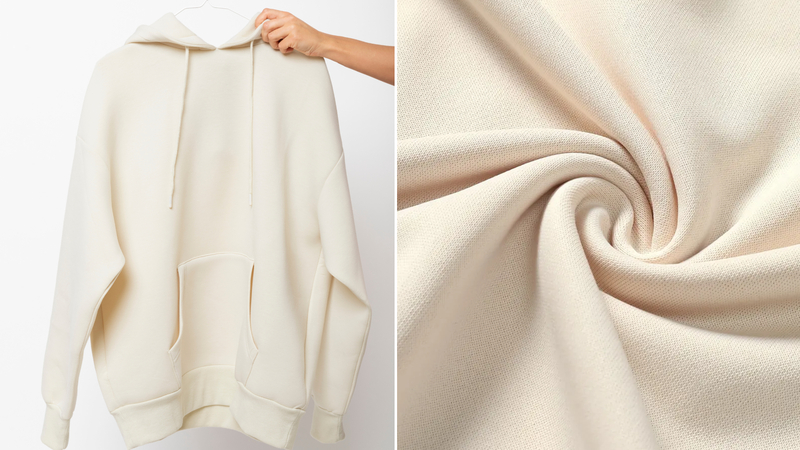
French terry is a knit fabric with a smooth outer face and unbrushed looped yarns on the inside. It is commonly made from 100% cotton or cotton-polyester blends such as 80% cotton and 20% polyester. This structure delivers moderate warmth while maintaining good breathability.
French terry hoodies are lighter and less bulky than fleece hoodies, making them suitable for year-round wear, layering, and athleisure collections. They offer an ideal balance between comfort, moisture absorption, and temperature regulation.
2.4. Heavyweight Hoodie
Heavyweight hoodies are defined by fabric weights typically ranging from 350 to 500 GSM or higher. They can be made from cotton fleece, brushed terry, or cotton-poly blends such as 80% cotton and 20% polyester to enhance durability and shape retention.
These hoodies provide exceptional warmth, structure, and a premium feel. Heavyweight hoodies are especially popular in streetwear and luxury casualwear, where consumers value substantial fabric, durability, and high-end aesthetics.
2.5. Lightweight Hoodie
Lightweight hoodies are usually produced from jersey, lightweight French terry, or thin fleece fabrics ranging from approximately 180 to 280 GSM. Common compositions include 100% cotton, cotton blends, or performance synthetics.
Their key advantages are breathability, flexibility, and ease of layering. Lightweight hoodies are ideal for transitional weather, travel, and active lifestyles where comfort is needed without excessive bulk or heat retention.
2.6. Sustainable Hoodie
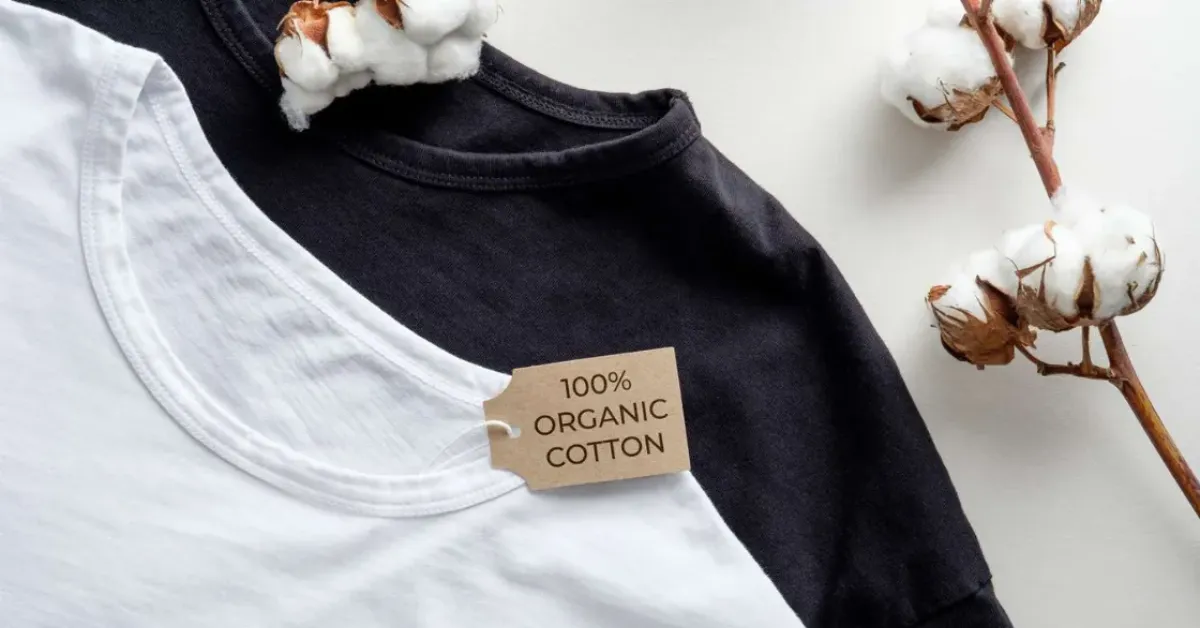
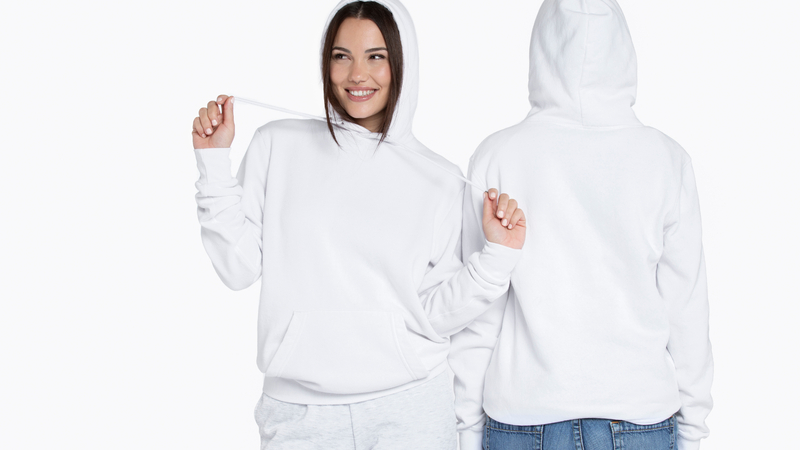
Sustainable hoodies are manufactured using environmentally responsible materials such as organic cotton, recycled polyester, hemp, TENCEL™ Lyocell, or bamboo viscose blends. Popular compositions include 100% organic cotton, 50% organic cotton and 50% recycled polyester, or other low-impact fiber combinations.
These hoodies offer the same performance characteristics as conventional fabrics while reducing environmental impact. They are increasingly favored by brands seeking to meet consumer demand for ethical production, traceable sourcing, and lower carbon footprints.
2.7. Active Hoodie
Active hoodies are engineered from technical fabrics designed to enhance athletic performance. Typical materials include polyester-spandex blends such as 88-92% polyester and 8-12% elastane, or nylon-elastane blends for improved stretch and recovery.
Key performance features include moisture-wicking, quick-drying, four-way stretch, and lightweight insulation. Active hoodies are widely used in sportswear, gym wear, and outdoor training apparel, offering both functionality and comfort during physical activity. For brands developing performance-focused collections, Thygesen also provides dedicated running hoodie manufacturing solutions with moisture-wicking fabrics and ergonomic construction
>> Active hoodies are engineered from technical fabrics designed to enhance athletic performance. For brands developing performance-focused collections, partnering with experienced athletic clothing manufacturers ensures your sportswear delivers both functionality and comfort during intense physical activity

Performance collections may also include visibility-enhancing garments produced by a specialized reflective hoodies manufacturer, particularly for outdoor running and training apparel.
3. By Design & Functional Details
Hoodies can also be categorized by their design elements and functional details, where specific construction features such as pocket styles, closure systems, hood adjustability, sleeve functionality, and graphic or decorative treatments define both the practicality and visual identity of each style.
3.1. Zipper Detail Hoodie
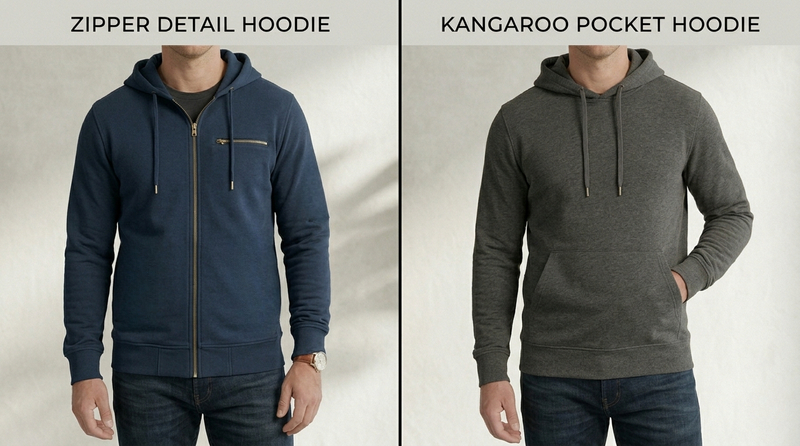
Zipper detail hoodies include full-zip, half-zip, or partially functional zipper constructions integrated into the front panel or pocket areas. Technically, this style requires accurate pattern alignment, reinforced stitching around zipper tapes, and careful control of fabric tension to ensure smooth opening and durability.
From an OEM standpoint, zipper hoodies offer strong versatility across casualwear, activewear, and outerwear segments. They also provide added functional value such as adjustable ventilation, layering flexibility, and ease of wear, making them a strategic product category for multi-purpose apparel lines.
Among these, the full-zip construction remains the most in-demand variation – and Thygesen’s full-zip hoodie manufacturing service is equipped to handle the technical precision this style demands, from zipper sourcing and tape alignment to reinforced seam finishing at scale.
3.2. Kangaroo Pocket Hoodie
The kangaroo pocket hoodie features a large front patch pocket integrated into the lower front panel, typically constructed by joining both sides of the garment into a single continuous pouch. From a manufacturing perspective, this design requires precise alignment to ensure symmetry, smooth surface appearance, and proper load distribution to avoid fabric distortion during wear.
In OEM production, this style is widely used in casualwear and streetwear collections due to its cost efficiency, straightforward construction, and high market acceptance. Beyond functionality, the kangaroo pocket enhances usability by providing hand-warming and storage convenience, making it a core design in mass-market hoodie development.
3.3. Adjustable Hood Hoodie
The adjustable hood hoodie is defined by the presence of drawstrings, eyelets, and hardware components that allow the wearer to modify hood fit and coverage. These functional elements play an important role in protection against wind and cold while also contributing to styling flexibility.
In OEM manufacturing, this is considered a standard but critical construction detail. It requires consistent quality control of trims such as cords, aglets, and eyelets to ensure durability, safety, and compliance with international retail standards, especially in EU and US markets.
3.4. Functional Sleeve Hoodie
Functional sleeve hoodies are designed with performance-oriented sleeve constructions such as raglan sleeves for enhanced mobility, set-in sleeves for a structured silhouette, or thumbhole cuffs for improved thermal retention and stability during movement.
From a production perspective, this category demands higher pattern engineering accuracy, particularly in armhole shaping and seam balance. It is commonly used in activewear and athleisure collections where comfort, flexibility, and ergonomic fit are key product requirements.
3.5. Graphic & Detail Hoodie
Graphic & detail hoodies focus on visual expression and brand identity through techniques such as screen printing, embroidery, applique, heat transfer, and color-block construction. Placement accuracy, color consistency, and durability of decoration are key technical factors in OEM production.
This category is highly driven by brand identity and market positioning, making it a core segment for streetwear, lifestyle, and fashion brands. Successful execution requires close collaboration between design, merchandising, and production teams to ensure that visual concepts are translated accurately into scalable manufacturing outcomes. For brands focusing on graphic-heavy collections, Thygesen supports full printed hoodie manufacturing services, including screen printing, embroidery, applique, and other advanced decoration techniques.
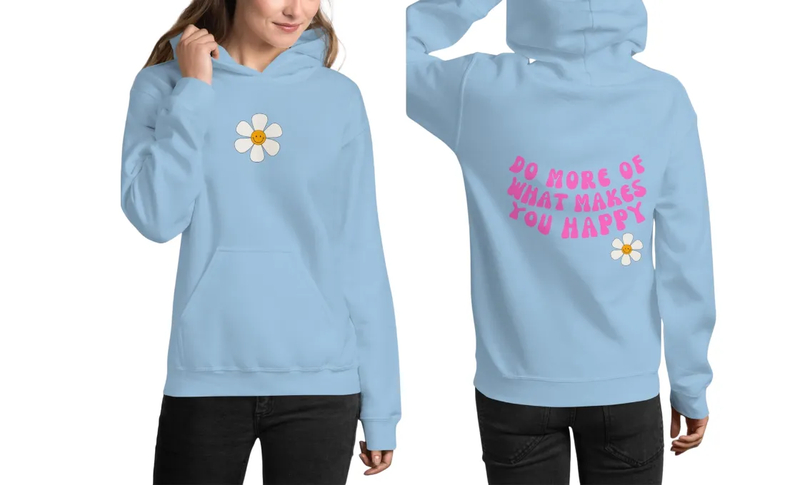
For brands looking to develop unique collections, Thygesen provides full-service custom hoodies manufacturing, covering fabric sourcing, pattern development, sampling, and scalable bulk production
4. Key Considerations When Producing Hoodies at Bulk Production
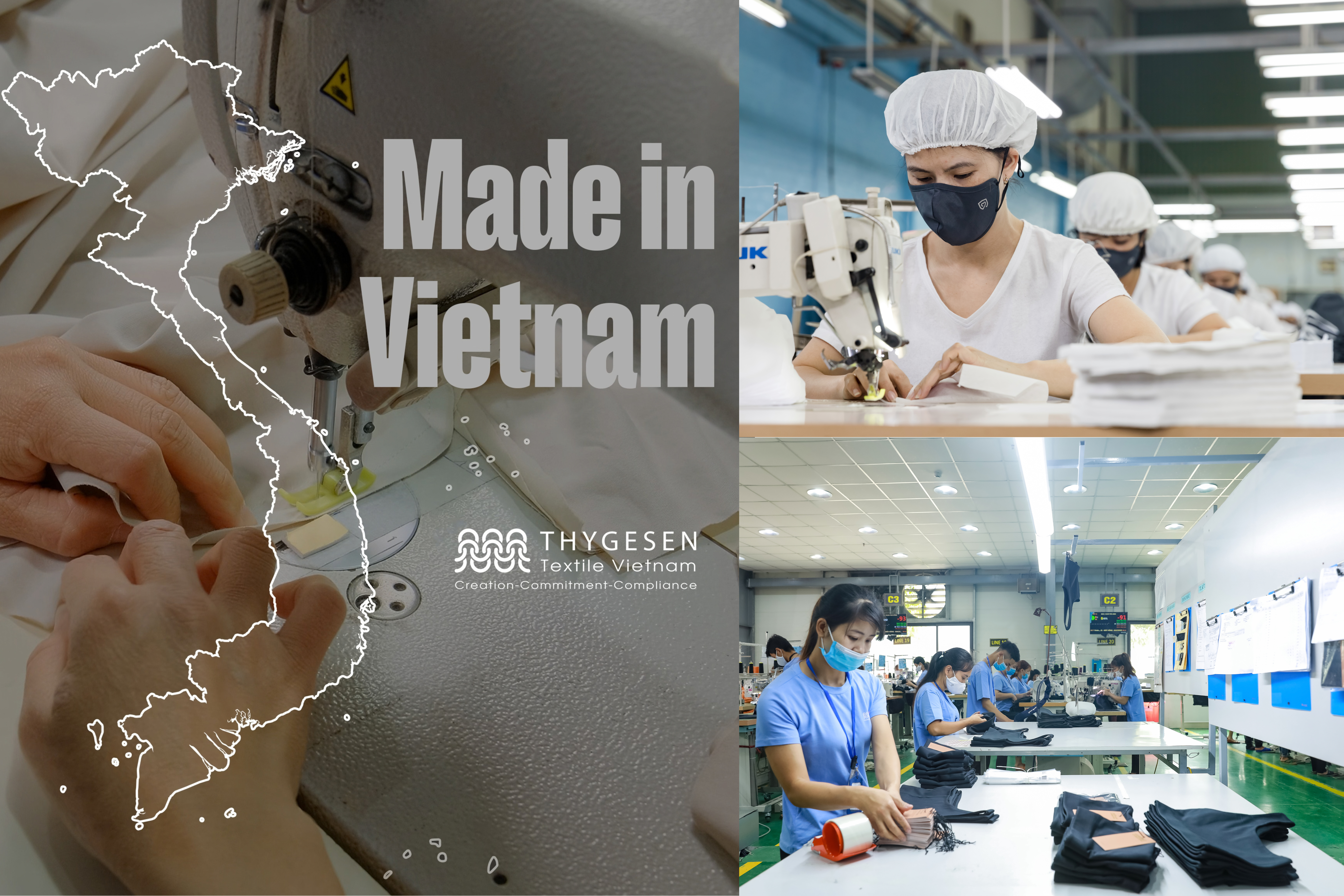
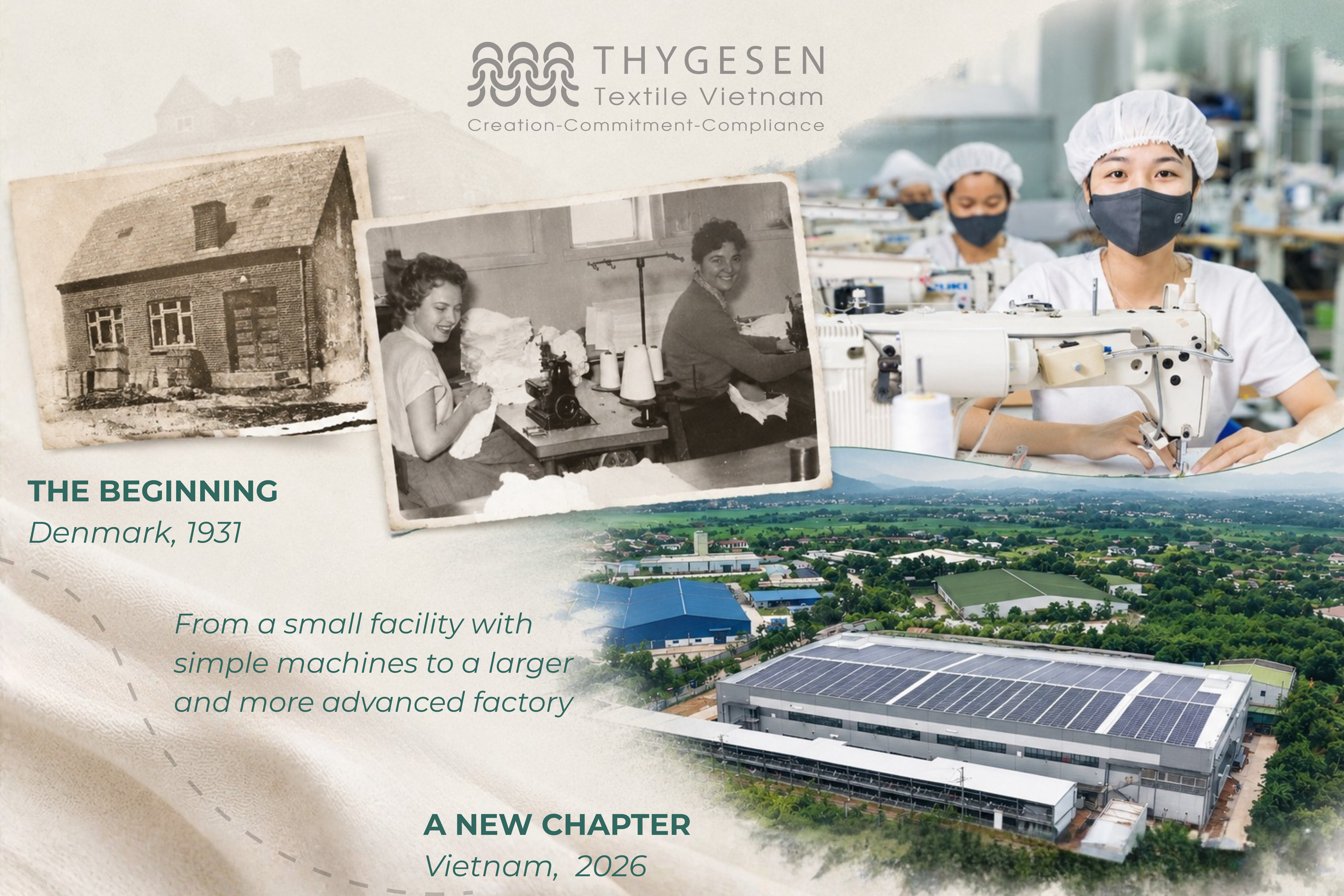
With decades of experience as a clothing manufacturer specializing in OEM and ODM production, Thygesen Textile Vietnam has developed deep expertise in producing hoodies for a wide range of international brands, from casualwear and streetwear labels to performance and lifestyle collections.
Through managing large-scale bulk production, we understand the critical balance between design intent, fabric selection, construction techniques, and production efficiency required to deliver consistent quality at scale. Based on this hands-on manufacturing experience, we would like to share a few key considerations for brands when developing hoodies for bulk production, helping to ensure better product performance, cost efficiency, and smoother execution from sampling to final shipment:
- Fabric selection: Fabric is the foundation of every hoodie and directly affects comfort, durability, and overall appearance. Key specifications such as fiber composition, GSM, knit construction, and finishing treatment should be clearly defined based on the intended use. Essential tests include shrinkage, color fastness, pilling resistance, and wash durability. A well-approved fabric ensures consistent performance from sample development through to bulk production.
- Sample development & approval stage: Sample development is not only about confirming the design, but also about evaluating production feasibility. At this stage, the factory validates pattern accuracy, construction methods, and fabric behavior under real manufacturing conditions. It is important to understand that an approved sample does not always guarantee identical bulk results. Clear alignment between brand expectations and factory capabilities is essential before production begins.
- Quality control: A comprehensive QC system should cover raw material inspection, inline monitoring, and final garment inspection. This helps ensure that fabrics, trims, and workmanship consistently meet approved standards throughout production. Special attention should be given to critical hoodie details such as rib recovery, pocket placement, hood symmetry, and measurement accuracy. Strong quality control is key to maintaining consistency across all production units.
As global brands increasingly shift sourcing to Southeast Asia, working with an experienced hoodie manufacturer in Vietnam offers advantages in quality control, flexibility, and competitive production capacity.
In conclusion, understanding the different types of hoodies helps brands make better decisions in design, fabric, and functionality for each target market. With strong OEM/ODM experience in hoodie production, Thygesen Textile Vietnam supports brands from development to bulk manufacturing with consistent quality and scalable solutions. To explore collaboration, contact us at sale@thygesen.com.vn or visit thygesenapparel.com.
>> As global brands increasingly shift sourcing to Southeast Asia, working with experienced hoodie manufacturers in Vietnam offers significant advantages in quality control, production flexibility, and competitive capacity for bulk manufacturing.