1. What Defines A High-Quality Clothing Manufacturer?
A high-quality manufacturer is not simply a factory that produces good-looking garments. Quality is a combination of these things.
1.1. Visible Qualities – What Customers See
When customers evaluate a garment, the first impression comes from what they can see, feel, and physically experience. A high-quality manufacturer ensures that every visible detail is aligned with your brand’s standards – not just in one sample, but consistently across mass production. These qualities include:
- Overall Finishing & Construction: Clean stitching, no loose threads, flat seams, no puckering, smooth edges, and accurate alignment between panels. A well-constructed garment looks refined even from a distance.
- Fit & Shape (Form): Patterns must be precise to maintain correct proportions, movement comfort, and silhouette. A high-quality manufacturer produces garments that fit true to size and remain shape-stable after washing.
- Color Accuracy & Consistency: Dyeing must be even, without patchiness or shade variation between batches. A reliable factory ensures colorfastness so the garment doesn’t fade or bleed easily.
- Style & Design Precision: Every detail – from neckline depth to stitching patterns to pocket placement should match design intent. Good production brings the designer’s sketch into reality with accuracy.
- Labels & Branding Components: Neck labels, care labels, woven patches, trims, heat-seal prints, and hangtags must be attached neatly and positioned correctly. A premium garment communicates brand identity through clean labeling.
- Handfeel & Material Touch: The tactile experience matters. Customers judge quality by how soft, smooth, flexible, or structured the fabric feels in their hands. A quality manufacturer chooses materials and finishing processes that elevate comfort.
- Print / Embroidery / Logo Application: Logo edges should be sharp, colors solid without cracking, peeling, or uneven density. Embroidery must be tight, durable, and free from thread pull. These branding elements reflect craftsmanship.
- Packaging & Presentation: Even the best garment can feel low-value if poorly packaged. Quality manufacturers provide neat folding, size stickers, polybag quality, and presentation good enough for retail delivery.
- Product Consistency Across Orders: True quality is not one good sample – it is repeatability. The color, fit, stitching, and branding of item No.100 must match item No.1.

Brands seeking specialized partners for performance wear can explore Thygesen’s capabilities as athletic clothing manufacturers. Thygesen provides extensive OEM development support, ensuring functional excellence and material integrity for your activewear lines. This collaboration facilitates the creation of garments that meet the rigorous demands of modern athletic performance.
1.2. Factory Expertise – What Makes the Quality
While visible qualities define the first impression of a garment, true product quality comes from the expertise and systems behind the scenes. A high-quality manufacturer combines skilled teams, disciplined processes, and strong problem-solving capabilities to consistently deliver garments that meet both design intent and functional standards. Key factors include:
- Strict Production Process & Quality Control: A high-quality manufacturer follows a standardized production workflow with strict quality control at every stage – from fabric inspection and cutting to sewing, finishing, and packing. Multi-stage QC ensures consistency, reduces defects, and guarantees that every garment meets the brand’s standards.
- Skilled Technical Team & Experience: Experienced pattern makers, sample technicians, and sewing supervisors are essential to maintain precision in fit, construction, and finishing. Their expertise ensures garments are made correctly, efficiently, and consistently across batches.
- Problem-Solving Capability: Production always involves unexpected issues such as shading, sewing errors, or material defects. A reliable factory identifies problems early, provides effective solutions, and minimizes disruptions to production timelines.
- Sample Development & Innovation/R&D: High-quality manufacturers support brands by developing samples optimized for mass production and incorporating innovations in fabrics, finishes, and construction techniques. This R&D capability not only allows brands to refine designs and create differentiated, high-performing products but also helps minimize unnecessary waste and improve production efficiency.
- Category Specialization & Technical Knowledge: Factories with experience in specific product lines (e.g., kidswear, activewear, underwear) understand the technical requirements, appropriate materials, sewing techniques, and safety standards, reducing trial-and-error and improving production efficiency.
- Compliance with Safety, Sustainability & Supply Chain Standards: Leading manufacturers follow strict safety regulations, sustainability practices, and transparent supply chain management. Certifications and ethical practices ensure garments are safe, responsibly made, and compliant with international standards.
The foundation of diverse apparel production often relies on sophisticated cut and sew manufacturing techniques. Thygesen implements stringent quality management systems across all production phases, ensuring precise execution and adherence to specific design requirements. This dedication to process excellence delivers consistent garment quality and enhances supply chain reliability.

2. Things To Check Before Partnering To Spot High Quality Manufacturers
Finding a reliable clothing manufacturer is more than checking sample quality, it requires understanding how the factory operates, what capabilities they bring, and whether their processes align with your brand’s goals.
2.1. Structure
Understand the factory’s business model and internal structure. Are they OEM (producing according to your design), ODM/full-package (handling design, sourcing, and production), or cut-and-sew only? When handling an order or project, how are responsibilities distributed?
Typically, the merchandising team has the most direct influence over order execution, managing timelines, quality checks, and coordination across departments. Other key departments include sales, development/design, quality assurance, and logistics.
A well-structured factory has clear accountability, smooth communication channels, and defined processes that ensure orders are managed efficiently from sample approval to final delivery.
2.2. Capabilities
Identify what makes the manufacturer different from others and how their strengths can support your brand’s growth. Check their expertise in: R&D and product innovation, fabric sourcing, proficiency in specific product categories, years of industry experience, production capacity, machinery and equipment, and technical knowledge etc. Understanding these capabilities helps you evaluate whether the factory can meet your quality expectations, scale with your business, and contribute to product innovation.

Developing distinctive casualwear collections necessitates a manufacturing partner capable of specialized production, particularly for items such as hoodies. Thygesen works alongside brands as expert hoodie manufacturers, offering tailored OEM solutions that encompass fabric innovation, design refinement, and diverse finishing options. This enables partners to create garments that perfectly capture their brand aesthetic and market positioning.
2.3. Fabric Sourcing & Development
A high-quality manufacturer should have deep knowledge of materials, access to certified and traceable suppliers, and sustainable fabric options. They should understand fabric properties, chemical compliance, and taxes or regulations for sourcing in different markets. Transparent and responsible material sourcing ensures both product quality and compliance with environmental and social standards.
Choosing an eco friendly clothing manufacturing company can significantly enhance your brand’s reputation and appeal to environmentally conscious consumers, demonstrating a commitment beyond just profit.
2.4. Factory Ethical Responsibility
Check whether the factory holds recognized ethical certifications such as WRAP, SA8000, or Better Work. Whenever possible, consider verifying practices in person. Ethical factories maintain fair labor practices, worker safety, and environmental compliance, which are increasingly important for brand reputation and market access.
Partnering with an eco friendly clothing manufacturer ensures that your brand not only meets consumer expectations for ethical production but also contributes positively to the environment through sustainable practices and materials.

2.5. Standard Lead Time
Ask about their sampling and bulk production timelines, overall capacity, and ability to handle peak-season pressure without delays. Reliable timelines are crucial for brands to launch collections on schedule, avoid stockouts, and plan marketing or retail activities accurately.
2.6. Minimum Order Quantity (MOQ)
Confirm that their MOQ aligns with your brand’s scale and growth stage. Factories specialized in large-scale production may not accept small orders or may charge high surcharges, whereas smaller factories may lack capacity for large runs. Understanding MOQ ensures alignment with your production strategy and budget.

3. Top 9 High Quality Clothing Manufacturers You Should Consider to Work With
Below are 9 clothing manufacturers that deliver high-quality garments and reliable service:
For brands specifically prioritizing sustainability in their casual wear lines, exploring a dedicated list of the Top 10 Eco-Friendly T-Shirt Manufacturers with Global Certifications can provide valuable insights and direct contacts.
3.1. Thygesen Textile Vietnam
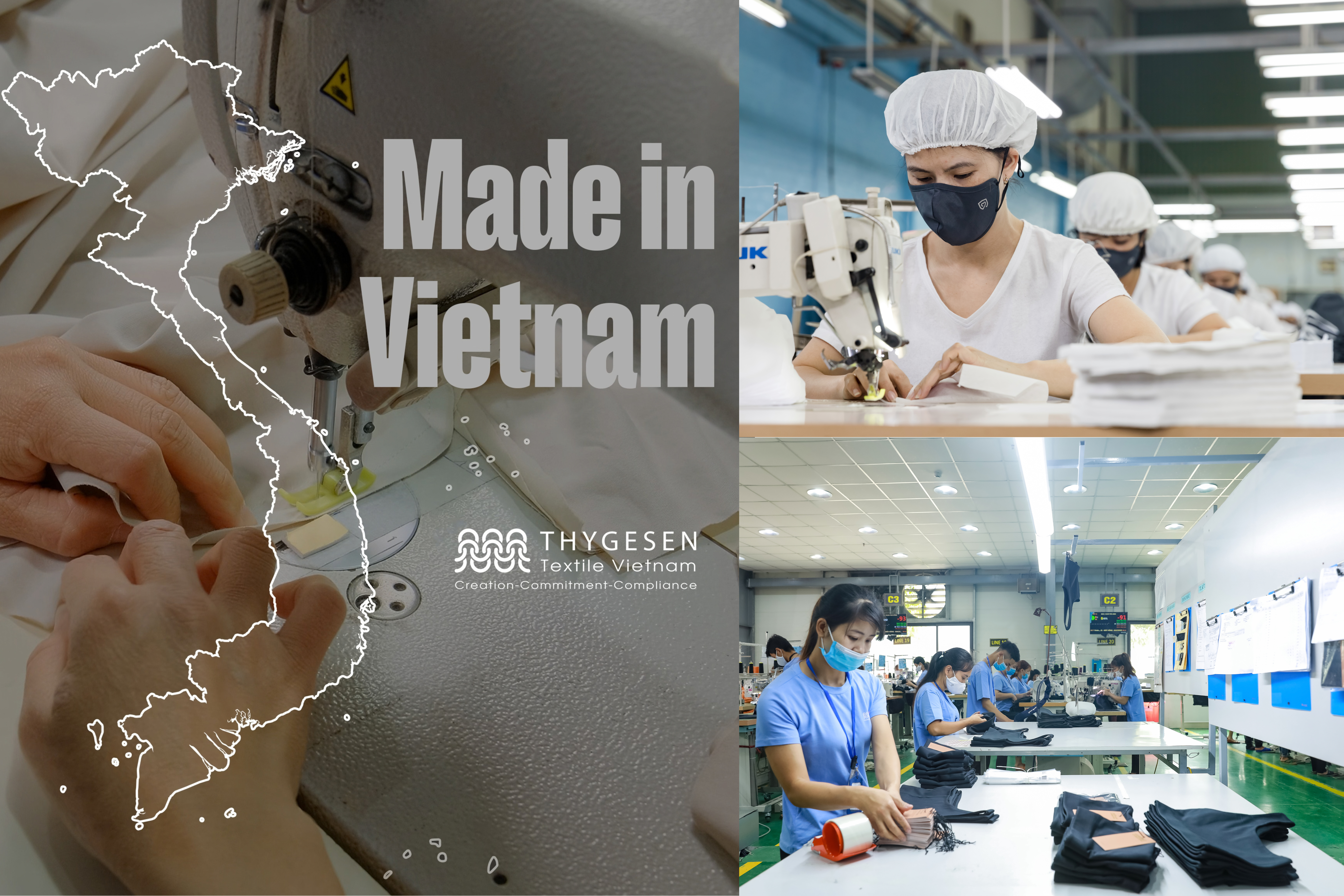
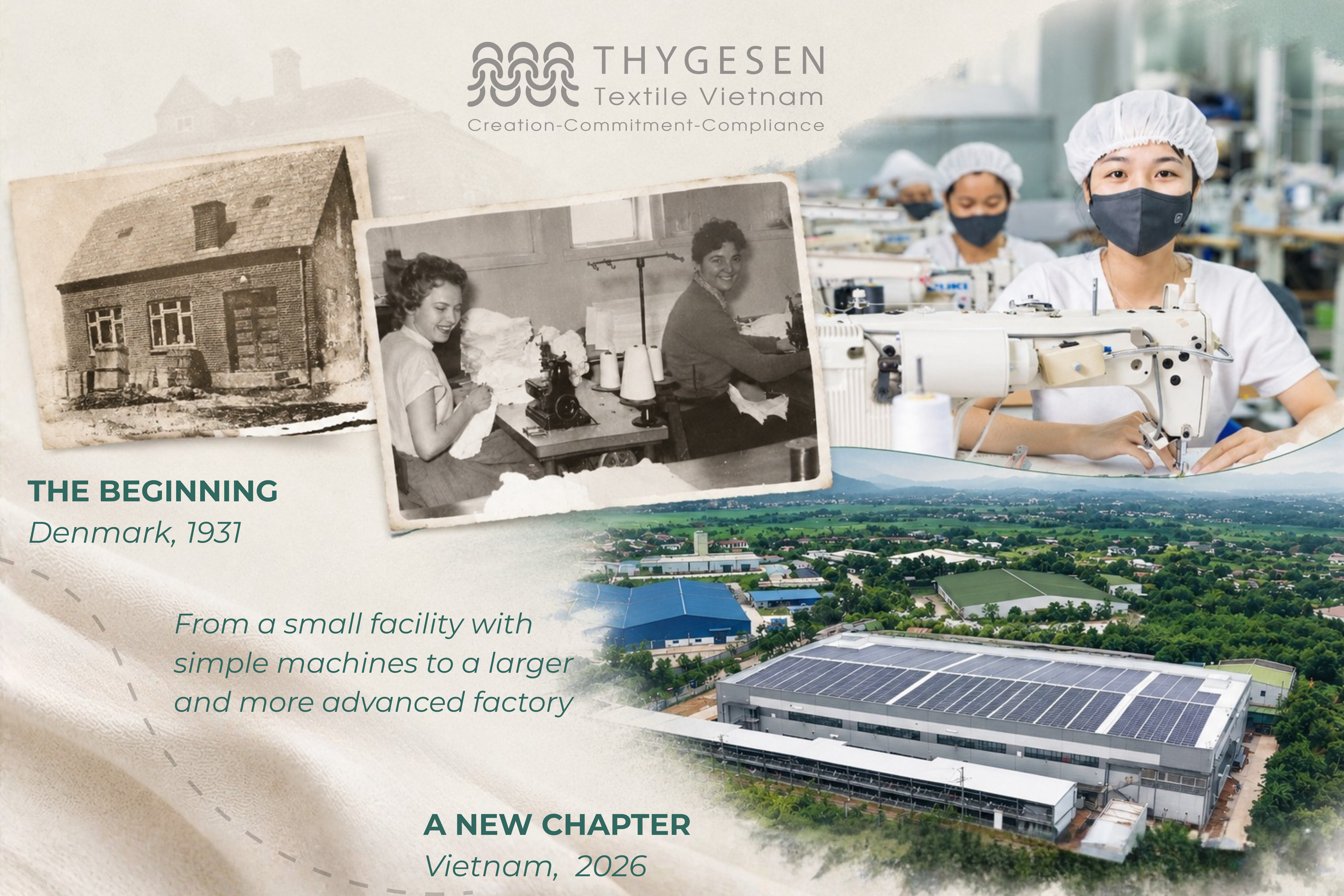
We are proud to be one of the few garment manufacturers in Vietnam specializing in full-package production, from design consultation and material sourcing to bulk production and international shipping. All products are manufactured in our SA8000 and WRAP-certified factory with strict quality control, and comply with leading global certifications including ISO 9001:2015, GRS, GOTS, OEKO-TEX STANDARD 100, OEKO-TEX STeP, FSC, and OCS.
Our mission is built on ethical manufacturing, honest partnerships, and transparency at every stage, ensuring trust and long-term value for global brands. With scalable capacity, we produce up to 800,000 garments per month — nearly 10 million pieces annually, covering a wide range of categories such as Activewear, Underwear, Casualwear, Kidswear, Workwear, and Uniform.
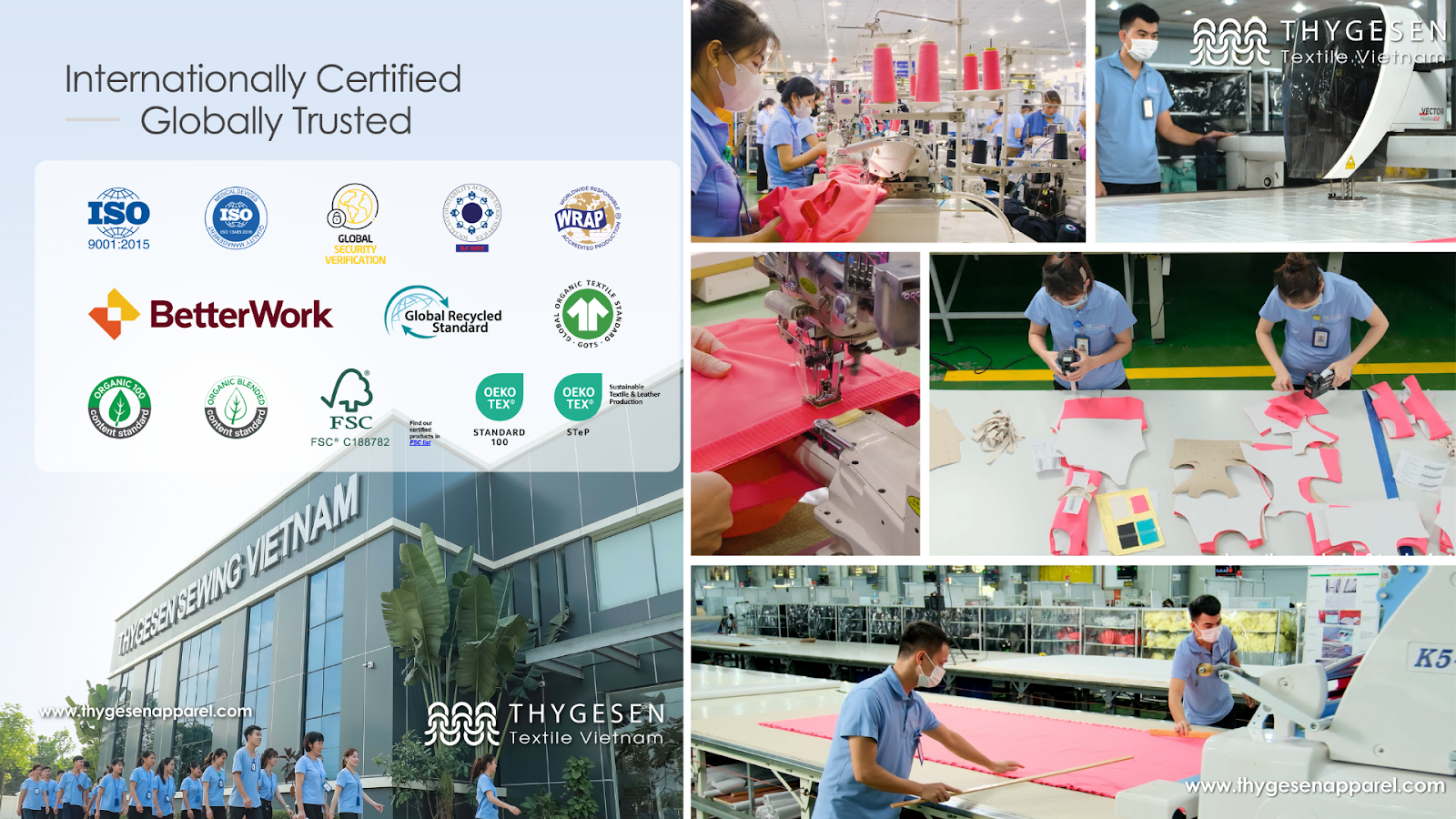
Brands prioritizing both performance and ethical production standards should carefully vet their prospective legging manufacturer. Thygesen maintains comprehensive social responsibility and sustainability commitments, reflected in its certifications and robust quality management systems for specialized apparel. This ensures that every pair of leggings meets not only functional expectations but also global compliance and environmental benchmarks.
3.2. The Evans Group
The Evans Group (TEG) is a Los Angeles-based full-service fashion development and production house, located at 1321 Palmetto Street, Los Angeles, CA 90013, USA. Over the past nearly 20 years, TEG has built a strong reputation as a trusted manufacturing partner for both emerging independent designers and established high-end brands, offering vertically integrated services under one roof.
TEG provides a comprehensive range of services, from design consultation, fabric and trim sourcing, pattern making and sample development, to cut-and-sew production whether small-batch (even 1-50 pieces/style) or larger runs (300+ pieces/style). They cater to diverse garment categories including womenswear, menswear, activewear, outerwear, formalwear, lingerie, and more.

3.3. MMS Clothing
MMS Clothing is a custom clothing manufacturer and wholesaler based in Chengdu, Sichuan, China. Founded in 2018 as Chengdu MMS Clothing Co., Ltd., the company has evolved from a small studio into a production partner for hundreds of global brands. With skilled teams and full development capabilities, MMS Clothing supports both emerging designers and established labels with reliable manufacturing capacity.
MMS Clothing provides a full-service manufacturing solution from concept development to final production and delivery. Their offerings include design and tech pack creation, material sourcing, pattern making, cutting, and sewing. They support multiple customization methods such as screen printing, digital printing, heat transfer, and embroidery, as well as private label branding, packaging, and logistics.

3.4. Lefty Production Co.
Lefty Production Co. is a full-service apparel and accessories manufacturer headquartered in Los Angeles, United States. They support production of small or large batches, with relatively low minimum order quantities, making them suitable for both start-up brands and larger labels. Their production capabilities cover a wide range of apparel and accessories including menswear, womenswear, children’s wear, athletic wear/activewear, swimwear, and also accessories or specialty items as needed.

3.5. Chenfeng Group
Chenfeng Group Co., Ltd. is a large-scale apparel manufacturer based in Changzhou, Jiangsu, China. Founded in 1967, the company has expanded from a silk garment producer into one of China’s leading export-oriented textile and clothing groups, operating multiple factories across regions such as Jintan, Kunshan, Suqian, Sihong, and Liyang.
Chenfeng specializes in textile production and garment manufacturing for woven and knit apparel across menswear, womenswear, and everyday casualwear. With strong mass-production capacity, advanced facilities, and global export experience, the company supplies major international brands while maintaining high standards of quality and production control.

3.6. Gelmart International
Gelmart International is a private‑label apparel manufacturer and supplier headquartered in New York, United States. Gelmart specializes in intimate apparel, shapewear, lingerie, bras and underwear, as well as lounge, daywear and related garments. The company offers full-service manufacturing, from design and sourcing to production and distribution, and has produced over 1.25 billion units for global retailers.

3.7. Apparel Production
Apparel Production Inc. is a New York based clothing manufacturer with over 75 years of experience. Founded in 1947, the company serves as a full-service production partner for fashion brands seeking reliable manufacturing and global distribution. pparel Production handles both small and large orders across a wide range of products including T-shirts, hoodies, loungewear, jackets, outerwear, and bodywear for men, women, and children while maintaining strict quality control.

3.8. Anata Group
Ananta Group is a large apparel manufacturer based in Bangladesh, with corporate headquarters in Dhaka. Founded in 1992, over the years the company has expanded into a major garment exporter, employing tens of thousands of workers and earning global recognition for supplying to leading international retailers.
Ananta specializes in woven ready‑made garments (RMG), producing trousers, shirts, jackets, shorts, schoolwear and other casual and formal clothing. The company operates multiple production units, with modern facilities including cutting, sewing, washing, finishing, embroidery and quality‑control.

3.9. Alok Industries
Alok Industries is one of India’s largest vertically‑integrated textile and garment companies, headquartered in Navi Mumbai, India. The company combines raw‑material production (yarns, polyester, cotton) with fabrics, home textiles and garment manufacturing, enabling full value‑chain control from fiber and yarn to finished apparel.
Under its garment division, Alok produces a wide range of clothing including menswear (e.g. polos, T‑shirts, boxers), womenswear (e.g. casual tops, loungewear, nightwear), kidswear (shirts, dresses, nightwear) and other everyday apparel.