Understanding ISO clothing standards is key for fashion brands aiming to ensure product quality, safety, and consistency. This guide covers their meaning, benefits, and everything brands need to know to stay compliant and competitive.
1. ISO Clothing Standards Meaning
ISO clothing standards are internationally recognized guidelines that define how clothing should be made, tested, and labeled to ensure quality, safety, and consistency. They cover all aspects of garment production, from raw materials and manufacturing processes to final product performance.
Key points:
- Ensure consistent quality across batches of clothing
- Define safety requirements for materials and finished garments
- Standardize testing methods for durability, colorfastness, and comfort
- Promote global trade by aligning products with international benchmarks
In short, ISO clothing standards help brands produce garments that meet consumer expectations, comply with regulations, and maintain a professional reputation in the global market.
2. Key ISO Clothing Standards
Understanding key ISO clothing standards helps brands ensure product quality, safety, and compliance in global markets. From textile testing methods to environmental management systems, these standards provide clear benchmarks that strengthen manufacturing credibility and build long-term trust with buyers.
2.1. ISO 9001: 2015 – Quality Management Systems
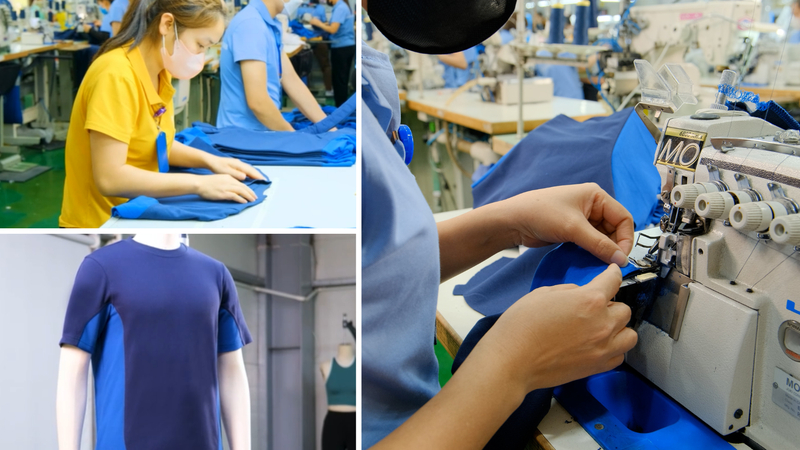
ISO 9001:2015 is the internationally recognized standard for Quality Management Systems (QMS). For apparel manufacturing, it provides a structured framework to ensure consistent garment quality, controlled production processes, and continuous improvement across the organization. Rather than focusing only on final inspection, ISO 9001:2015 builds quality into every stage of the workflow.
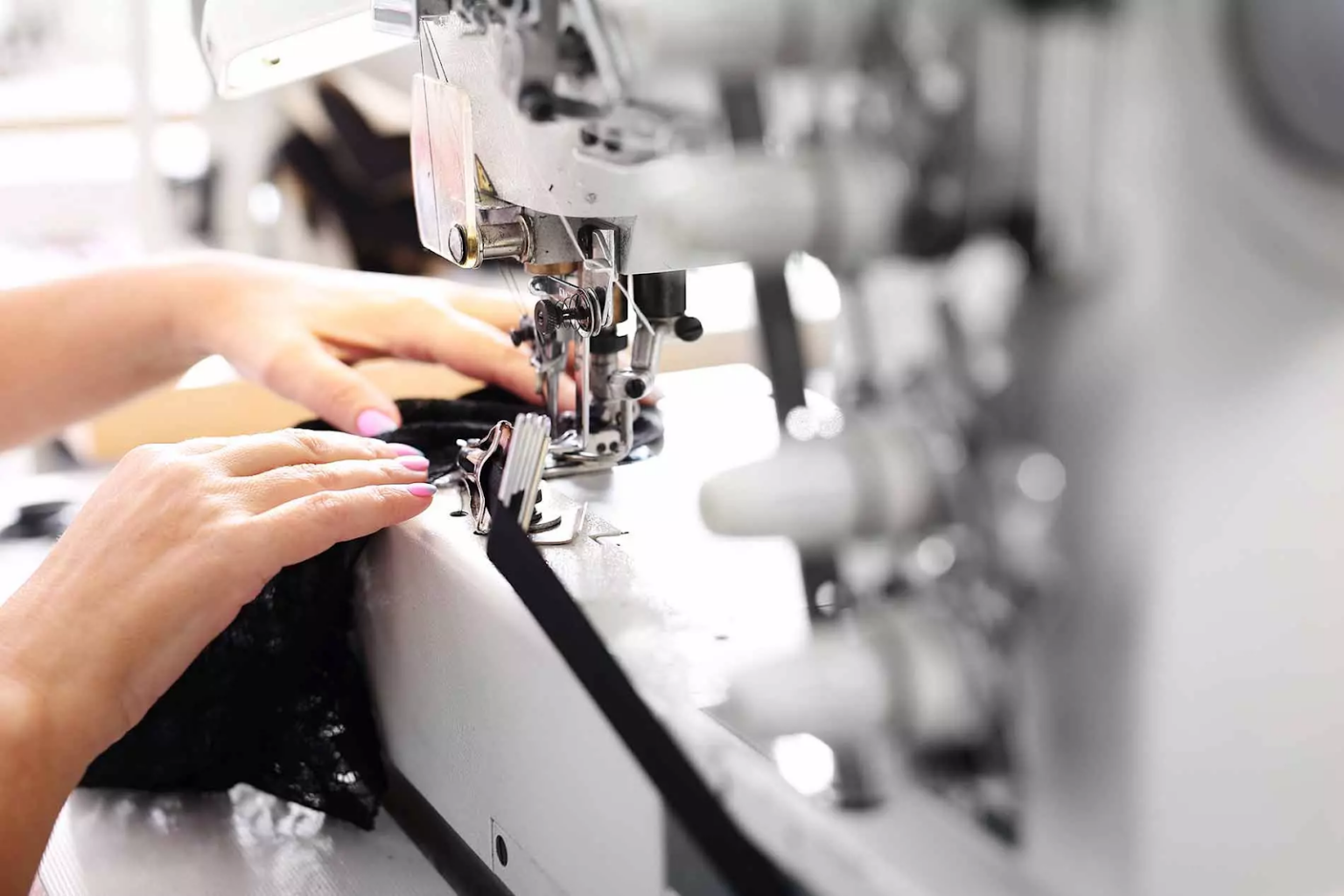
In a garment factory, this means establishing clear and documented procedures from fabric sourcing and incoming material inspection to cutting, sewing, finishing, quality control, and shipment.
This end-to-end workflow is the foundation of cut and sew manufacturing – a production method where fabric panels are precisely cut to pattern and assembled through specialized stitching, giving brands full control over construction quality and compliance at every stage. Brands evaluating ISO-certified production partners can explore a curated list of cut and sew manufacturers to identify factories with structured quality systems and verified manufacturing capabilities.
The standard emphasizes risk-based thinking, process consistency, defined responsibilities, and measurable quality objectives. It also requires internal audits, management reviews, and corrective actions to ensure issues are identified and addressed systematically.
For clothing brands and global buyers, ISO 9001:2015 signals operational reliability and a reduced risk of defects, delays, and costly rework. It demonstrates that the manufacturer operates under a transparent and structured quality system capable of delivering consistent results across different product categories, including fashion collections, activewear, underwear, kidswear, workwear, and large-scale private-label production.
For brands developing activewear lines, partnering with experienced athletic apparel manufacturers that hold ISO 9001:2015 certification ensures both technical performance and production consistency. A curated list of athletic apparel manufacturers is available for brands comparing certified partners across different markets and production capabilities.

2.2. ISO 13485 – Medical Device Quality Management for Healthcare Textiles
ISO 13485 is a specialized quality management standard designed for organizations involved in the production of medical devices and related products, including healthcare textiles. The standard ensures that medical textile products are consistently safe, reliable, and compliant with regulatory expectations.
For apparel manufacturers producing medical garments, ISO 13485 demonstrates the ability to meet rigorous healthcare regulations. It strengthens credibility when supplying hospitals, clinics, and institutional buyers. By ensuring controlled production environments and
documented quality procedures, the certification reduces risk and enhances trust in high-stakes healthcare applications.
It is suitable for medical and healthcare textiles such as surgical gowns, medical scrubs, patient garments, PPE textile components, and antimicrobial or hospital-use products where safety and traceability are essential.

2.3. ISP 13688 – General Protective Clothing Requirements
ISO 13688 sets the fundamental requirements for protective garments, covering ergonomics, fit, comfort, and labeling.It ensures that clothing is safe to wear and does not cause harm to the user.This standard acts as the foundation for all other protective clothing certifications.
For workwear manufacturers, ISO 13688 guarantees that garments meet essential safety and usability benchmarks. It ensures products are properly labeled, functional, and comfortable for daily industrial use. Compliance strengthens credibility before applying additional hazard-specific certifications.
This standard is particularly suitable for apparel lines that require enhanced safety and durability, including industrial workwear, construction uniforms, and general-purpose PPE garments where protection and compliance are essential.

2.4. ISO 11612 – Clothing for Protection Against Heat and FLame
ISO 13688 defines the general performance requirements for protective clothing, including safety, comfort, and ergonomic design. It ensures garments are harmless to the wearer and appropriately sized and labeled. This standard serves as the baseline framework for all specialized protective apparel certifications.
For workwear brands, ISO 13688 confirms that products meet essential safety and usability standards before entering the market. It enhances product reliability by ensuring clear labeling and wearer comfort in demanding environments. Compliance also builds buyer confidence and supports alignment with additional protective clothing standards.
This standard is particularly suitable for high-risk protective apparel, including flame-resistant workwear, welding garments, and oil & gas protective uniforms where enhanced safety performance and compliance are critical.
2.5. ISO 14001: Environmental Management Systems
ISO 14001 sets out the requirements for establishing and maintaining an effective Environmental Management System (EMS). It helps organizations systematically manage their environmental responsibilities through structured policies and measurable objectives. The standard focuses on reducing environmental impact while promoting continuous improvement.
For apparel brands, sustainability has become a key factor in global sourcing decisions. ISO 14001 certification demonstrates a manufacturer’s commitment to responsible production and regulatory compliance. It also enhances resource efficiency, supports ESG strategies, and strengthens brand reputation in competitive markets.
This certification is well suited for sustainable fashion collections, organic and eco-conscious product lines, as well as export garments destined for environmentally regulated markets where transparency and responsible sourcing are required.
3. Why ISO Clothing Standards Matters for Apparel Brands
ISO clothing standards are essential for apparel brands aiming to meet international market expectations. They provide structured guidelines for quality, safety, and sustainability across the supply chain. By working with ISO-certified manufacturers, brands enhance credibility, minimize compliance risks, and strengthen long-term competitiveness.
- Global Market Access: ISO certification functions as a gateway to international trade. Many major retailers and regulated markets, including the EU and North America, require suppliers to comply with recognized ISO benchmarks. Meeting these standards accelerates vendor approval and reduces entry barriers. For apparel brands, it opens doors to stable, high-value global partnerships.
- Quality Consistency: Standards such as ISO 9001 ensure strict quality control across every production stage, from fabric sourcing to final inspection. Structured procedures reduce defects, rework, and costly returns. Consistency becomes measurable rather than dependent on individual oversight. This reliability is crucial for maintaining brand integrity across multiple seasons and markets.
- Operational Efficiency: ISO frameworks enforce standardized workflows and performance monitoring. By identifying bottlenecks and waste, brands can optimize resources and shorten production lead times. Clear documentation improves coordination between departments and suppliers. The result is lower operating costs and stronger supply chain control.
- Sustainability and Ethics: ISO 14001 and ISO 26000 provide structured guidance for environmental responsibility and ethical operations. These standards support waste reduction, energy efficiency, and transparent labor practices. Compliance aligns production with rising ESG expectations from buyers and investors. For modern apparel brands, sustainability is no longer optional-it is a competitive requirement.
- Consumer Trust and Brand Reputation: ISO certification signals professionalism, accountability, and commitment to excellence. It reassures buyers and end consumers that products meet internationally recognized standards. In a saturated market, certification becomes a powerful differentiator. Over time, this credibility translates into stronger loyalty and long-term brand value.
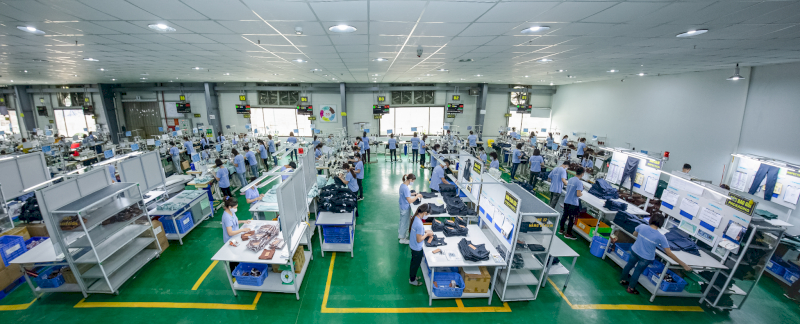
Brands looking for reliable partners that meet these standards can explore a curated list of experienced hoodie manufacturers with ISO-certified production capabilities, ensuring consistent construction quality, compliance, and reliable delivery across collections. Similarly, brands developing performance bottoms can explore a list of experienced legging manufacturers specializing in private-label production with ISO-certified quality systems, ensuring precise fit engineering, fabric compliance, and scalable output for activewear and athleisure collections.
5. Thygesen Texle Vietnam – Your Reliable ISO Certified Garment Manufacturer
With over 90 years of textile expertise, Thygesen Textile Vietnam is a trusted full-package apparel manufacturer serving global brands. From fabric sourcing and product development to bulk production and shipping, Thygesen delivers end-to-end solutions with strict quality control at every stage.
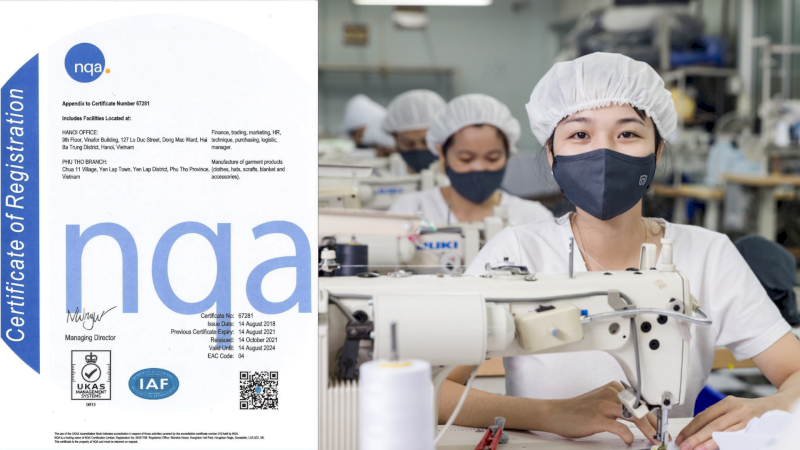
Our factory operates under ISO 9001:2015 Quality Management Systems, reinforcing strict process control and continuous improvement across every production stage. In addition, we are SA8000 and WRAP certified, reflecting our commitment to ethical labor practices and social responsibility. As an OEKO-TEX certified garment manufacturer, Thygesen Textile Vietnam adheres to rigorous testing for harmful substances, guaranteeing that their apparel meets high human-ecological safety standards.
Thygesen also complies with globally recognized standards such as GRS, GOTS, OEKO-TEX® STANDARD 100, FSC, and OCS, supporting sustainable sourcing and environmentally responsible manufacturing. These certifications demonstrate our dedication to quality, transparency, and long-term partnership with international apparel brands.
For a detailed comparison of organic textile standards, consider reading GOTS vs OCS Certifications: Requirements, Benefits, and Key Differences – Thygesen Textile Vietnam to understand their distinct advantages.
This global standard ensures textiles are free from harmful substances, giving consumers peace of mind that their oeko-tex certified products are safe and responsibly made.
6. FAQ
Does having ISO certification make clothing more expensive?
Not necessarily. While implementing ISO systems may require initial investment in audits, training, and process improvements, it often reduces long-term costs. Fewer defects, less rework, and improved efficiency help offset expenses. In many cases, ISO certification leads to better cost control rather than higher product prices.
Can ISO clothing standards give brands a competitive advantage?
Yes. ISO certification demonstrates compliance with internationally recognized benchmarks for quality, safety, and management systems. This strengthens buyer confidence and simplifies entry into regulated markets. In competitive sourcing environments, certification can be a decisive factor in supplier selection.
Do ISO clothing standards affect sustainability practices?
Absolutely. Standards such as ISO 14001 directly address environmental management, encouraging waste reduction and energy efficiency. Even quality-focused standards improve resource optimization through better process control. Together, they support stronger ESG performance and more responsible apparel production.
In conclusion, ISO clothing standards play a vital role in ensuring quality consistency, regulatory compliance, operational efficiency, and sustainable production in today’s global apparel industry.
As a trusted garment manufacturer with nearly a century of experience, Thygesen Textile Vietnam combines ISO 9001:2015 and other global certifications with full-package OEM/ODM services, ethical production practices, and sustainable material sourcing. To learn more, visit thygesenapparel.com or contact our team at sale@thygesen.com for production inquiries.