In the modern textile industry, the OEKO-TEX certified label serves as the gold standard for safety and environmental responsibility. Beyond protecting consumers from harmful substances, this certification empowers brands to build trust and gain a competitive edge in a conscious market. Dive into our comprehensive guide to understand what it means and how it can transform your brand’s global reputation.
1. OEKO-TEX Certified Meaning
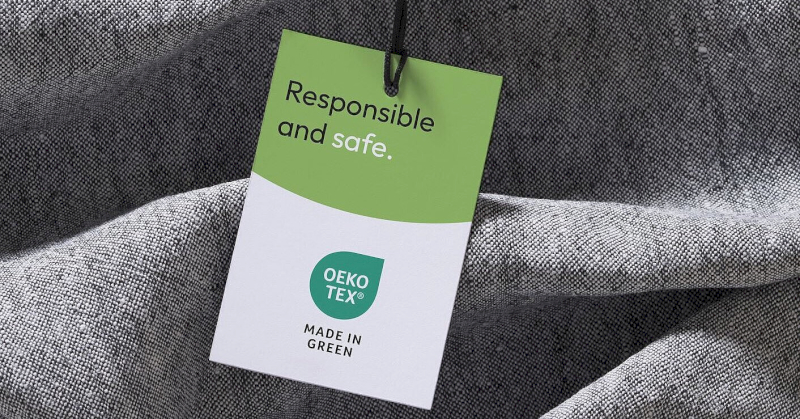
OEKO-TEX certification means that a textile product and its components have been tested for harmful substances and proven safe for human use. This certification does not apply to fabric alone, it can also cover threads, dyes, prints, elastics, and other materials used to make the final product.
In simple terms, OEKO-TEX certification ensures that every relevant part of a garment meets strict safety standards, helping confirm that the product is skin-friendly and free from chemicals that could pose risks to health.
OEKO-TEX certification is most commonly applied to products that have direct contact with the skin, such as kidswear, underwear, and sleepwear – categories that require a higher level of safety. For brands, this certification plays an important role in demonstrating transparency and responsibility toward consumer health, while helping build trust with customers who prioritize safety and sustainability in the products they choose.
>> Leggings fall into the same high-priority category, as they are tight-fitting garments worn directly against the skin during both active and everyday use. Brands developing private-label leggings can explore a curated list of experienced legging manufacturers with OEKO-TEX certified production to ensure fabric safety, chemical compliance, and consistent quality across their collections.
2. Types of OEKO-TEX Certifications
To better understand how OEKO-TEX works, it’s important to know that the certification system includes different standards, each designed for specific stages and aspects of textile production.
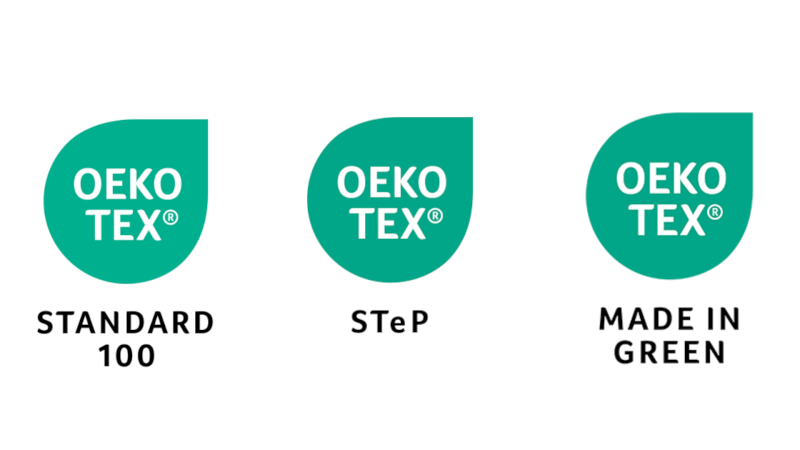
2.1. OEKO-TEX STANDARD 100
This is the most commonly requested standard for apparel brands is OEKO-TEX® STANDARD 100. STANDARD 100 certifies that every component of a product, including fabric, sewing thread, trims, labels, and accessories has been tested for harmful substances. The testing process covers a wide range of regulated and non-regulated chemicals, including formaldehyde, heavy metals, azo dyes, phthalates, pesticides, and substances restricted under EU REACH and other global regulations.
Products are categorized into four classes depending on their intended use:
| Product Class | Intended Use |
| Class I | Baby products (strictest limits) |
| Class II | Direct skin contact garments |
| Class III | No direct skin contact |
| Class IV | Decorative materials |
2.2. OEKO-TEX® STeP and Chemical Management
While STANDARD 100 focuses on finished products, OEKO-TEX® STeP evaluates the manufacturing facility itself. STeP certification assesses environmental performance, chemical management systems, wastewater treatment, occupational health and safety, and social responsibility practices within the factory.
For brands sourcing internationally, STeP certification signals that the manufacturer operates under structured sustainability and compliance systems. It does not replace brand audits, but it reduces uncertainty by demonstrating that formal environmental and chemical controls are already in place.
2.3. OEKO-TEX® MADE IN GREEN
OEKO-TEX® MADE IN GREEN builds on STANDARD 100 by adding supply chain transparency. To qualify for this label, a product must be tested for harmful substances and manufactured in facilities certified under OEKO-TEX STeP.
Each MADE IN GREEN product includes a traceable QR code that allows consumers to verify where the item was produced and whether the facilities meet environmental and social responsibility requirements. For brands that emphasize transparency and traceability, this certification provides a visible way to communicate those efforts.
3. Understanding the Difference: OEKO-TEX vs. GOTS
Although both are trusted certifications for sustainable fashion, OEKO-TEX and GOTS are often confused because they both focus on safety and environmental standards. However, while OEKO-TEX emphasizes chemical safety in finished products, GOTS is stricter about organic origins and ethical production processes. To help brands choose the right standard for their goals, the table below provides a detailed comparison of the two certifications:
>>> For brands exploring various organic and sustainable textile options, understanding gots vs ocs can further clarify the best path for their supply chain.
| Feature | OEKO-TEX Standard 100 | GOTS (Global Organic Textile Standard) |
| Primary Focus | Chemical Safety of the final product. | Organic Origin & ethical production. |
| Fiber Requirement | Can be synthetic or natural (non-organic). | Must contain 70% to 95% organic fibers. |
| Testing Scope | Checks for harmful residues in every component. | Audits the entire supply chain (farm to factory). |
| Social Criteria | Not mandatory for Standard 100. | Mandatory (fair wages, no child labor). |
| Brand Message | “My product is safe for your skin.” | “My product is kind to the planet.” |
4. Why Should Brands Choose a Manufacturer with OEKO-TEX Certification?
Working with an OEKO-TEX certified manufacturer isn’t just optional, it’s a smart choice for today’s market, where safety and transparency are key. This certification guarantees compliance and helps build consumer trust, while making production easier and meeting global standards.
4.1. Guaranteed Consumer Safety
With an OEKO-TEX certified manufacturer, every part of your product, fabric, threads, trims is tested for over 1,000 harmful substances. This is especially important for babywear, underwear, or bedding, where fabrics touch the skin constantly. Eliminating toxic chemicals like formaldehyde or heavy metals protects your customers and lowers the risk of recalls.
>> Beyond babywear and underwear, OEKO-TEX certification is equally important for everyday casualwear like hoodies, which are worn directly against the skin for extended periods. Brands developing certified casual collections can explore a list of experienced hoodie manufacturers that prioritize OEKO-TEX compliant materials and responsible production.
4.2. Easier Access to Global Markets
The OEKO-TEX label is recognized worldwide, helping your products meet strict requirements in markets like the EU and North America. Many retailers now require this certification before working with new brands. Partnering with a certified manufacturer means your products are ready for international sales without extra hurdles.
>> For activewear brands targeting these regulated markets, partnering with certified athletic apparel manufacturers that hold OEKO-TEX certification ensures both technical performance and safety compliance are met from the outset. A curated list of athletic apparel manufacturers is available for brands comparing certified production partners across different regions.
4.3. Stronger Brand Credibility
In a world full of greenwashing, third-party certification proves your claims. Showing the OEKO-TEX certified tag signals that your brand cares about people and quality. This transparency helps build consumer trust and loyalty, making shoppers more likely to stick with your brand.
4.4. Simplified Supply Chain Compliance
Keeping track of chemicals and materials in a supply chain can be complicated. Certified manufacturers handle testing and documentation for fabrics, trims, and threads, saving your team time and effort. This allows you to focus on design and marketing instead of compliance headaches.
>> Most OEKO-TEX certified garments are produced through a cut and sew manufacturing process — where fabric panels are precisely cut to pattern and assembled through specialized stitching, ensuring full control over material traceability, seam construction, and chemical compliance at every production stage. Brands can explore a curated list of cut and sew manufacturers holding OEKO-TEX certification to find verified partners for their collections.
4.5. Competitive Advantage in a Conscious Market
As more consumers care about safety and sustainability, OEKO-TEX certification gives your brand a clear edge. It acts as a mark of quality, justifying premium pricing and showing that your brand is a leader in responsible fashion.

5. Thygesen Texle Vietnam – Your Reliable OEKO-TEX Certified Garment Manufacturer
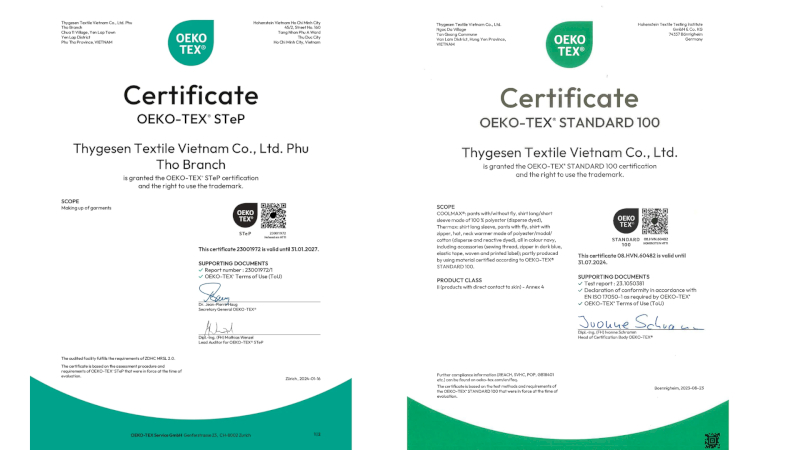
Thygesen Textile Vietnam combines decades of global manufacturing experience with a strong commitment to quality, sustainability, and safety. As a trusted full‑package OEM/ODM partner for fashion brands worldwide, we hold internationally recognized certifications, including OEKO‑TEX® STANDARD 100 and OEKO‑TEX® STeP, which demonstrate our adherence to rigorous standards for product safety, environmental performance, and responsible production practices.
>>> Partnering with an OEKO-TEX certified garment manufacturer like Thygesen Textile Vietnam ensures your products meet the highest safety and environmental standards.
In addition to OEKO‑TEX certifications, Thygesen Textile Vietnam holds multiple other international standards, including SA8000, WRAP, ISO 9001:2015, GRS, GOTS, FSC, and OCS. These certifications ensure that every aspect of production, from quality management and social responsibility to sustainable sourcing, meets strict global standards, giving partner brands maximum confidence in their collaboration
>>> If you are looking to expand your network of sustainable partners, discover the Top 10 GRS Certified Clothing Manufacturers You Should Work With.
6. FAQ
Does OEKO-TEX certification make manufacturing more expensive?
Not necessarily. While some costs may be slightly higher due to testing and compliance, working with a certified manufacturer can reduce risks, prevent costly recalls, and save money in the long run.
What Are Common OEKO-TEX Certified Fabrics & Materials?
OEKO‑TEX certification can apply to a wide range of textiles and components, including cotton, polyester, blends, knits, woven fabrics, threads, dyes, prints, elastics, and trims, basically any material used in garment production that comes into contact with the skin.
Are there rules for using the OEKO‑TEX label?
Yes. The label must follow OEKO‑TEX guidelines, showing the correct logo, certification number, and product category. Misuse can lead to revocation of certification.
In conclusion, the OEKO-TEX certified label is more than just a tag; it’s a global symbol of consumer safety and textile integrity. For brands, securing this certification is a strategic move to build lasting trust and ensure chemical compliance. Take the next step in creating trusted, high-quality garments for your brand – visit thygesenapparel.com or contact us at sale@thygesen.com.vn today.